

Corneal Transplant Surgery in Iran
Corneal transplant in Iran can restore corneal clarity and improve vision when advanced disease, scarring, or endothelial failure can no longer be managed effectively with non-surgical treatment. CeritaMed connects international patients with experienced corneal specialists for PKP, DALK, DMEK, and DSEK, with coordinated evaluation, surgery, and postoperative follow-up in Iran.
- Modern PKP, DALK & DMEK Transplant Techniques
- Expert Corneal Specialists for Complex Keratoplasty
- Personalized Surgical Planning & Follow-Up

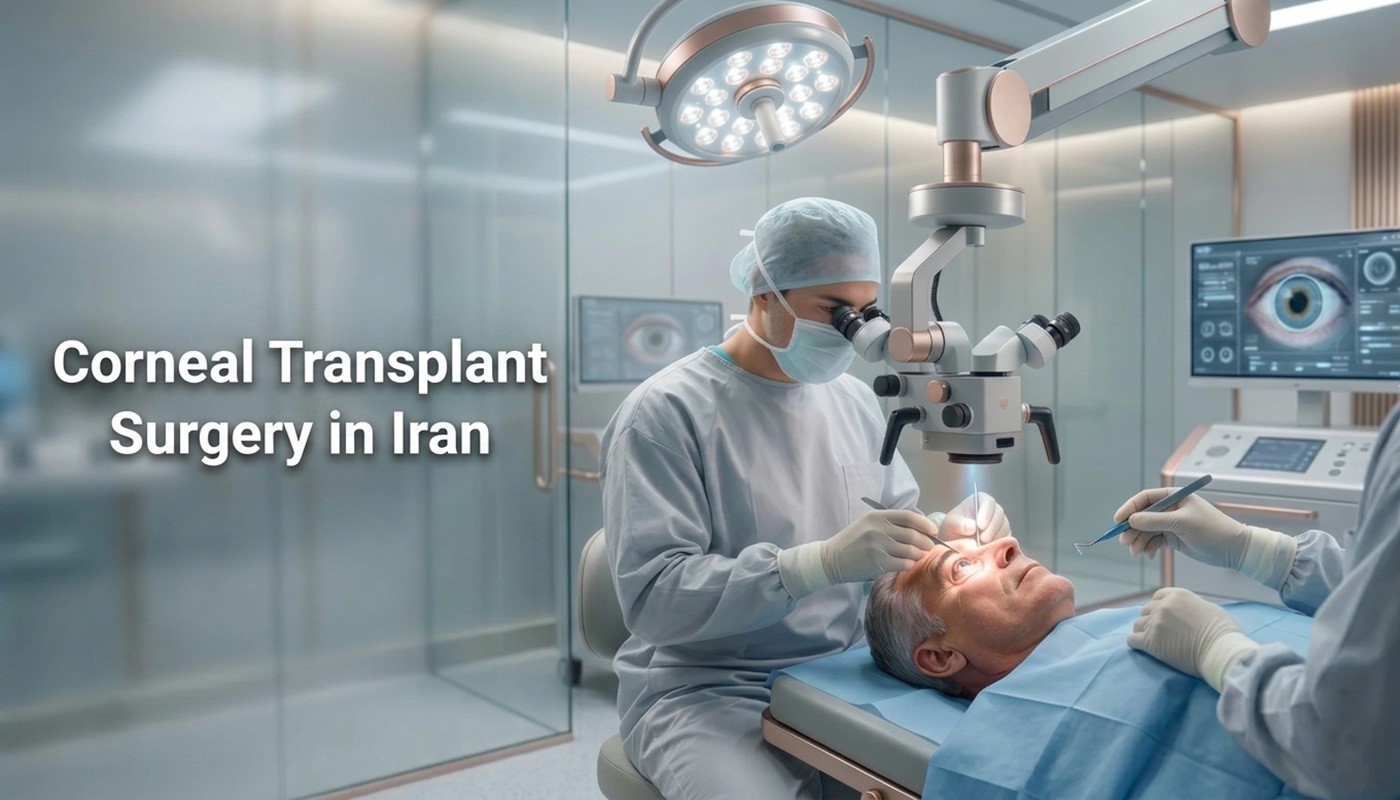
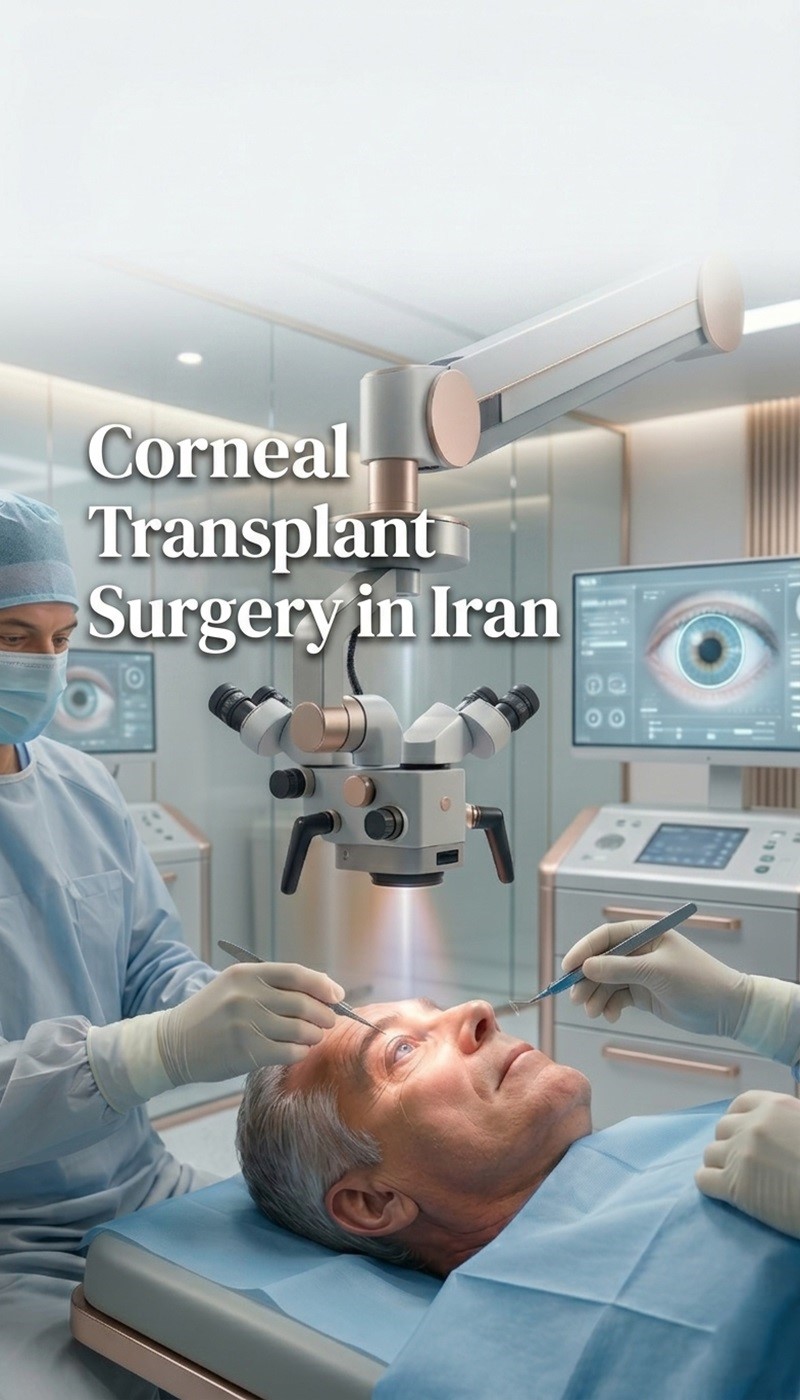
What Is a Corneal Transplant?
When the cornea becomes too damaged to remain clear, vision can become severely blurred. A corneal transplant, also called keratoplasty, replaces damaged or diseased corneal tissue with healthy donor tissue to improve corneal clarity and vision.
Depending on the condition, surgeons may replace the full thickness of the cornea or only the affected layers, preserving healthy tissue whenever possible.
Can Corneal Diseases Be Treated Without Surgery?
Not every corneal disease requires a transplant. Depending on the diagnosis and stage of the condition, treatment may include medication, specialty contact lenses, or procedures such as corneal cross-linking (CXL).
If the cornea becomes permanently scarred, swollen, severely thinned, or loses its transparency and vision cannot be adequately improved with these options, a corneal transplant may be considered. A corneal specialist determines whether surgery is necessary and which technique is most appropriate.
When Is Corneal Transplant Surgery Recommended?
Corneal transplant surgery may be recommended when corneal disease causes significant vision loss or permanent structural damage that cannot be adequately managed with non-surgical treatment.
Candidates may include patients with:
- Advanced keratoconus
- Corneal scarring after infection or trauma
- Fuchs’ endothelial dystrophy
- Corneal edema or endothelial failure
- Corneal dystrophies
- Corneal opacity affecting vision
- A failed previous corneal transplant
- Severe corneal injury
A corneal specialist can determine whether transplantation is necessary and which technique is most appropriate for the affected corneal layer.
Types of Corneal Transplant Surgery
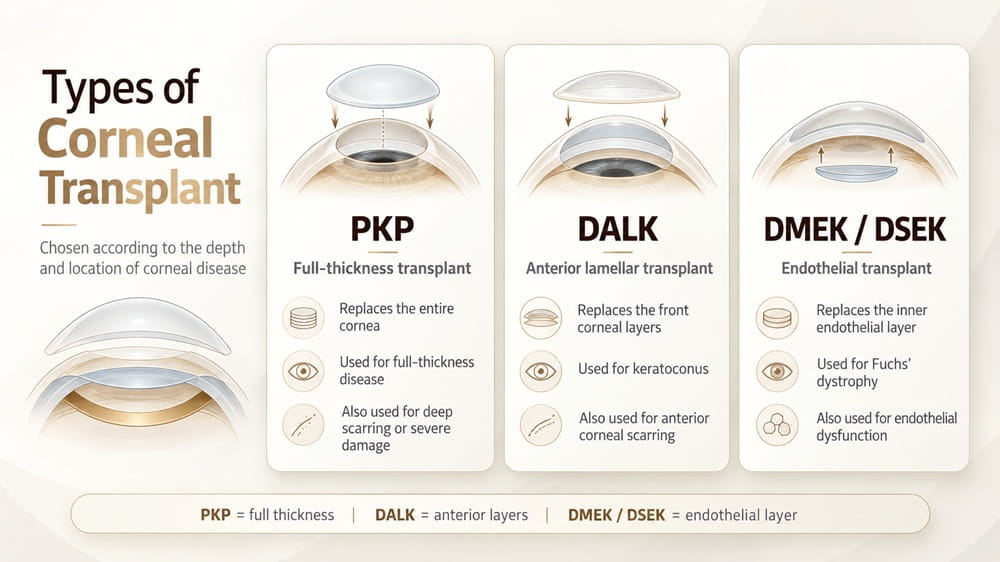
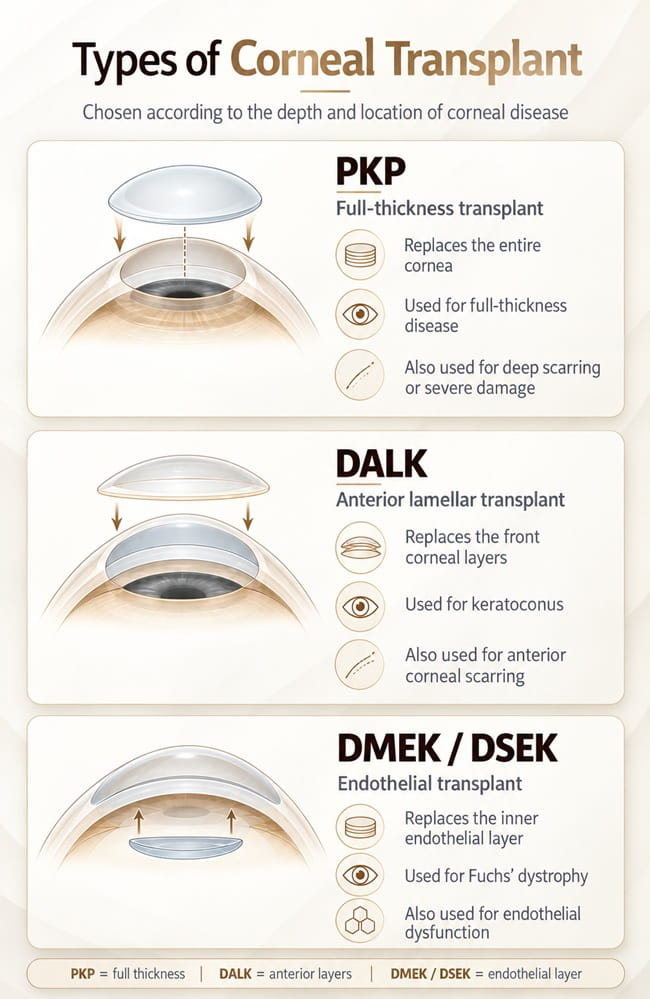
Corneal transplant surgery can replace the full thickness of the cornea or only the damaged layers. The best technique depends on which part of the cornea is affected and how much healthy tissue can be preserved.
Penetrating Keratoplasty (PKP)
PKP is a full-thickness corneal transplant that replaces all layers of the damaged cornea with donor tissue. It may be used when disease, scarring, or injury affects the full thickness of the cornea.
Deep Anterior Lamellar Keratoplasty (DALK)
DALK is a partial-thickness corneal transplant that replaces the damaged front layers while preserving the patient’s healthy endothelium. It is commonly considered for conditions such as keratoconus and anterior corneal scarring.
Endothelial Keratoplasty (DMEK / DSEK)
DMEK and DSEK are partial corneal transplant techniques that replace the damaged inner endothelial layer rather than the entire cornea. They are mainly used for endothelial disorders such as Fuchs’ dystrophy and corneal edema.
Which Corneal Transplant Technique Is Right for You?
The appropriate technique depends mainly on the location and depth of corneal damage. Your corneal specialist will determine whether full-thickness or partial-thickness transplantation is more suitable after examination.
| Technique | Tissue Replaced | Commonly Used For |
|---|---|---|
| PKP | Full corneal thickness | Full-thickness disease, deep scarring or severe damage |
| DALK | Front corneal layers | Keratoconus and anterior corneal scarring |
| DMEK / DSEK | Inner endothelial layer | Fuchs' dystrophy and endothelial dysfunction |
How Is a Corneal Transplant Done?
The procedure varies depending on the type of corneal transplant. The surgeon removes the corneal tissue affected by disease and replaces it with healthy donor tissue according to the selected technique.
1. Eye Evaluation
The cornea is examined to determine the extent of damage and the most appropriate transplant technique.
2. Donor Tissue Preparation
Healthy donor corneal tissue is prepared according to the type of transplant planned.
3. Damaged Tissue Removal
The surgeon removes either the full thickness of the damaged cornea or only the affected layers.
4. Donor Tissue Placement
The donor tissue is positioned in the treated area. PKP typically uses fine sutures, while endothelial procedures such as DMEK or DSEK may use an air or gas bubble to help hold the graft in place. Mayo Clinic
5. Postoperative Follow-Up
Eye drops and follow-up examinations are used to support healing and monitor the graft after surgery.
Corneal Transplant Recovery Time
Recovery after a corneal transplant depends on the technique used, the condition of the eye, and individual healing. Endothelial procedures such as DMEK and DSEK often provide faster visual recovery than full-thickness PKP, while recovery after DALK varies according to the individual case.
Vision usually improves gradually as the graft heals. Full visual stabilization may take several months and can take considerably longer after PKP.
Prescribed eye drops and regular follow-up examinations are important for healing and for monitoring the graft after surgery.
International patients generally plan a 7–10 day stay in Iran for preoperative evaluation, surgery, and initial postoperative follow-up. The exact stay may vary according to the procedure and the surgeon’s assessment.
Risks and Possible Complications
Corneal transplant surgery is generally well established, but like any eye surgery it carries potential risks. These can include graft rejection or failure, infection, increased eye pressure, suture-related problems, and less commonly retinal or other serious eye complications. Mayo Clinic
Careful follow-up is important because some complications can be treated more effectively when detected early.
Corneal Transplant Success Rate
Corneal transplant surgery can achieve excellent long-term outcomes in appropriately selected patients. Success depends on the underlying condition, transplant technique, graft health, and postoperative follow-up.
Partial Corneal Transplant Success Rate
Partial-thickness techniques such as DALK, DMEK, and DSEK can achieve high graft-survival rates in appropriately selected cases, but there is no single success percentage that applies to all three procedures.
Published studies report graft survival above 90% in some DALK and DMEK patient groups, although outcomes vary according to the disease being treated and the length of follow-up.
PKP Success Rate
Penetrating keratoplasty can also provide durable graft survival and meaningful visual improvement. Outcomes vary considerably according to the reason for transplantation, the health of the eye, and the length of follow-up.
Your surgeon can provide a more meaningful prognosis after evaluating the diagnosis, corneal condition, previous eye surgery, and planned transplant technique.
Corneal Transplant Cost in Iran
The cost of a corneal transplant in Iran ranges from $1,500 to $3,300 per eye, depending on the transplant technique, donor tissue requirements, hospital fees, and the complexity of the case.
The lower cost in Iran mainly reflects lower local hospital and operating expenses and currency differences—not a simpler surgical technique. Patients can still access experienced corneal specialists and established keratoplasty procedures at a significantly lower overall treatment cost.
What Affects the Cost of a Corneal Transplant?
- Type of transplant: PKP,
- DALK, DMEK, or
- DSEKDonor tissue
- preparation and
- requirements
- Hospital and operating-
- room fees
- Preoperative
- examinations
- Complexity of the eye condition
- Postoperative follow-up needs
Depending on the selected treatment plan, international patient support can also include accommodation assistance, airport transfers, multilingual coordination, and postoperative follow-up.
Why Choose CeritaMed for Corneal Transplant in Iran?
Corneal transplant outcomes depend heavily on specialist expertise, the right surgical technique, and careful follow-up. CeritaMed connects international patients with experienced corneal surgeons, specialized eye hospitals, and coordinated support throughout treatment in Iran.
Corneal Transplant Specialists
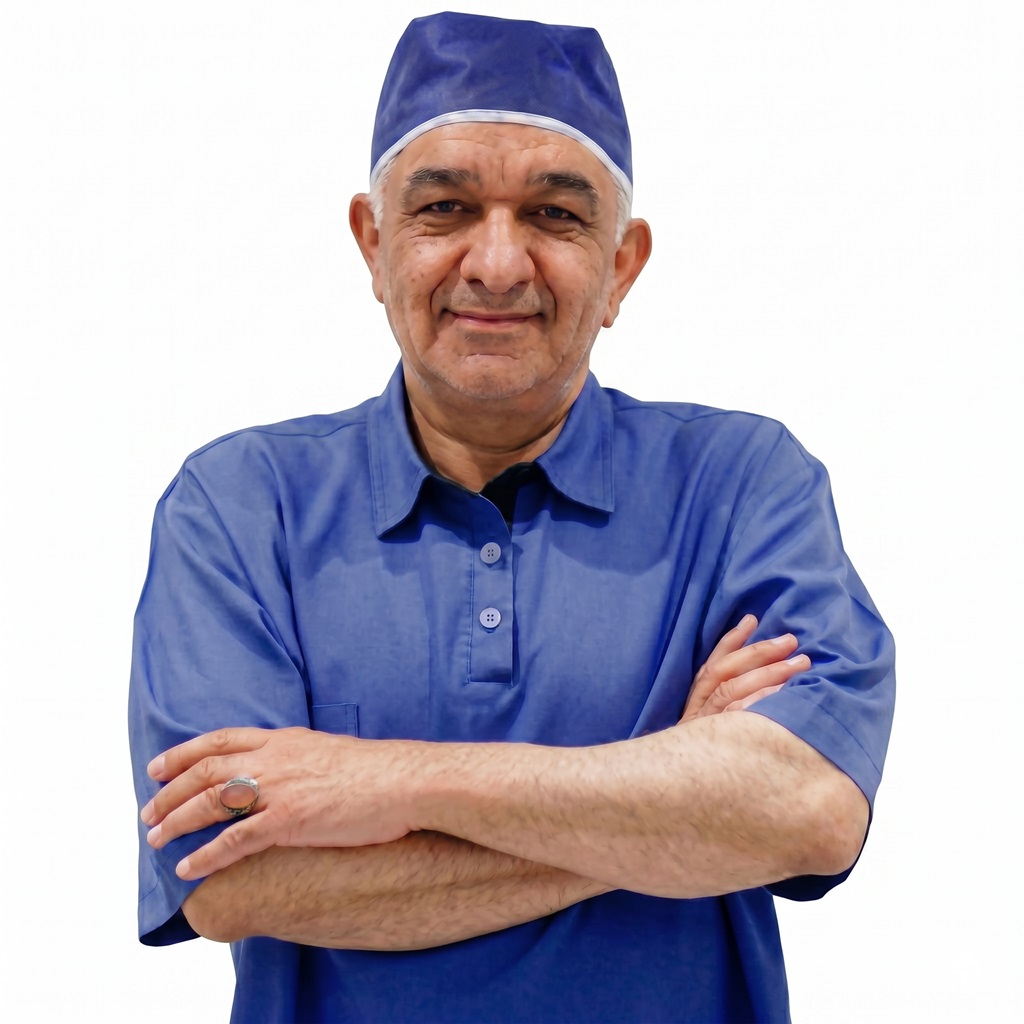 Cornea Specialist
Prof. Mahmoud Jabarvand
Cornea & Refractive Surgeon
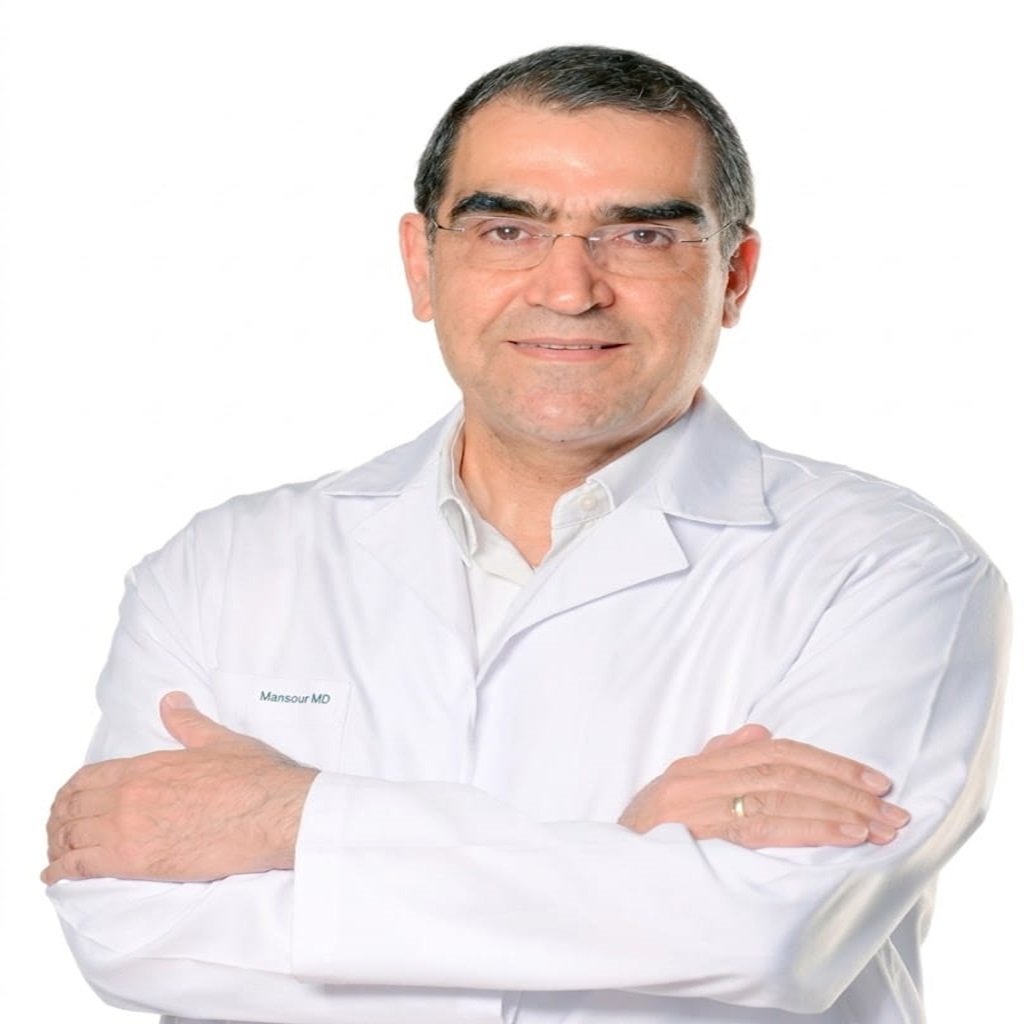 Cornea & Refractive Specialist
Dr. Seyed Hassan Hashemi
Cornea & Refractive Surgeon
Specialized Eye Hospitals
Corneal transplant procedures are performed at leading ophthalmology centers in Iran, including:
- Farabi Eye Hospital
- Noor Eye Hospital
- Aftab Eye Hospital
- Novin Didegan Eye Center
These specialized eye hospitals are equipped with advanced diagnostic systems, modern operating rooms, and the latest microsurgical technology for corneal transplantation.
International Patient Support
For international patients, CeritaMed coordinates the medical and travel steps around treatment so the focus can remain on surgery and recovery.
- Personalized treatment planning
- Appointment coordination
- Accommodation assistance
- Airport transfers
- Multilingual communication
- Postoperative follow-up
Considering Corneal Transplant Surgery in Iran?
If you have been advised to consider a corneal transplant or would like a specialist review, CeritaMed can help assess your case, explain the appropriate treatment options, and coordinate your care in Iran.
Contact our team for specialist evaluation, cost details, and treatment planning.
Procedure Overview
Anesthesia:Local anesthesia
Procedure Duration: 45 to 90 minutes
Stay Duration in Iran: Usually 7–10 days
Transplant Options: PKP, DALK, DMEK & DSEK

Frequently Asked Questions About Corneal Transplant Surgery in Iran
Is corneal transplant surgery painful?
The procedure is performed under anesthesia, so significant pain during surgery is not expected. Mild discomfort, irritation, or light sensitivity may occur during the early recovery period.
How long does recovery take?
Recovery varies depending on the transplant technique. Partial-thickness procedures generally recover faster, while complete visual stabilization after PKP may take several months.
Can a corneal transplant fail?
Although uncommon, graft rejection or graft failure can occur. Regular follow-up visits and proper use of prescribed medications significantly reduce these risks.
What are the signs of corneal graft rejection?
Warning signs can include increasing eye redness, pain, sensitivity to light, or a sudden decrease in vision. These symptoms require prompt ophthalmic evaluation
Will my vision improve immediately after surgery?
Usually not. Vision improves gradually as the transplanted cornea heals. The speed of improvement depends on the type of transplant and the condition of the eye.
How long should international patients stay in Iran?
Most international patients plan to stay about 7–10 days for preoperative evaluation, surgery, and initial follow-up. The exact stay depends on the procedure and the surgeon's assessment.