

Glaucoma Treatment in Iran
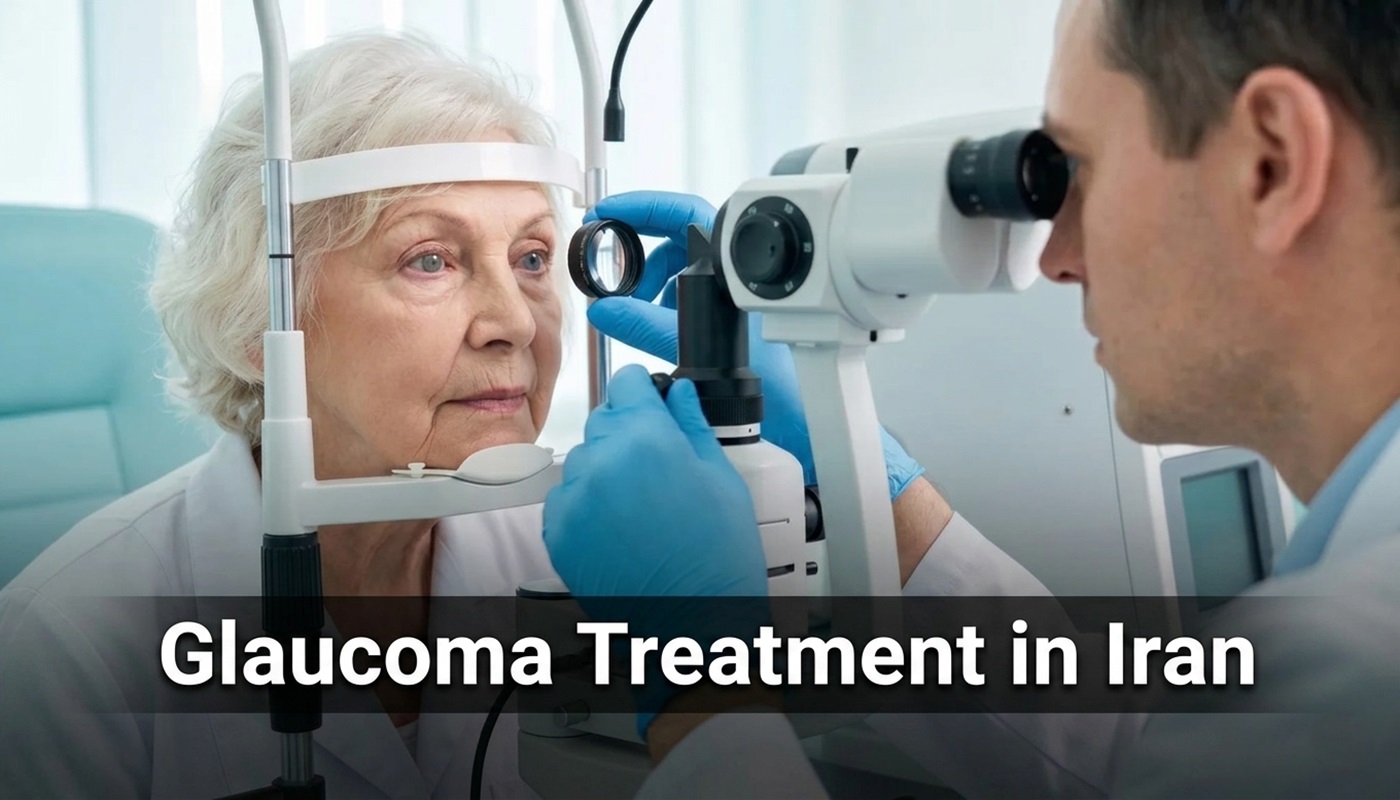
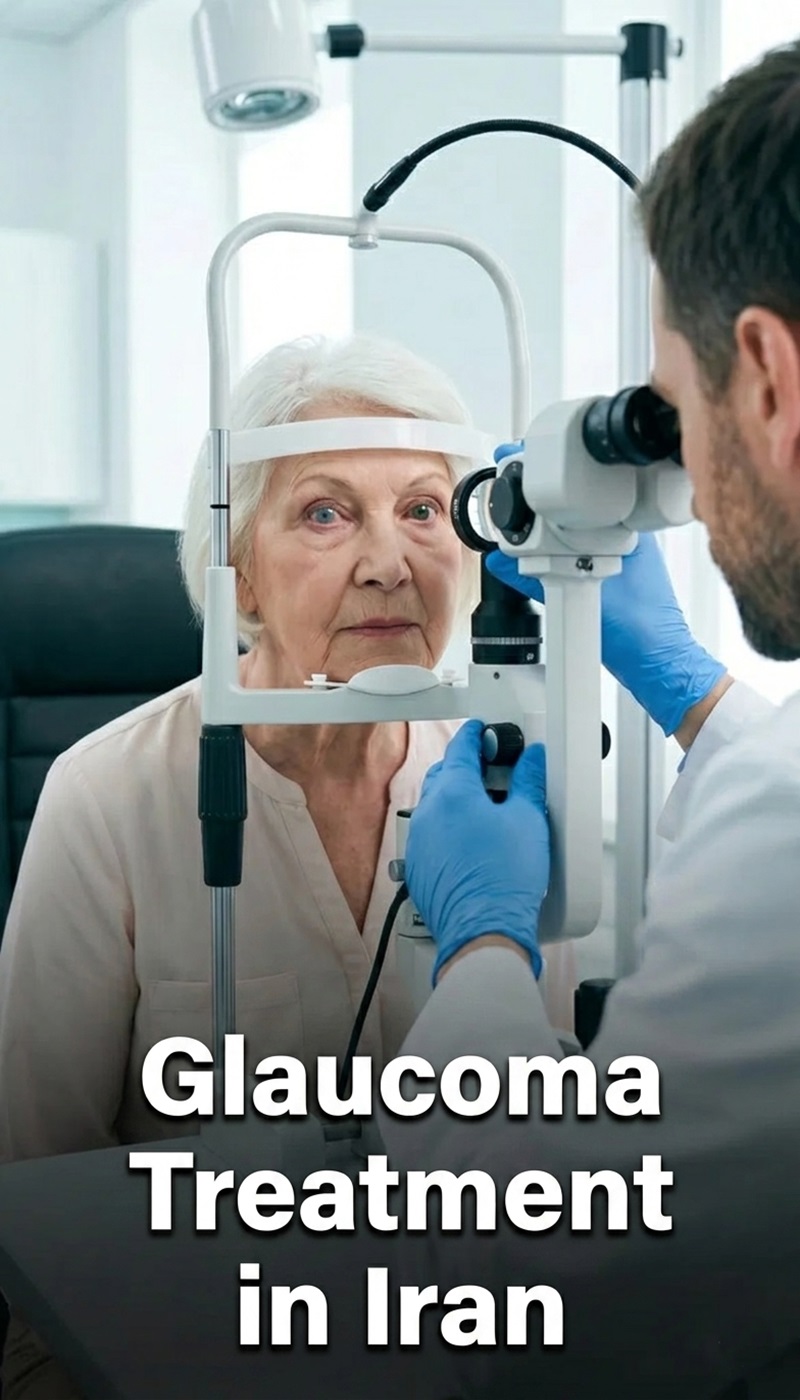
Protect your vision with glaucoma treatment in Iran at CeritaMed. International patients can access experienced glaucoma specialists and personalized treatment plans designed to lower intraocular pressure (IOP) and protect remaining vision.
Treatment may include eye drops, SLT laser therapy, MIGS, trabeculectomy, or glaucoma drainage implants, with care coordinated from evaluation through follow-up.
- SLT, MIGS, Trabeculectomy & Ahmed Valve Options
- Experienced Glaucoma Specialists
- Personalized IOP Control & Long-Term Follow-Up
What Is Glaucoma?
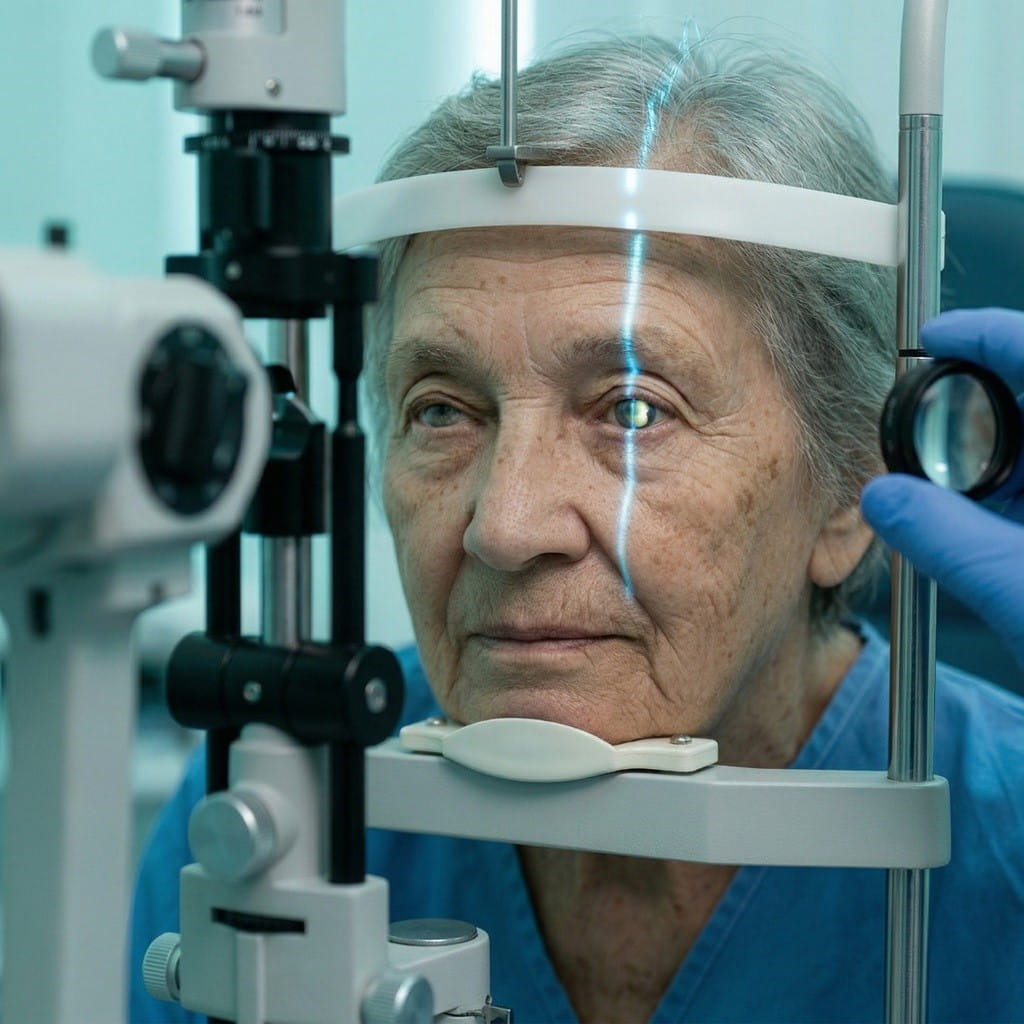
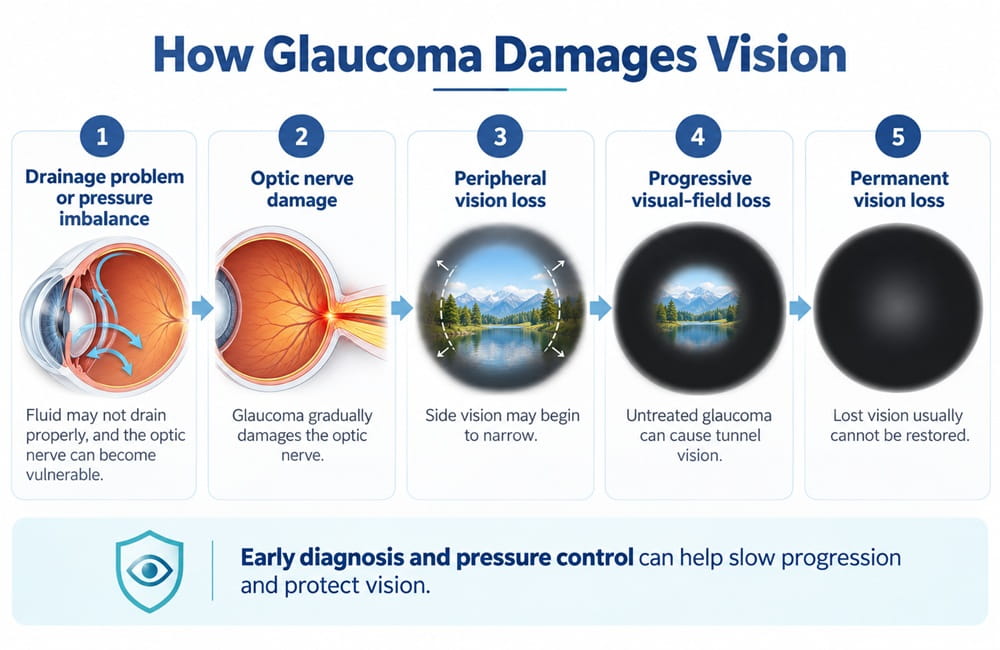
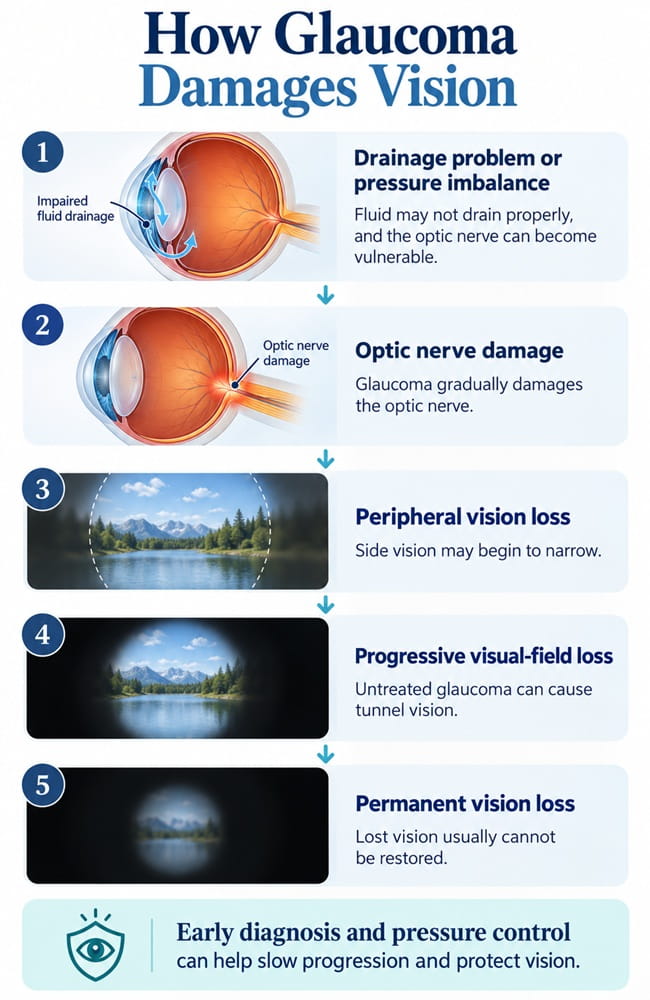
Glaucoma is a group of eye diseases that damage the optic nerve, often in association with elevated intraocular pressure. It can progress quietly, with no noticeable symptoms until peripheral vision has already been affected.
Vision already lost from glaucoma cannot be restored, but early diagnosis and treatment can help slow further damage.
Open-Angle Glaucoma
The most common form. It usually develops slowly and often causes no noticeable symptoms in the early stages.
Angle-Closure Glaucoma
This form occurs when the eye’s drainage angle becomes blocked. A sudden attack can cause severe eye pain, redness, nausea, and blurred vision and requires urgent treatment.
Early Symptoms and Risk Factors
Early glaucoma often causes no symptoms. As damage progresses, changes in peripheral vision may become noticeable.
Possible symptoms:
- Gradual loss of peripheral vision
- Blurred or patchy vision in more advanced disease
- Severe eye pain, redness, nausea, or sudden blurred vision in acute angle closure
Common risk factors:
- Elevated intraocular pressure
- Family history of glaucoma
- Older age
- Previous eye injury or surgery
- Long-term corticosteroid use
- Certain medical conditions, including diabetes
Glaucoma vs. Cataracts
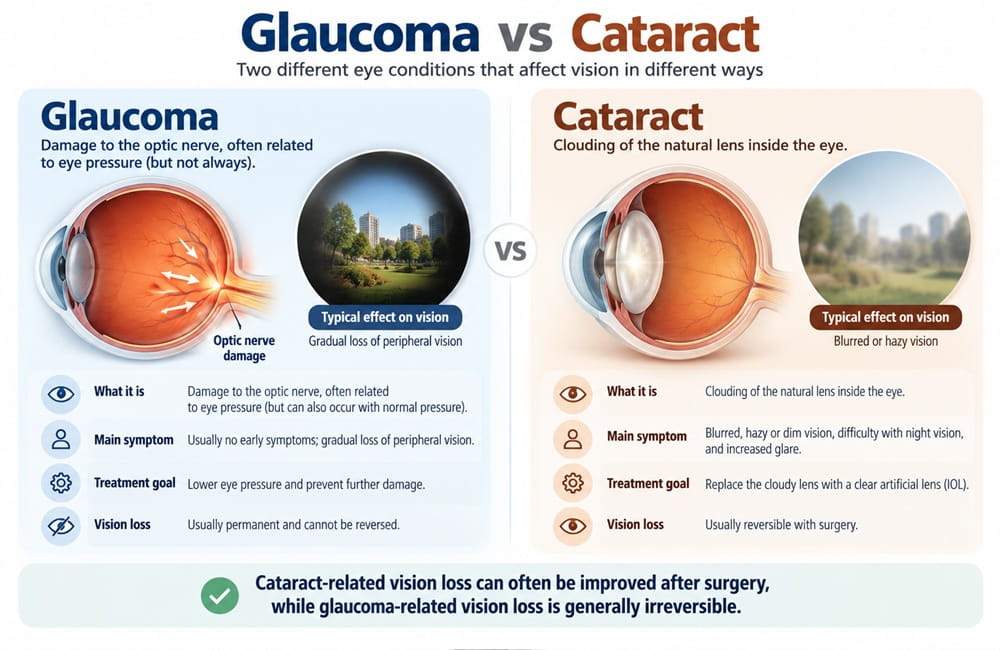
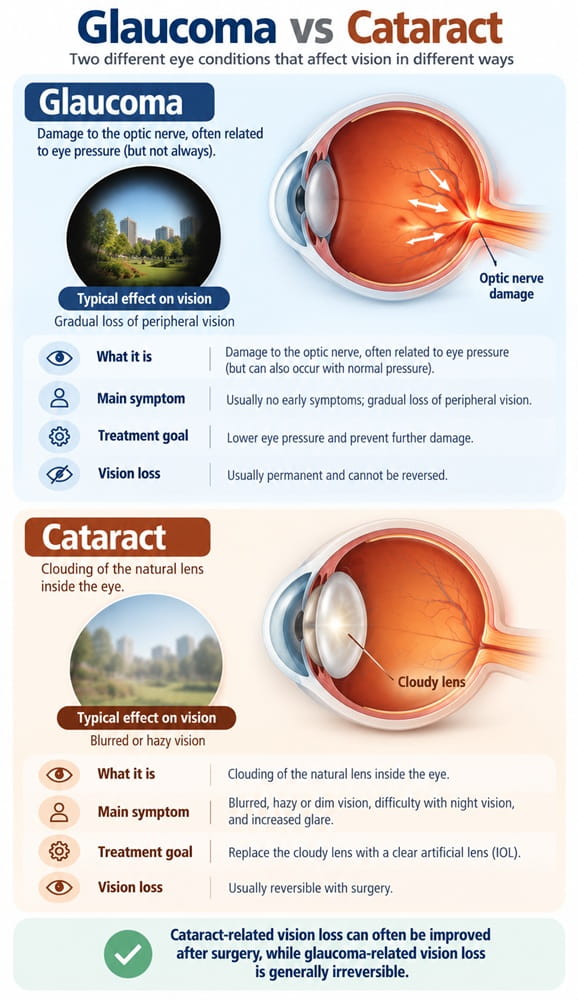
Although both conditions can affect vision, cataracts affect the eye’s natural lens, while glaucoma damages the optic nerve. Vision lost from glaucoma cannot be restored, making early diagnosis and long-term monitoring especially important.
Can Glaucoma Be Treated Without Surgery?
Often, yes. Many patients can manage glaucoma with prescription eye drops, laser treatment, or both.
Depending on the type and stage of glaucoma, treatment may begin with eye drops or Selective Laser Trabeculoplasty (SLT). Surgery is considered when pressure remains above the target level, disease continues to progress, or stronger pressure control is needed.
When Is Glaucoma Treatment Recommended?
Treatment is recommended when the optic nerve is at risk of further damage or when existing treatment is no longer controlling the disease adequately.
Treatment May Be Started or Adjusted When:
- Glaucoma is confirmed through optic nerve, imaging, or visual field findings
- Eye pressure remains above the target level
- Optic nerve damage or visual field loss is progressing
- Eye drops or laser treatment are not providing enough control
- Angle closure requires more urgent treatment
- Secondary or pediatric glaucoma requires specialist management
The treatment plan depends on the type and stage of glaucoma, target eye pressure, optic nerve condition, and previous treatment.
Glaucoma Treatment Options
Glaucoma can be managed with medication, laser treatment, or surgery. The right option depends on the type and stage of disease and how much pressure reduction is required.
Glaucoma Eye Drops
Prescription eye drops lower intraocular pressure by reducing fluid production or improving drainage. They may be used alone or together with laser treatment.
Selective Laser Trabeculoplasty (SLT)
SLT is an office-based laser treatment that improves drainage and lowers eye pressure in selected patients with open-angle glaucoma or ocular hypertension.
It may be used as an initial treatment or as an alternative or addition to glaucoma eye drops.
For angle-closure glaucoma, other laser procedures such as laser peripheral iridotomy may be recommended.
Minimally Invasive Glaucoma Surgery (MIGS)
MIGS procedures use smaller incisions and are generally considered for mild to moderate glaucoma. They can lower eye pressure, may reduce dependence on medication, and some can be combined with cataract surgery.
For advanced glaucoma requiring very low target pressure, trabeculectomy or a drainage implant may be more appropriate.
Trabeculectomy Surgery in Iran
Trabeculectomy creates a new drainage pathway to help fluid leave the eye and lower intraocular pressure. It is commonly considered when glaucoma is advanced or medication and laser treatment do not provide sufficient pressure control.
Ahmed Glaucoma Valve Surgery in Iran
The Ahmed Glaucoma Valve creates an alternative drainage pathway to reduce intraocular pressure. It may be recommended in selected complex or poorly controlled glaucoma cases.
Pediatric Glaucoma Treatment
Children with glaucoma require specialist evaluation and early treatment. Management depends on the cause and severity of the disease and often involves surgery to protect visual development.
How Is Glaucoma Treatment Selected?
Glaucoma treatment is not one-size-fits-all. The ophthalmologist determines a target eye pressure and selects treatment according to the stage of disease and the pressure reduction required.
The treatment plan depends on:
- Type and stage of glaucoma
- Current eye pressure and target IOP
- Optic nerve and visual field changes
- Response to previous treatment
- Eye anatomy and previous surgery
- Other eye conditions, including cataracts
This is why one patient may need eye drops or SLT while another requires MIGS, trabeculectomy, or a drainage implant.
Glaucoma Treatment Recovery
Recovery depends on the procedure. SLT usually involves minimal downtime, while surgical treatments require closer follow-up and a longer healing period.
| Treatment | Typical Recovery |
|---|---|
| SLT | Most patients return to normal daily activities the next day; temporary irritation or blurred vision may occur. |
| MIGS | Recovery is generally faster than traditional incisional glaucoma surgery and varies by procedure. |
| Trabeculectomy / Drainage Implant | Healing requires closer monitoring, and activity restrictions may continue for several weeks. |
Eye drops and follow-up examinations are used to monitor eye pressure and healing.
International patients generally plan a 7–10 day stay in Iran for treatment and initial follow-up.
Glaucoma Treatment Success Rate
There is no single success rate that applies to all glaucoma treatments. Outcomes depend on the type and stage of glaucoma, target eye pressure, selected treatment, previous eye surgery, and long-term follow-up.
The main goal of treatment is to lower intraocular pressure and slow further optic nerve damage, rather than restore vision that has already been lost.
Risks and Possible Complications
Each glaucoma treatment has a different risk profile. SLT and many minimally invasive procedures generally involve a lighter recovery, while trabeculectomy and drainage implants require closer postoperative monitoring.
| Treatment | Possible Post-Treatment Issues |
|---|---|
| SLT | Temporary irritation, blurred vision, or short-term changes in eye pressure |
| MIGS | Temporary inflammation, pressure fluctuations, or minor bleeding; additional medication may still be needed |
| Trabeculectomy / Drainage Implant | Low or uncontrolled pressure, infection, scarring, corneal changes, or implant-related problems |
Regular follow-up helps detect and manage problems early.
Glaucoma Treatment Cost in Iran
The cost of glaucoma treatment in Iran depends mainly on the treatment required. SLT, MIGS, trabeculectomy, and drainage implant surgery have different costs.
The final glaucoma surgery cost in Iran also depends on the complexity of the case, hospital, diagnostic testing, and selected surgical technique.
What Affects the Cost?
- Selected treatment
- Diagnostic tests and disease complexity
- Hospital and surgical fees
- Implant or device requirements
- Post-treatment follow-up
Lower treatment costs in Iran largely reflect local medical expenses and currency differences rather than the use of a simpler glaucoma procedure.
Why Choose Iran for Glaucoma Treatment?
Iran offers access to experienced glaucoma specialists, specialized eye hospitals, and medical, laser, and surgical treatment options at comparatively lower treatment costs for international patients.
Why Choose CeritaMed for Glaucoma Treatment in Iran?
CeritaMed coordinates glaucoma care for international patients from specialist evaluation and treatment planning through treatment and follow-up.
Glaucoma Specialists in Iran
 Glaucoma Specialist
Dr. Ali Izadi
Ophthalmologist, Glaucoma & Anterior Segment Surgeon
 Cornea Specialist
Dr. Farshid Porkar
Cornea & Refractive Surgeon
 Cornea Specialist
Prof. Mahmoud Jabarvand
Cornea & Refractive Surgeon
 Cornea & Refractive Specialist
Dr. Mohammad Reza Saeidi Far
Cornea & Refractive Surgeon
 Cornea & Refractive Specialist
Dr. Seyed Hassan Hashemi
Cornea & Refractive Surgeon
 Glaucoma Specialist
Dr. Yadollah Eslami
Glaucoma Specialist & Ophthalmologist
Specialized Eye Hospitals in Tehran
Glaucoma diagnosis and treatment are performed at leading ophthalmology centers equipped with advanced diagnostic imaging, modern laser systems, and microsurgical technology, including:
- Farabi Eye Hospital
- Noor Eye Hospital
- Aftab Eye Hospital
- Novin Didegan Eye Center
International Patient Support
Our international patient team assists you throughout your medical journey with:
- Personalized treatment planning
- Appointment coordination
- Accommodation assistance
- Airport transfers
- Multilingual communication
- Post-treatment follow-up
From your first consultation to your return home, we coordinate every step of your treatment experience.
Considering Glaucoma Treatment in Iran?
If you have been diagnosed with glaucoma or need a specialist review of your current treatment, CeritaMed can arrange an evaluation and help determine the appropriate medical, laser, or surgical options.
Frequently Asked Questions About Glaucoma treatment in Iran
Can glaucoma cause blindness?
Yes. If left untreated, glaucoma can lead to permanent vision loss and blindness. Early diagnosis and appropriate treatment are essential to preserve vision.
Can glaucoma be cured?
Glaucoma cannot be cured, and vision already lost cannot be restored. However, modern treatments can effectively control intraocular pressure and significantly slow or prevent further optic nerve damage.
How is glaucoma diagnosed?
A comprehensive glaucoma examination may include intraocular pressure measurement (tonometry), optic nerve evaluation, visual field testing, corneal thickness measurement, and advanced retinal imaging.
Is glaucoma surgery painful?
Most glaucoma procedures are performed under local anesthesia with minimal discomfort. Mild irritation during the first few days of recovery is common and usually improves with prescribed medications.
How long should international patients stay in Iran?
Most international patients stay approximately 5–7 days for evaluation, treatment, and the first postoperative follow-up before traveling home.
Procedure Overview
Anesthesia: Local (Numbing Drops)
Procedure Duration: 30–60 Minutes per eye
Hospital Stay: Usually outpatient.
Stay Duration in Iran: 7–10 Days