What Is a Cataract?
A cataract is a clouding of the eye’s natural lens that can make vision blurred, dim, or hazy. Most cataracts develop gradually with age, although diabetes, previous eye injury or surgery, long-term corticosteroid use, and some inherited conditions can increase the risk.
Common Symptoms of Cataracts:
- Blurred or cloudy vision
- Increased glare or light sensitivity
- Difficulty seeing or driving at night
- Faded or yellowed colors
- Frequent prescription changes
- Double vision in one eye
Symptoms often develop gradually, and an eye examination can confirm whether a cataract is causing the change in vision.
Can Cataracts Be Treated Without Surgery?
Early cataracts may sometimes be managed temporarily with updated glasses, brighter lighting, or anti-glare measures, but eye drops, medications, vitamins, and supplements cannot reverse an existing cataract.
When vision can no longer be adequately improved and daily activities are affected, surgery is the only treatment that removes the cloudy lens, according to the American Academy of Ophthalmology (AAO).
The timing of surgery should be based on your symptoms, eye health, and an ophthalmologist’s evaluation.
When Is Cataract Surgery Recommended?
Cataract surgery is usually recommended when vision loss begins to interfere with everyday life and can no longer be adequately corrected with glasses or contact lenses.
The decision depends on how much the cataract affects daily life, not simply how long it has been present.
You May Be Ready for Cataract Surgery If:
- Reading, driving, or working has become difficult
- Glare or poor night vision limits daily activities
- Prescription changes no longer provide adequate vision
- Poor vision is affecting independence or quality of life
- The cataract prevents proper examination or treatment of other eye conditions
Types of Cataract Surgery in Iran
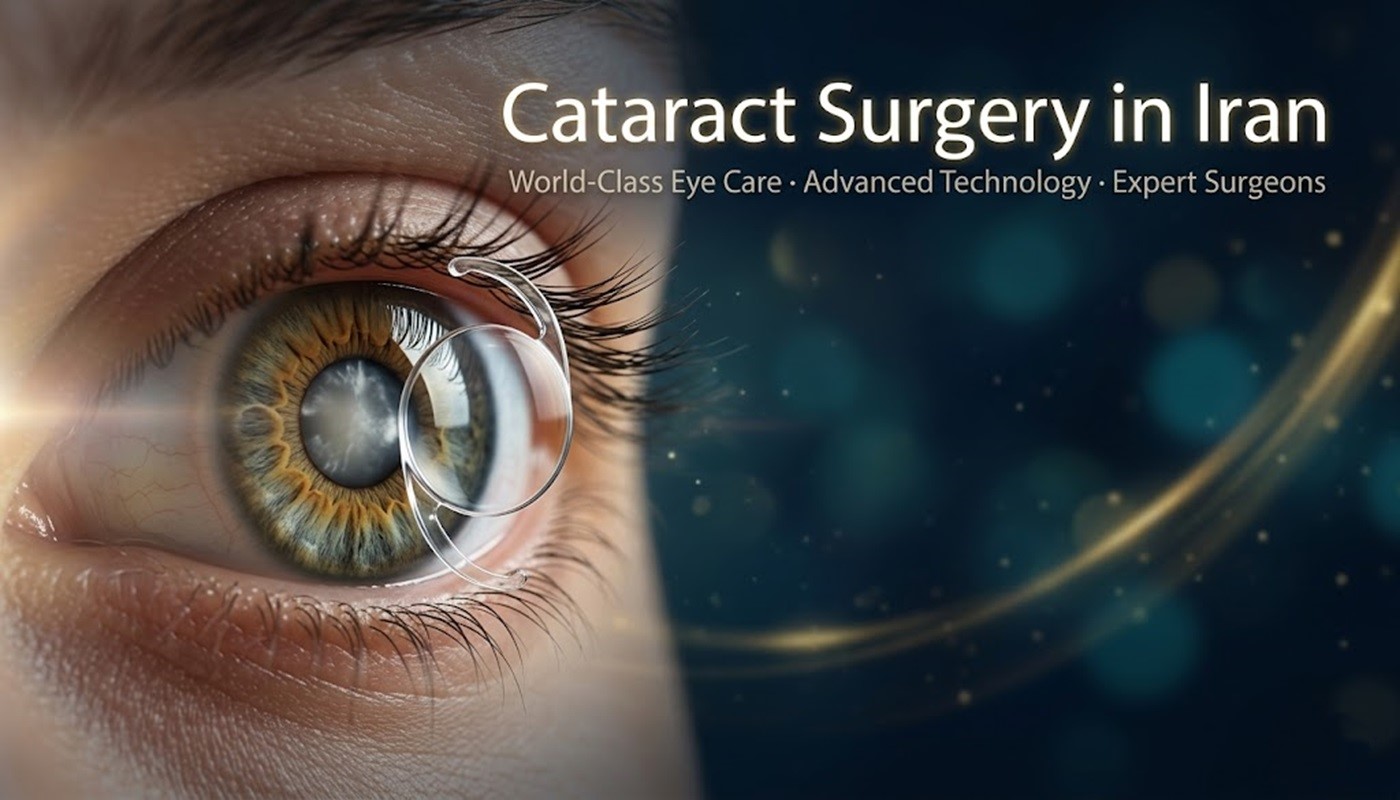
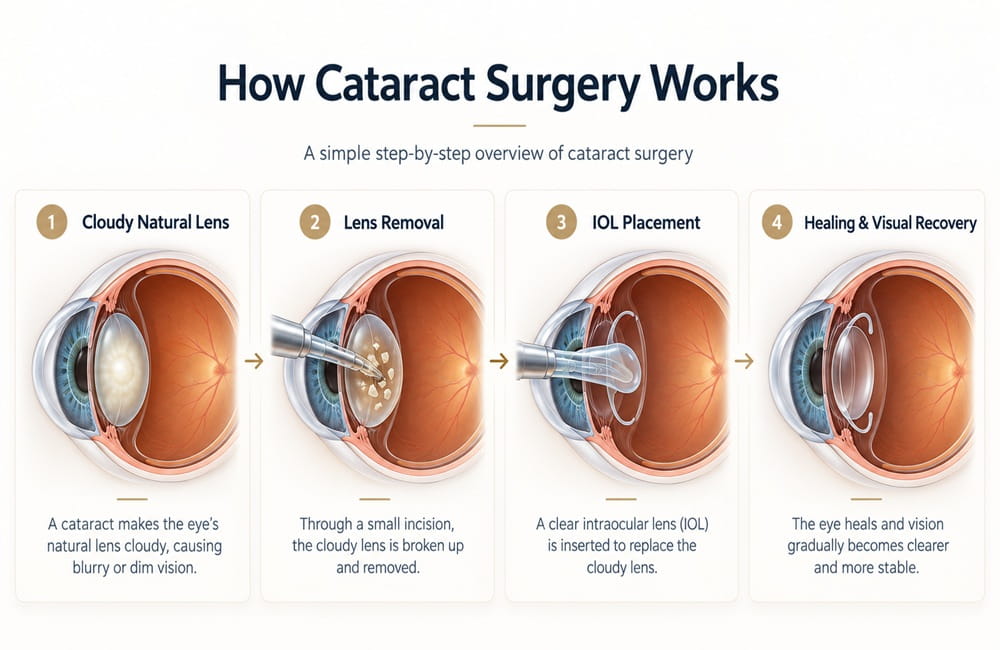
Modern cataract surgery removes the cloudy natural lens and replaces it with a clear intraocular lens (IOL). The technique depends on the cataract, eye health, and surgical plan.
Phacoemulsification (Phaco) Cataract Surgery in Iran
Phacoemulsification is the most common technique. Through a small incision, ultrasound energy breaks the cloudy lens into fragments, which are removed before a foldable IOL is implanted. The incision is usually self-sealing.
Femtosecond Laser Cataract Surgery in Iran
Femtosecond laser-assisted surgery uses a laser for selected steps such as corneal incisions, capsulotomy, and initial lens fragmentation.
It can improve the precision of certain surgical steps and reduce ultrasound energy in selected cases, but does not automatically provide better visual outcomes than well-performed conventional phacoemulsification.
Complex Cataract Surgery
Additional planning or techniques may be required for very dense cataracts, previous eye surgery, trauma, pseudoexfoliation, or other conditions that make standard surgery more challenging.
Cataract Surgery With Other Eye Procedures
In selected patients, cataract surgery may be coordinated with retinal, corneal, or ocular surface procedures. The ophthalmologist determines whether treatments should be combined or performed separately based on the eye condition and surgical plan.
How Is Cataract Surgery Performed?
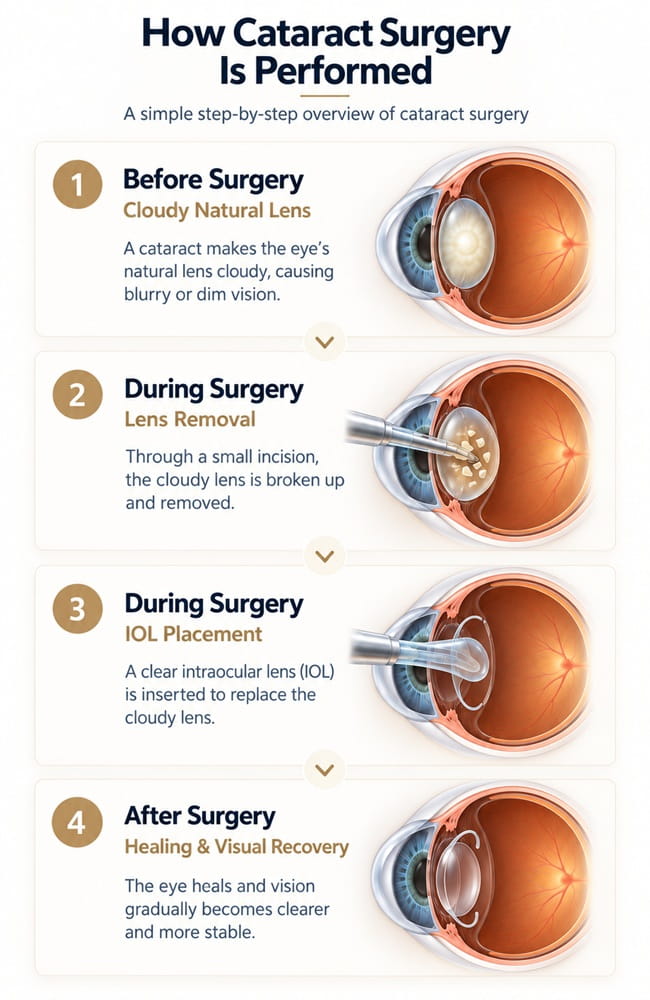
Cataract surgery is usually an outpatient procedure in which the cloudy natural lens is removed and replaced with an IOL.
1. Eye Measurements & IOL Planning
The eye is measured to calculate the appropriate IOL power and select the lens type.
2. Anesthesia
Numbing eye drops or local anesthesia are used, with sedation when appropriate.
3. Small Corneal Incision
A small incision is created to access the cloudy lens; selected steps may also be performed with a femtosecond laser.
4. Cataract Removal
The cloudy lens is fragmented and removed, most commonly using phacoemulsification.
5. IOL Implantation
A foldable IOL is inserted and positioned inside the eye to replace the natural lens.
Most patients return home the same day and use prescribed eye drops during recovery.
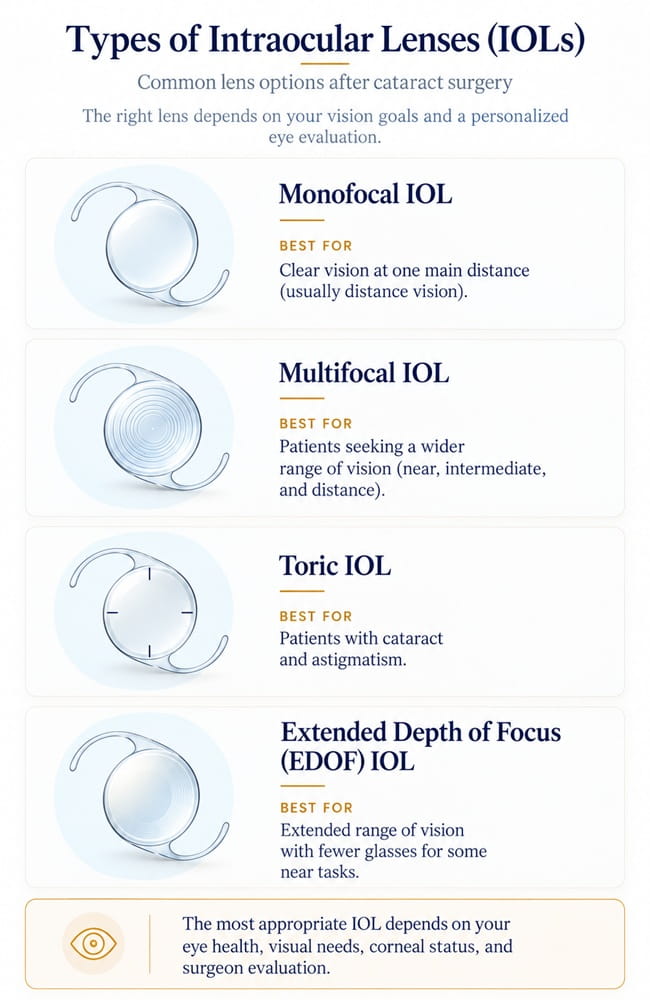
Choosing the Right Intraocular Lens (IOL)
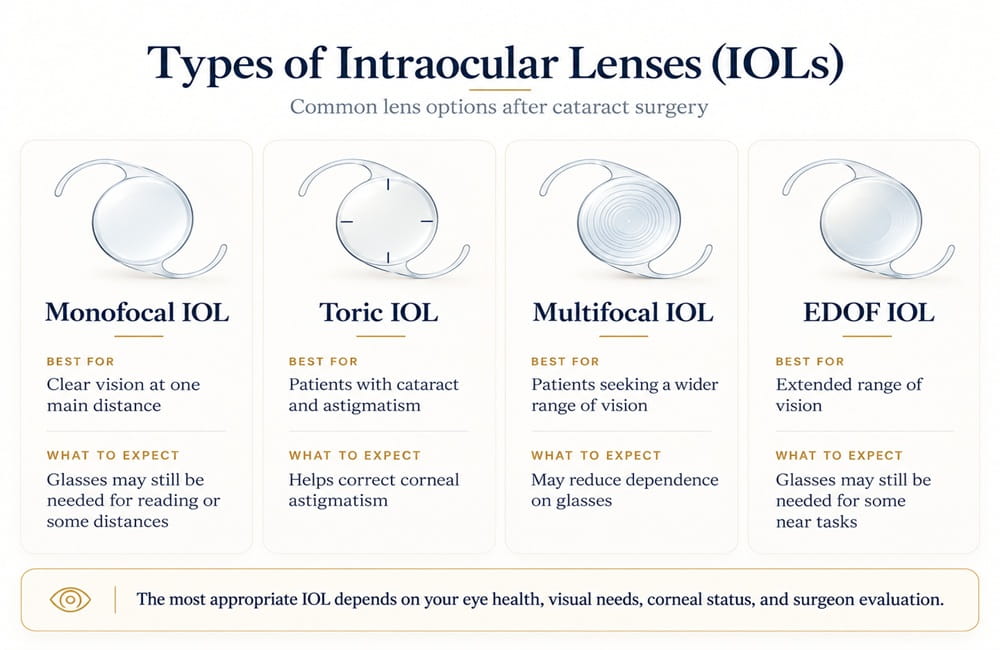
The most suitable IOL depends on eye health, astigmatism, lifestyle, visual goals, and desired dependence on glasses.
Monofocal IOLs
Provide clear vision at one selected focal distance, usually distance vision. Reading glasses are commonly still needed.
Toric IOLs
Designed for patients with corneal astigmatism and may reduce dependence on glasses for the corrected distance.
Multifocal IOLs
Provide vision at more than one distance and may reduce glasses dependence, although some patients experience glare or halos.
EDOF IOLs
Provide an extended range of distance and intermediate vision; reading glasses may still be needed for fine near tasks.
At Ceritamed, patients have access to internationally recognized premium IOL brands, including Alcon and ZEISS.
Cataract Surgery Recovery
Vision often begins to improve within the first few days after cataract surgery, while full healing and visual stabilization may take several weeks.
Patients are usually advised to use prescribed eye drops, avoid rubbing the eye, and temporarily avoid swimming, strenuous exercise, and heavy lifting.
Follow-up examinations are important for monitoring healing, eye pressure, IOL position, and visual recovery.
International patients generally plan a 5–7 day stay in Iran for evaluation, surgery, and initial follow-up.
Risks and Possible Complications
Cataract surgery is widely performed and most patients recover without serious problems. As with any surgery, complications can occur.
Possible complications include temporary inflammation or increased eye pressure, infection, corneal or retinal swelling, IOL position problems, retinal detachment, which is uncommon, and posterior capsule opacification (PCO). Regular follow-up and using prescribed eye drops as directed are important parts of recovery.
Many postoperative problems can be managed effectively when detected early. PCO, which can cause cloudy vision later, can usually be treated with a short YAG laser procedure.
When Should You Contact Your Surgeon?
Seek prompt ophthalmic evaluation for increasing pain or redness, sudden vision loss, new flashes or floaters, or a dark shadow in your field of vision.
Cataract Surgery Cost in Iran
Cataract surgery in Iran at CeritaMed currently starts from approximately $1,200 per eye.
The final cost depends mainly on the surgical technique, selected IOL, hospital, and complexity of the case.
The lower cost in Iran mainly reflects lower local medical and operating expenses and currency differences—not a simpler surgical technique or lower standard of care.
What Affects the Cost?
- Phacoemulsification or femtosecond-assisted surgery
- Monofocal, toric, multifocal, or EDOF IOL
- Hospital and surgical fees
- Preoperative examinations
- Complexity of the case
- Postoperative follow-up
Premium IOLs and femtosecond-assisted surgery may increase the final treatment cost.
International patient and travel services can be coordinated separately according to the treatment plan.
Why Choose Iran for Cataract Surgery?
CeritaMed coordinates cataract treatment for international patients from specialist evaluation and IOL planning through surgery and postoperative follow-up.
Cataract Surgery Specialists in Iran
CeritaMed works with ophthalmologists experienced in cataract surgery, IOL implantation, and complex lens procedures.
Specialized Eye Hospitals in Tehran
Our partner hospitals include:
- Farabi Eye Hospital
- Noor Eye Hospital
- Aftab Eye Hospital
- Novin Didegan Eye Center
These accredited centers are equipped with advanced diagnostic systems, modern operating rooms, and the latest cataract surgery technologies.
International Patient Support
Our international patient team assists with:
- Personalized treatment planning
- Appointment scheduling
- Accommodation assistance
- Airport transfers
- Multilingual communication
- Postoperative follow-up
Considering Cataract Surgery in Iran?
If cataracts are affecting your vision or you have been advised to consider surgery, CeritaMed can arrange a specialist evaluation, review your IOL options, and coordinate treatment in Iran.
Request a Cataract Evaluation




 Cornea & Refractive Specialist
 Cornea Specialist
 Cornea Specialist
 Retina Specialist
 Cornea & Refractive Specialist
 Neuro-Ophthalmology Specialist