

Rhinoplasty in Iran
Rhinoplasty in Iran combines experienced surgeons, advanced techniques, and competitive costs for international patients. At Ceritamed, every procedure is tailored to the patient’s facial features and goals to achieve balanced, natural-looking results with improved nasal function.
- Advanced Preservation & Piezo rhinoplasty techniques.
- Experienced surgeons for natural, balanced results.
- Personalized treatment plans at Ceritamed.


What Is Rhinoplasty and Who Is It For?
Rhinoplasty is a surgical procedure that reshapes the nose to improve appearance, breathing, or both. Unlike a simple cosmetic change, successful rhinoplasty requires understanding nasal structure, facial balance, and long-term stability.
The goal of modern rhinoplasty is not to create an identical “ideal” nose, but to achieve a nose that fits naturally with the patient’s facial features.
Rhinoplasty, commonly known as a nose job, is a surgical procedure designed to improve the appearance and/or function of the nose.
Cosmetic Rhinoplasty (Nose Job)
Cosmetic rhinoplasty focuses on improving the appearance of the nose. It may address:
- Nasal hump reduction
- Tip refinement
- Nose width adjustment
- Nostril shape correction
- Nasal asymmetry
A natural rhinoplasty approach prioritizes facial harmony rather than exaggerated changes.
Functional Rhinoplasty for Breathing Problems
Some patients seek rhinoplasty not only for appearance but also for breathing improvement.
Functional rhinoplasty can help correct structural issues that affect airflow while maintaining aesthetic balance.
Common concerns include:
Nasal obstruction
Internal structural problems
Difficulty breathing through the nose
Rhinoplasty with Septoplasty
When a deviated septum affects breathing, septoplasty may be combined with rhinoplasty.
This approach allows surgeons to improve both nasal function and external appearance during one procedure.
Who Is a Good Candidate for Rhinoplasty?
A suitable candidate for rhinoplasty in Iran usually has:
- Good overall health
- Completed facial growth
- Realistic expectations
- Cosmetic or functional nasal concerns
A detailed consultation helps determine the appropriate technique based on nasal structure, skin thickness, and desired outcome.
Rhinoplasty Age Limit
The recommended age for rhinoplasty depends on facial development and emotional readiness.
Generally:
- Women: around 16–17+ years
- Men: around 17–18+ years
However, individual evaluation is essential before surgery.
Types of Rhinoplasty in Iran
Every nose has different anatomy, skin thickness, and structural characteristics. Choosing the correct rhinoplasty technique is essential for achieving stable and natural results.
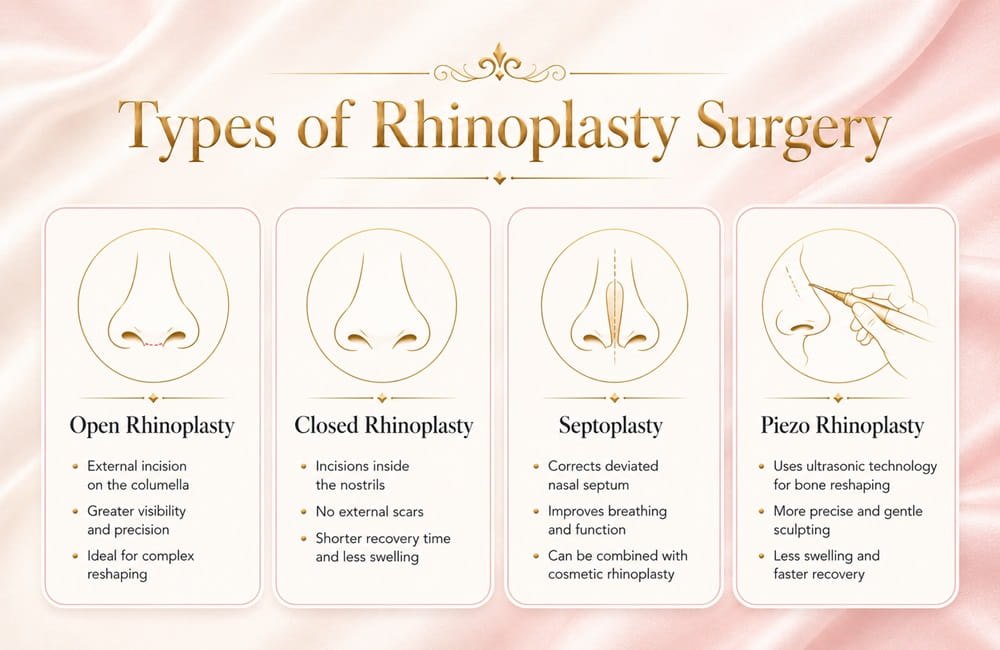
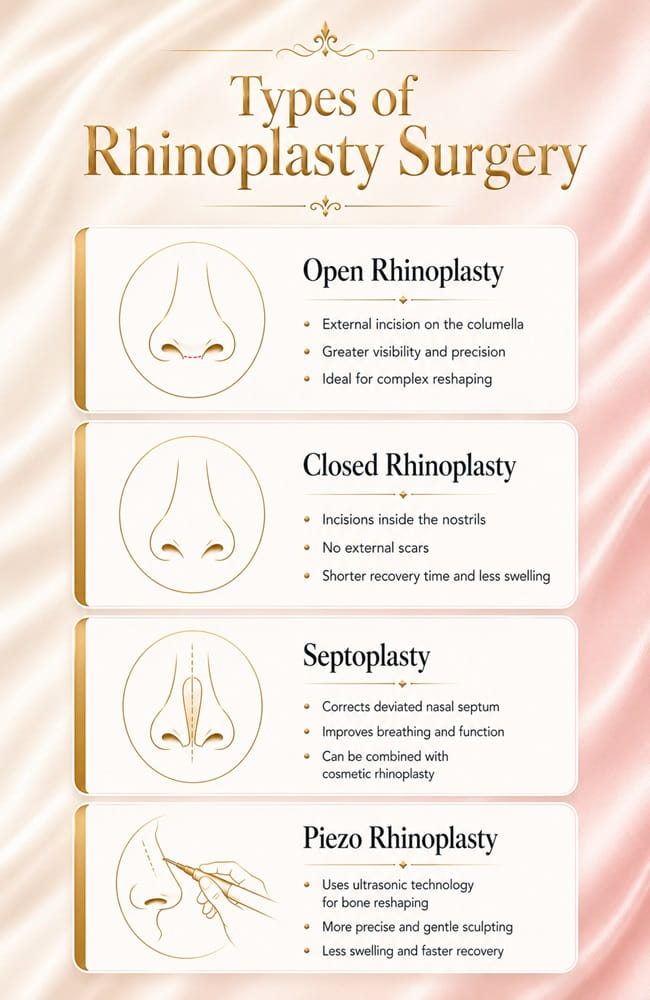
Open Rhinoplasty
Open rhinoplasty uses a small incision between the nostrils, allowing greater visibility of nasal structures.
It is commonly used for:
- Complex reshaping
- Tip reconstruction
- Revision rhinoplasty
Closed Rhinoplasty
Closed rhinoplasty uses internal incisions without an external cut.
It may be suitable for:
- Minor hump reduction
- Subtle refinements
- Selected primary cases
Fleshy Nose Rhinoplasty
Fleshy nose rhinoplasty requires careful structural planning because thick skin can affect tip definition.
Modern approaches focus on:
- Structural cartilage support
- Stronger tip framework
- Long-term stability
Simply removing tissue may lead to weak support and less predictable results. Structural techniques help create a more balanced and durable outcome.
Revision Rhinoplasty
Revision rhinoplasty is performed to correct unsatisfactory results from previous nose surgery.
Because revision cases often involve altered anatomy and reduced cartilage support, they require advanced surgical experience and detailed planning.
Why Choose Rhinoplasty in Iran?
Rhinoplasty in Iran has become a popular choice for international patients due to experienced nasal surgeons, high surgical volume, and access to advanced techniques.
Iranian surgeons perform a wide range of nasal procedures, including primary, ethnic, thick skin, and revision rhinoplasty cases. This experience helps surgeons develop precise techniques for different nasal structures and aesthetic goals.
Experienced Rhinoplasty Surgeons in Iran
Choosing the right surgical team is more important than choosing a destination. Successful rhinoplasty requires:
- Detailed facial analysis
- Strong understanding of nasal anatomy
- Structural support techniques
- Experience with different nose types
At Ceritamed, rhinoplasty is performed by an experienced team of plastic and reconstructive surgeons with expertise in aesthetic and functional nose surgery.
Their approach focuses on natural results, functional improvement, and long-term nasal stability.
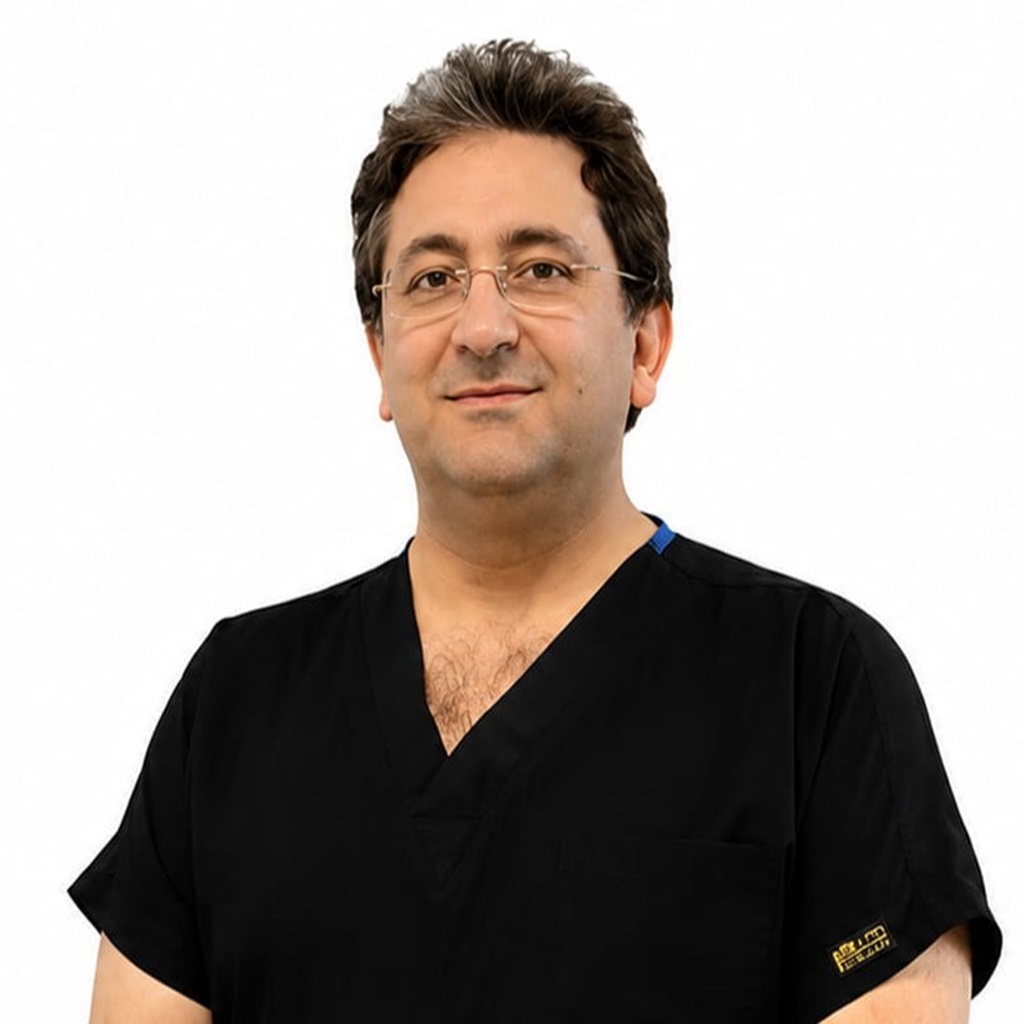 Plastic Surgery Specialist
Dr. Ataollah Heydari
Plastic, Reconstructive & Aesthetic Surgeon
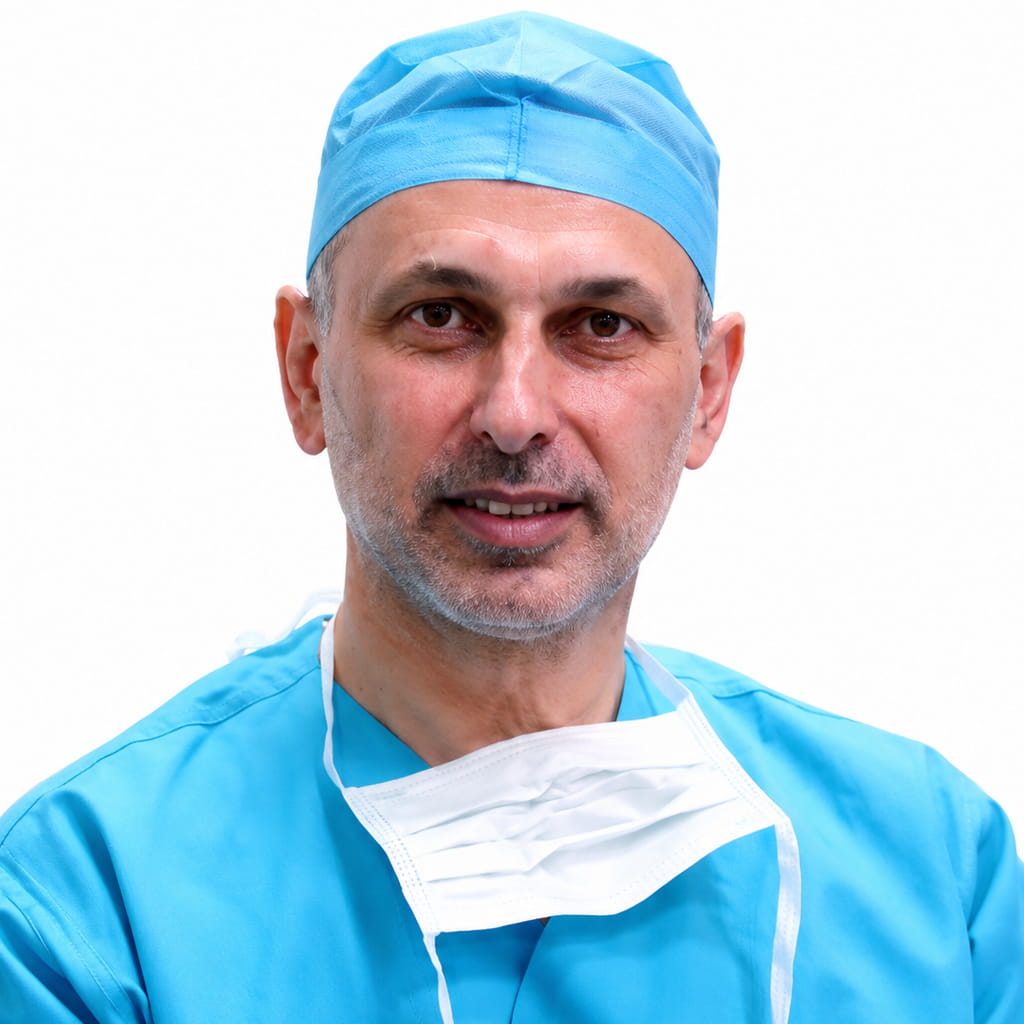 Plastic Surgery Specialist
Dr. Ghasemali Khorasani
Plastic, Reconstructive & Aesthetic Surgeon
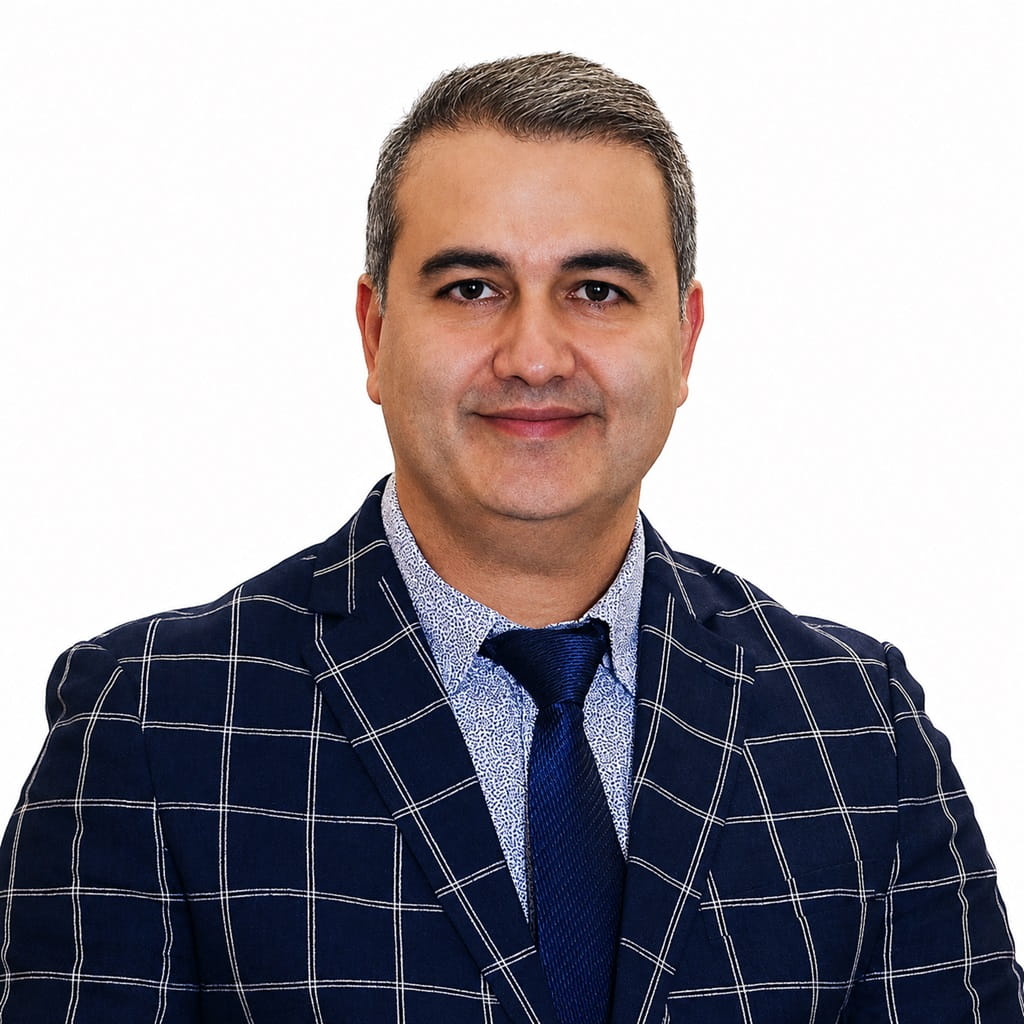 Plastic Surgery Specialist
Dr. Hadi Amali
Plastic, Reconstructive & Aesthetic Surgeon
 Aesthetic Surgery Specialist
Dr. Hamid Asherlou
General & Aesthetic Surgeon
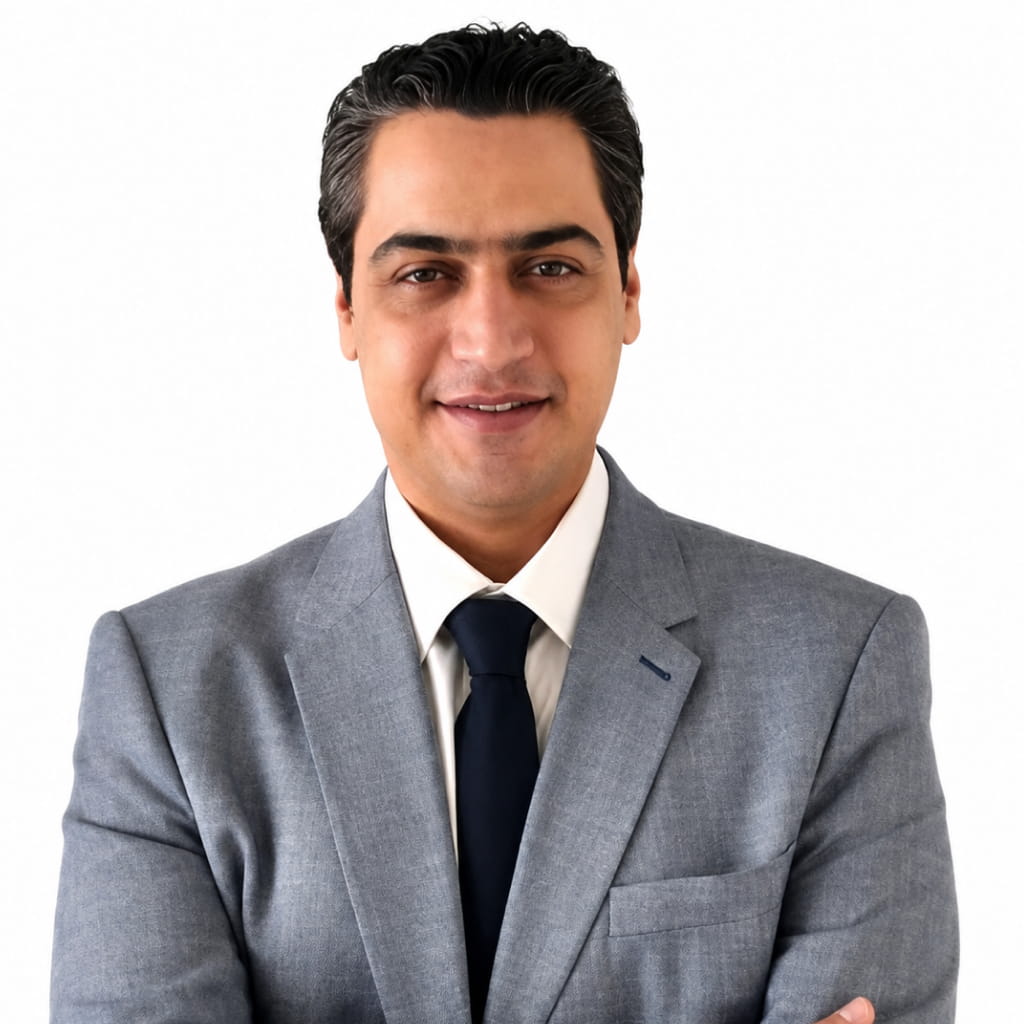 Plastic Surgery Specialist
Dr. Mahmoud Nazemian
Plastic, Reconstructive & Aesthetic Surgeon
 Aesthetic Surgery Specialist
Dr. Mohammad Moradmand
General & Aesthetic Surgeon
Advanced Rhinoplasty Techniques
Modern rhinoplasty techniques focus on preserving nasal structure, improving precision, and creating stable results.
Preservation Rhinoplasty
Preservation rhinoplasty is a modern approach that aims to maintain important nasal structures while reshaping the nose.
Benefits include:
- More natural dorsal lines
- Less unnecessary tissue removal
- Improved structural preservation
- Natural-looking results
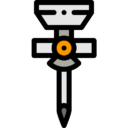
Ultrasonic (Piezo) Rhinoplasty
Ultrasonic rhinoplasty, also known as Piezo rhinoplasty, uses ultrasonic technology to reshape nasal bones with greater precision.
Potential advantages include:
- More controlled bone reshaping
- Reduced soft tissue trauma
- Less bruising in many cases
- Improved surgical accuracy
Structural Rhinoplasty
Structural rhinoplasty focuses on strengthening the nasal framework instead of only reducing tissue.
It is especially important for:
- Fleshy nose rhinoplasty
- Weak nasal tip support
- Revision rhinoplasty cases
Cartilage grafts may be used to improve stability and maintain long-term results.
3D Simulation Before Surgery
Before surgery, facial analysis and 3D simulation can help patients understand possible outcomes and improve communication with the surgeon.
Simulation is a planning tool and does not guarantee an exact final result, as healing varies between individuals.
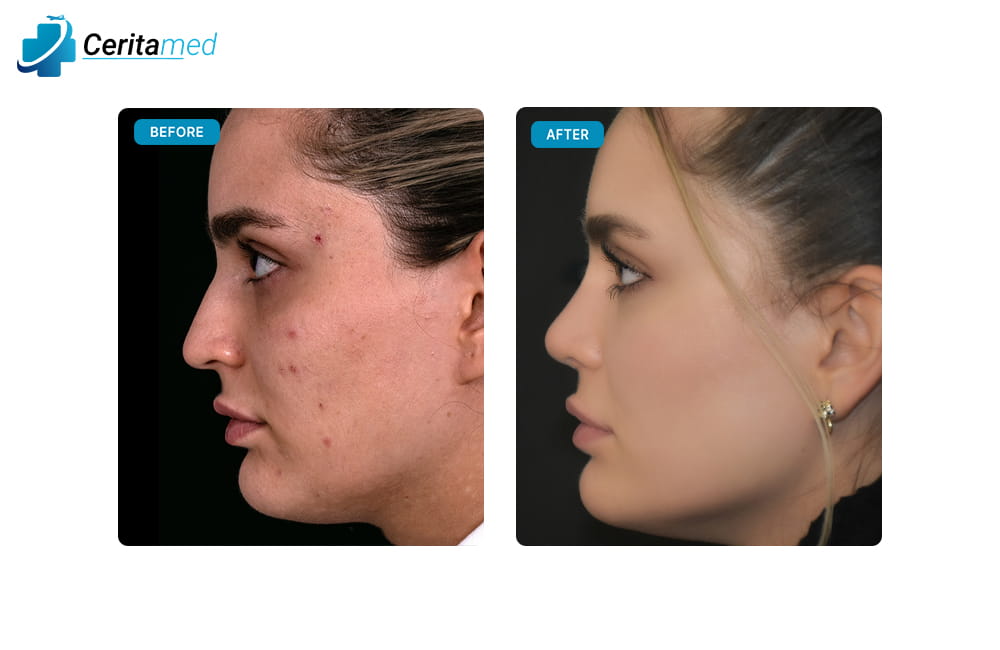
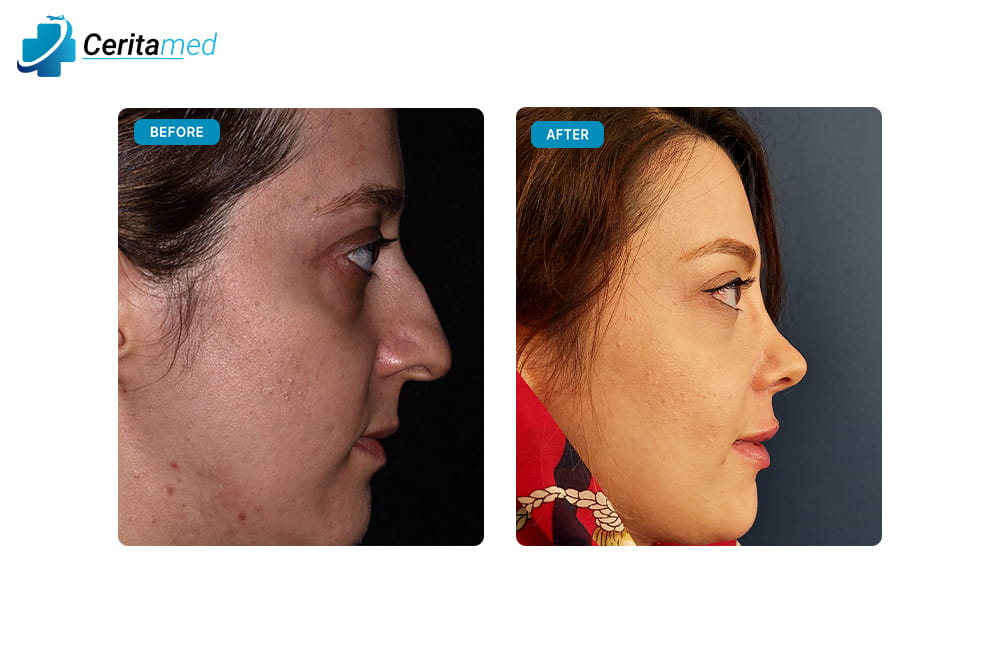
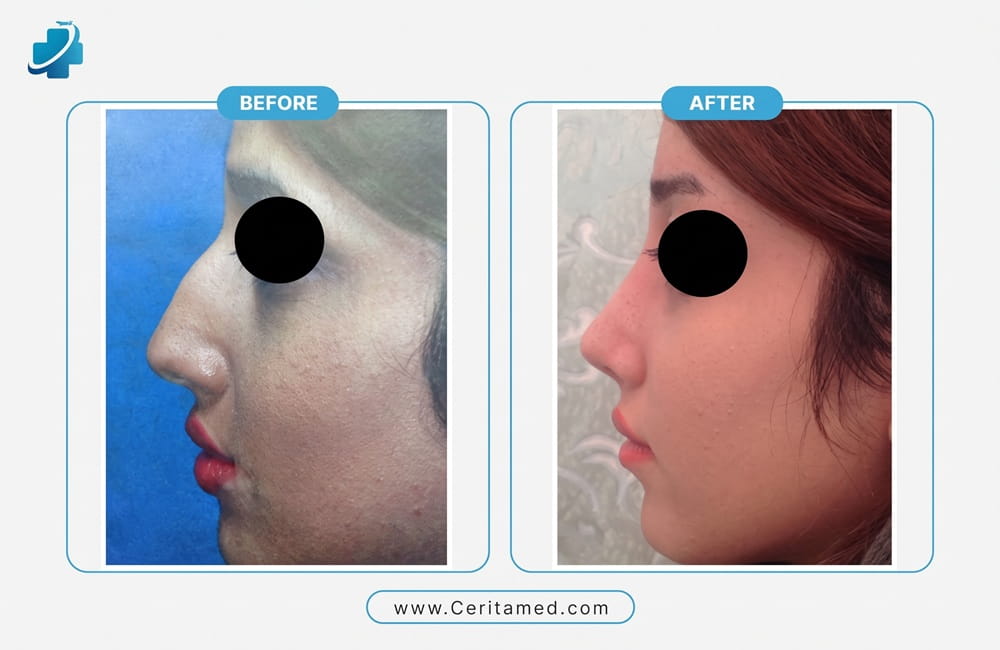
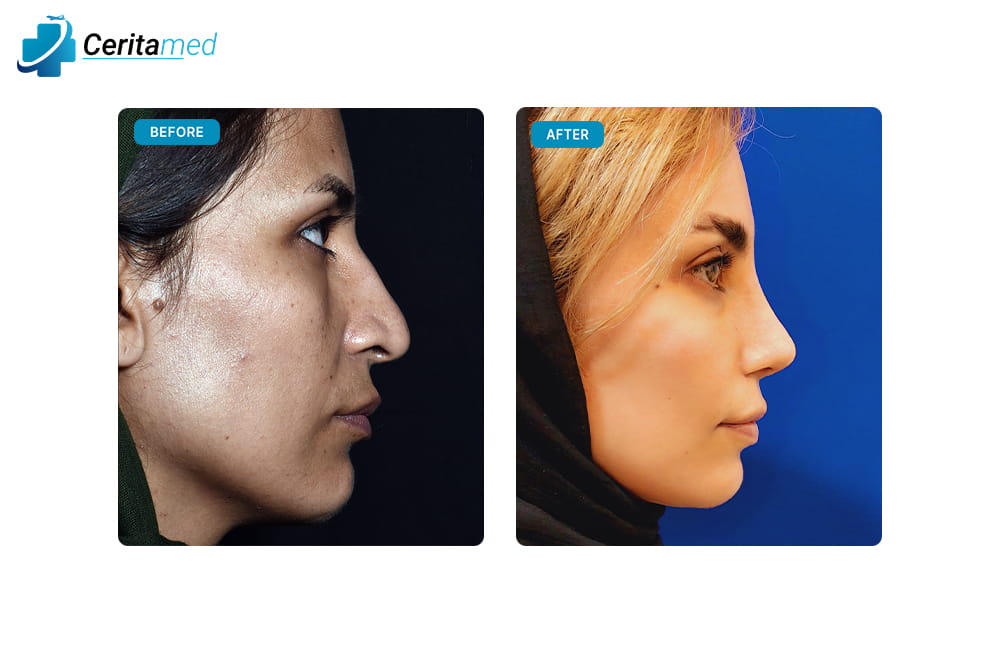
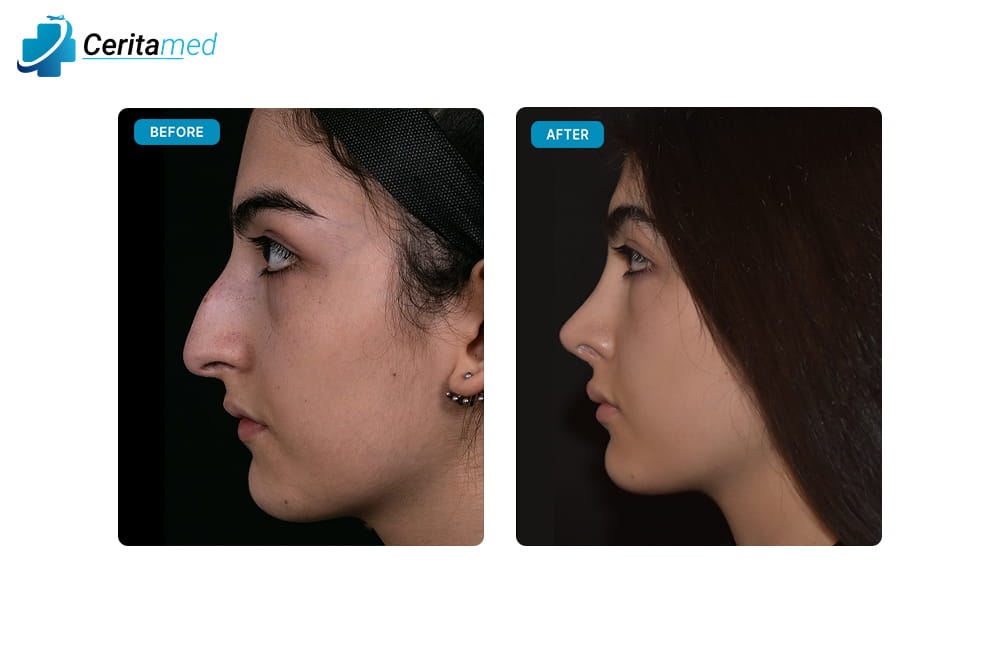
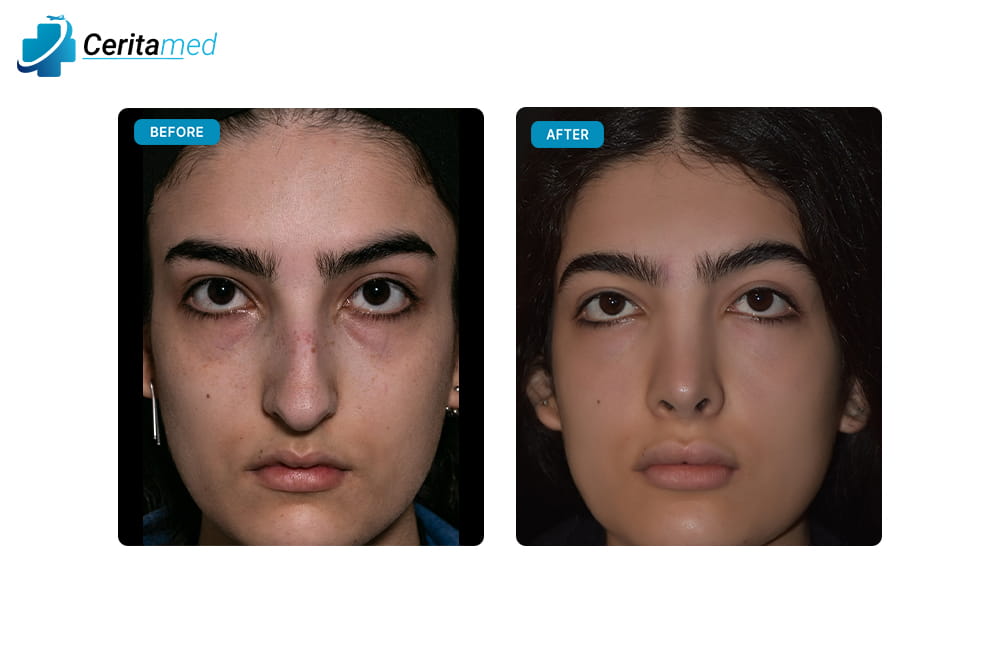
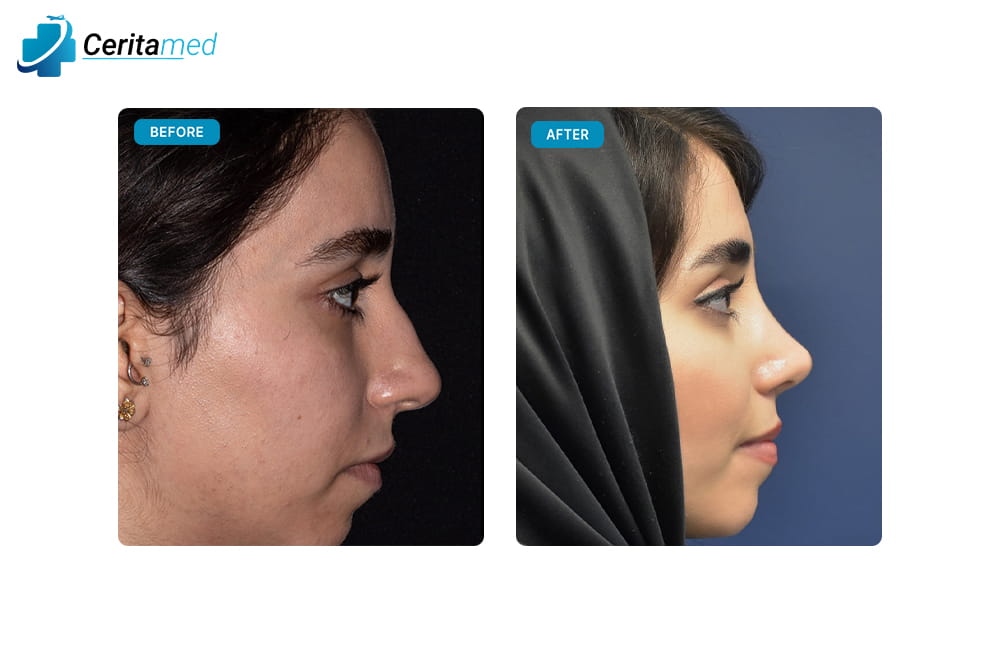
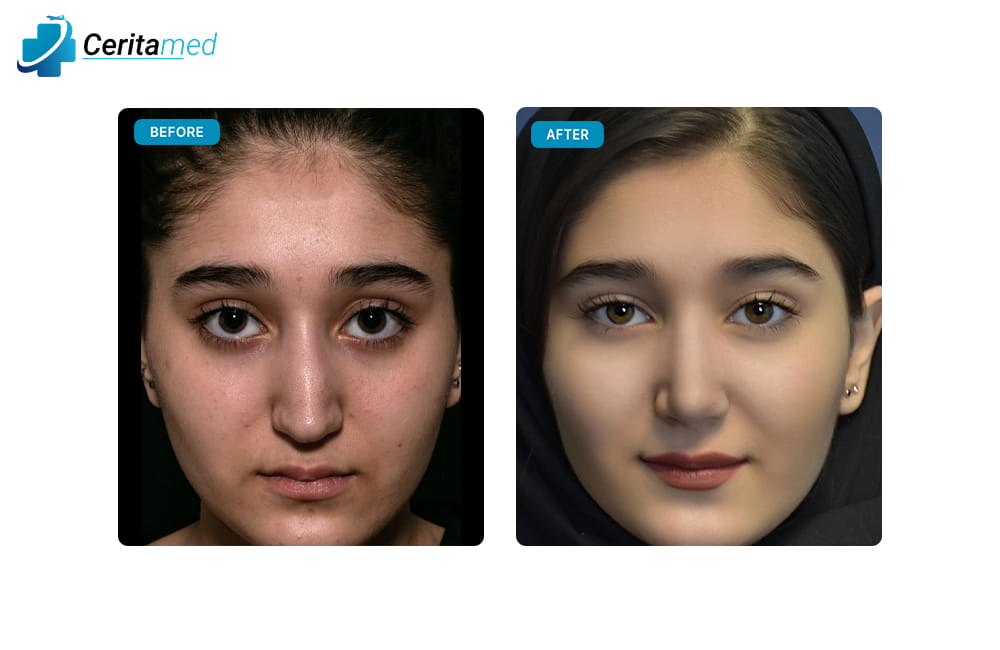
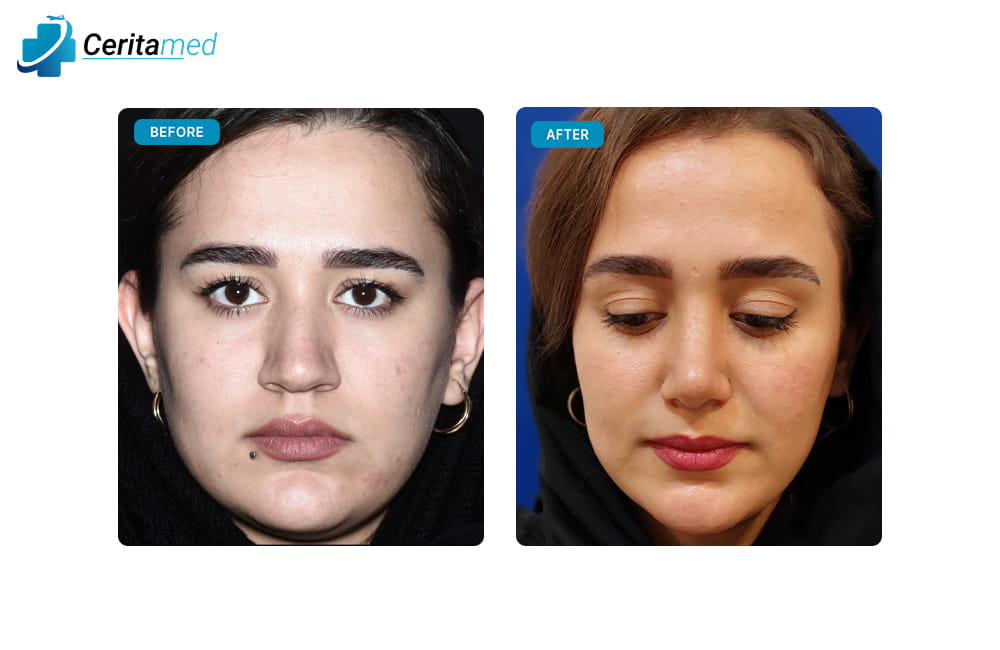
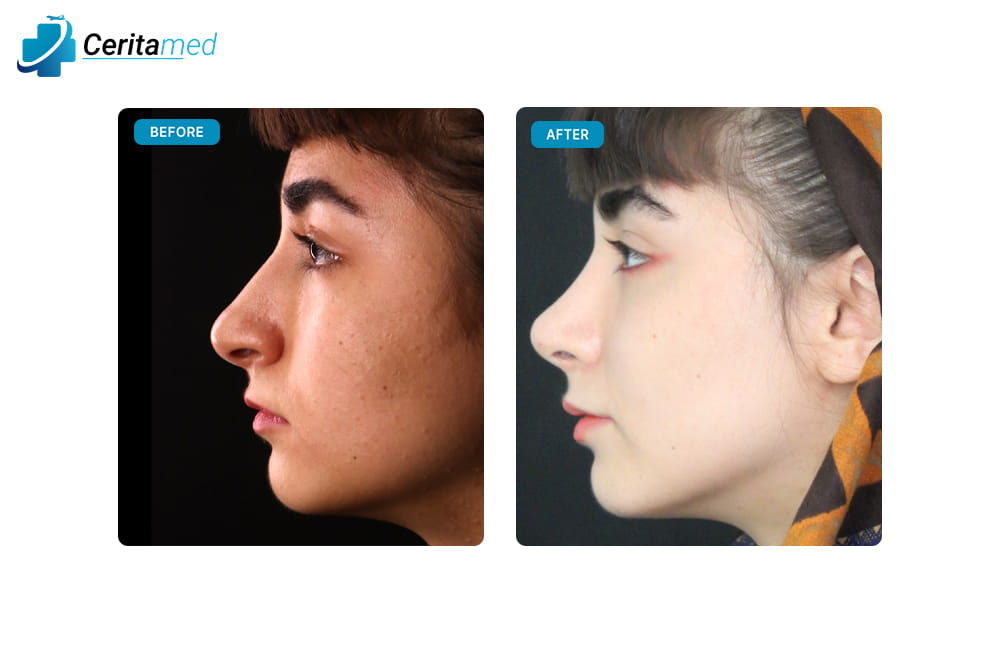
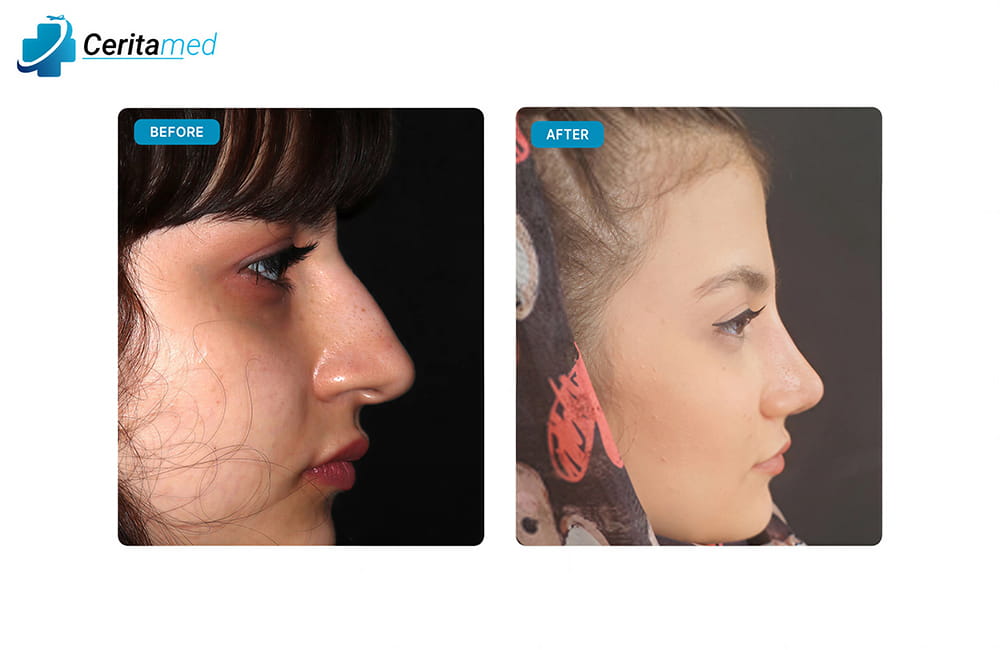
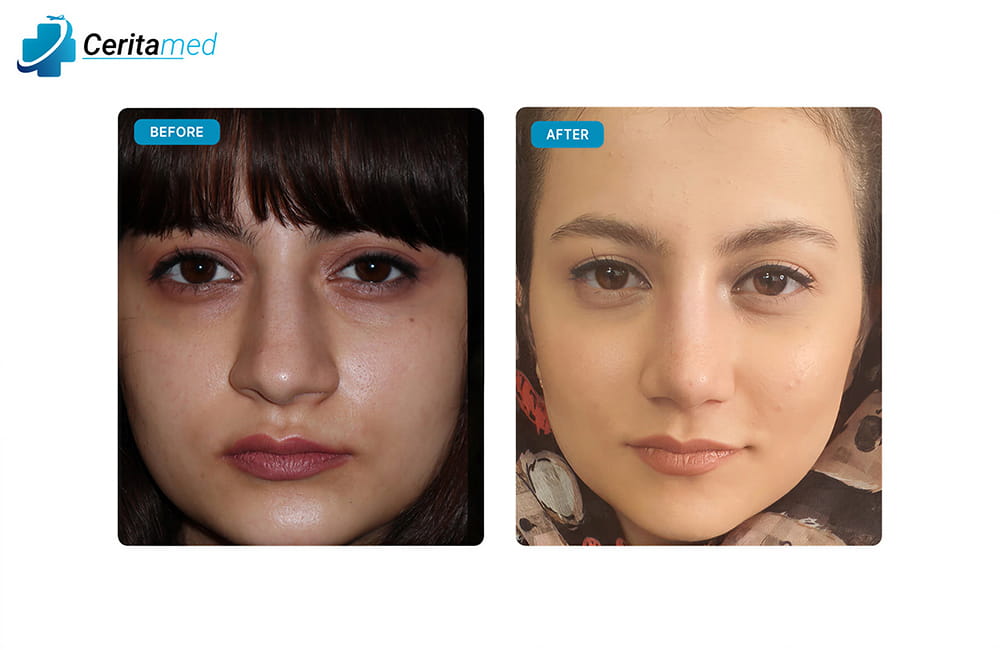
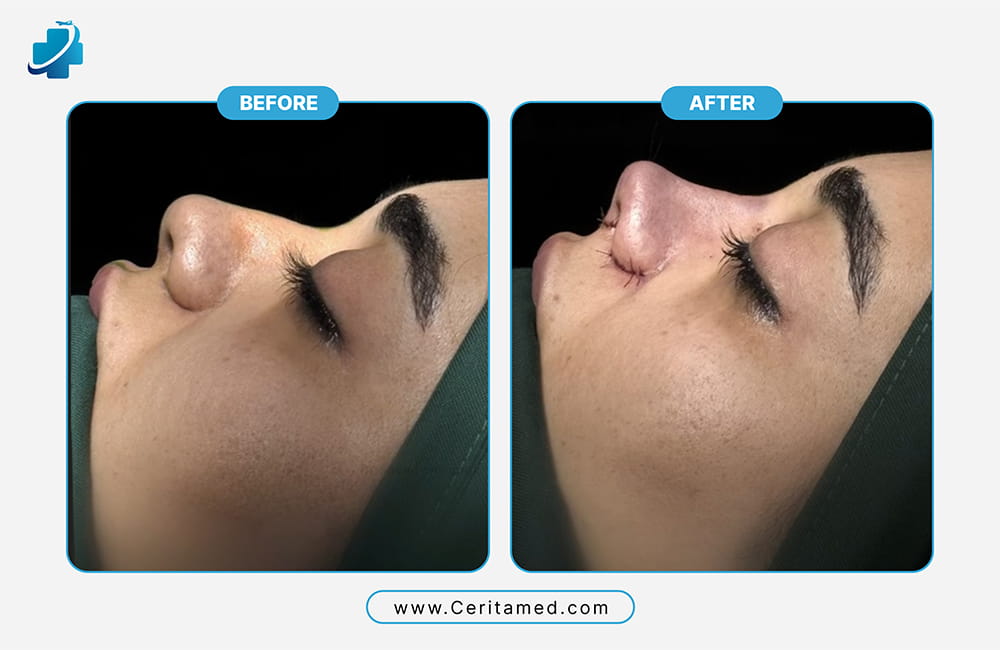
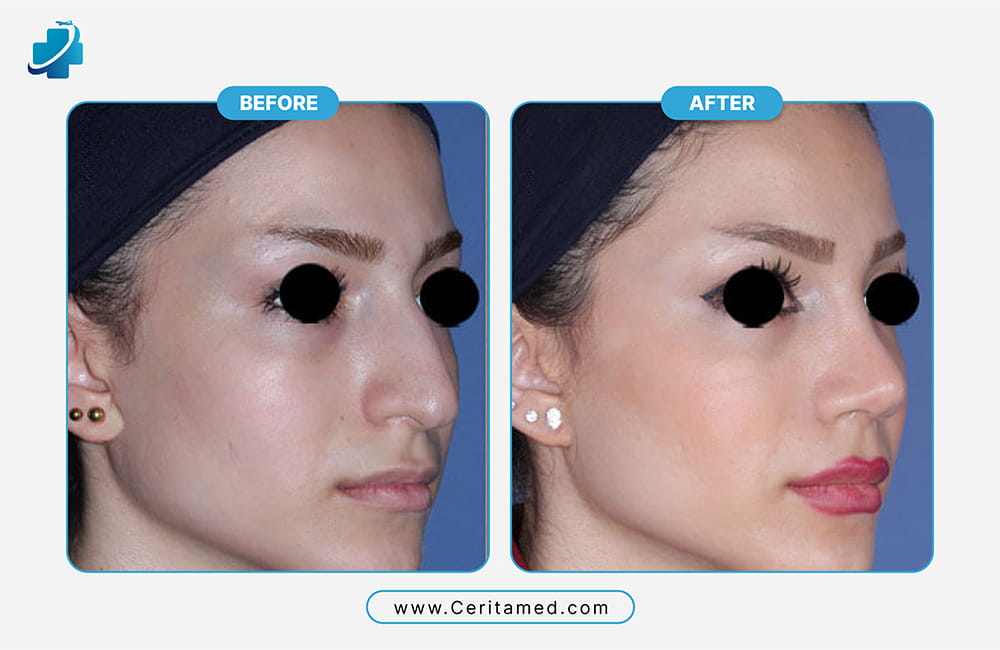
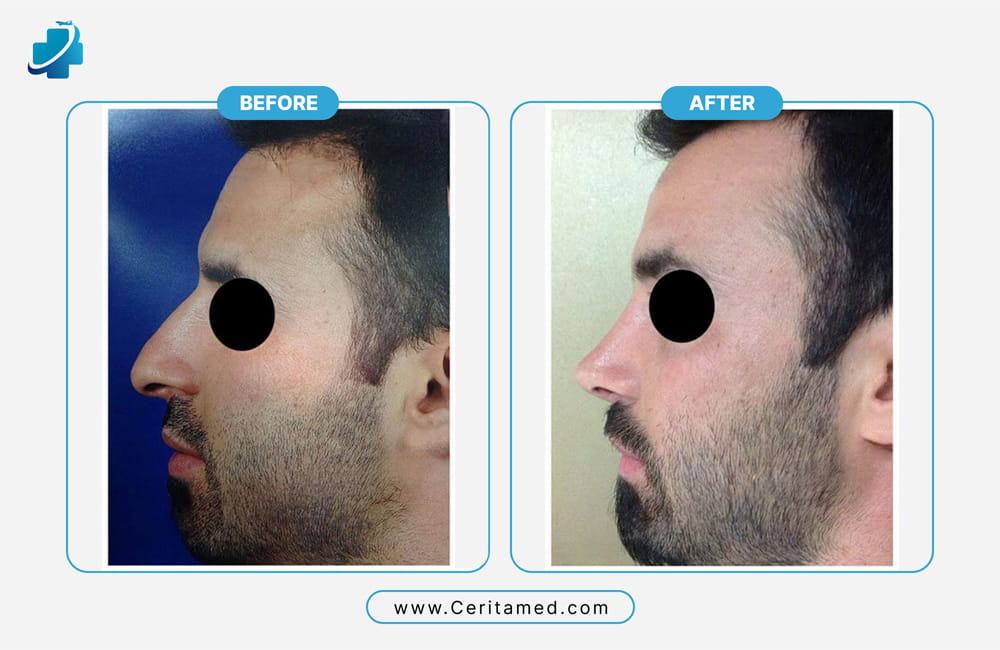
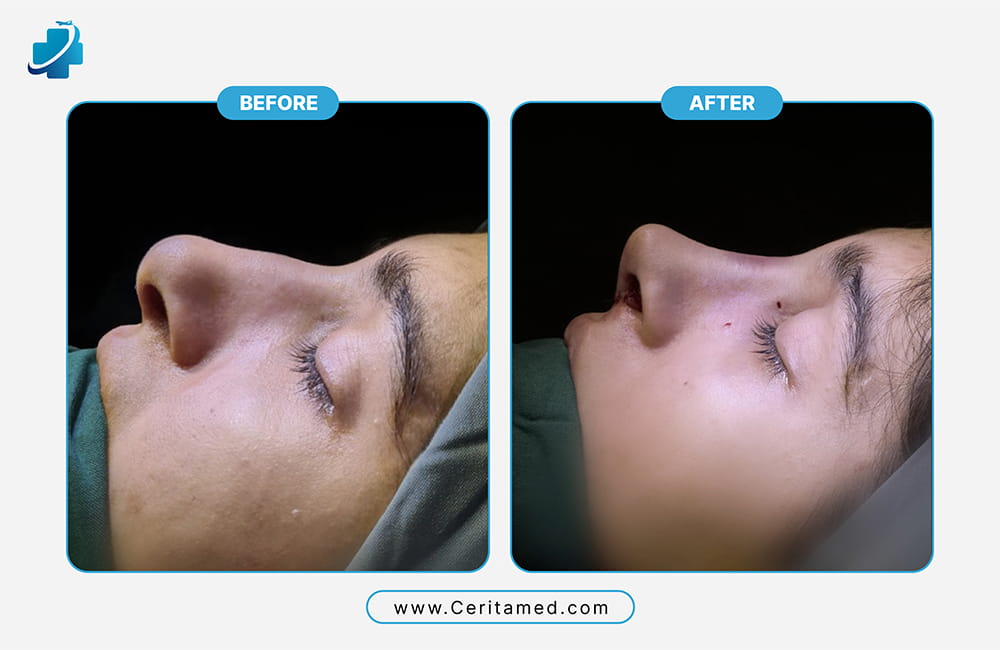
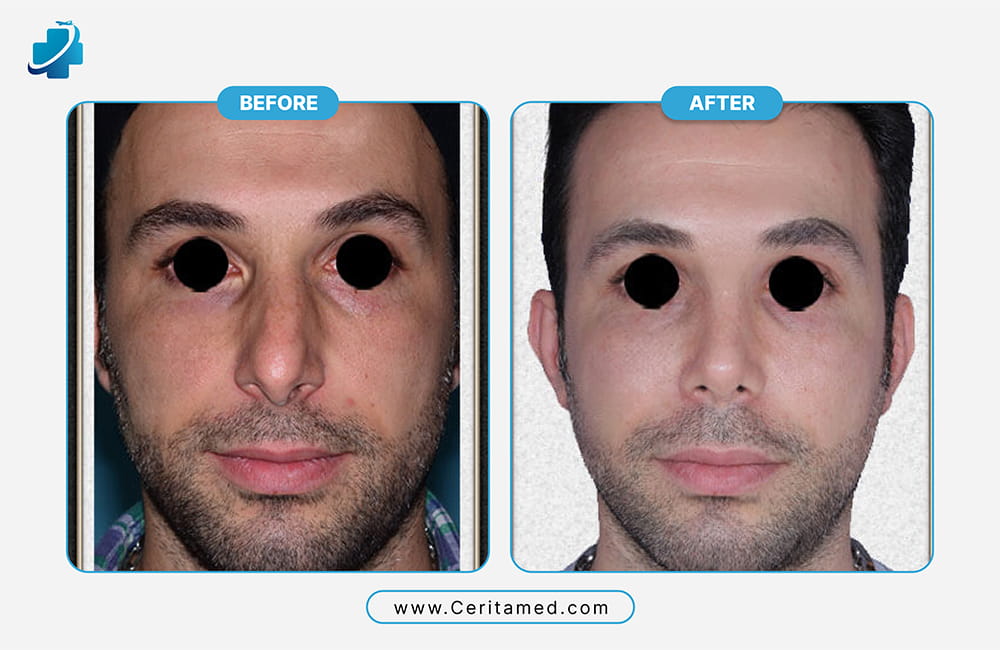
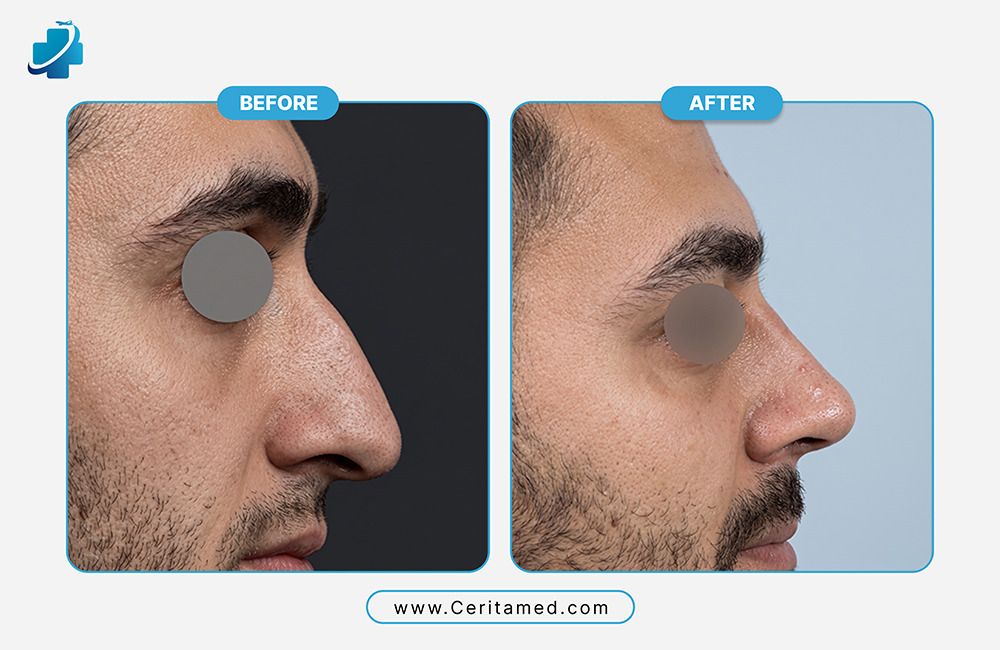
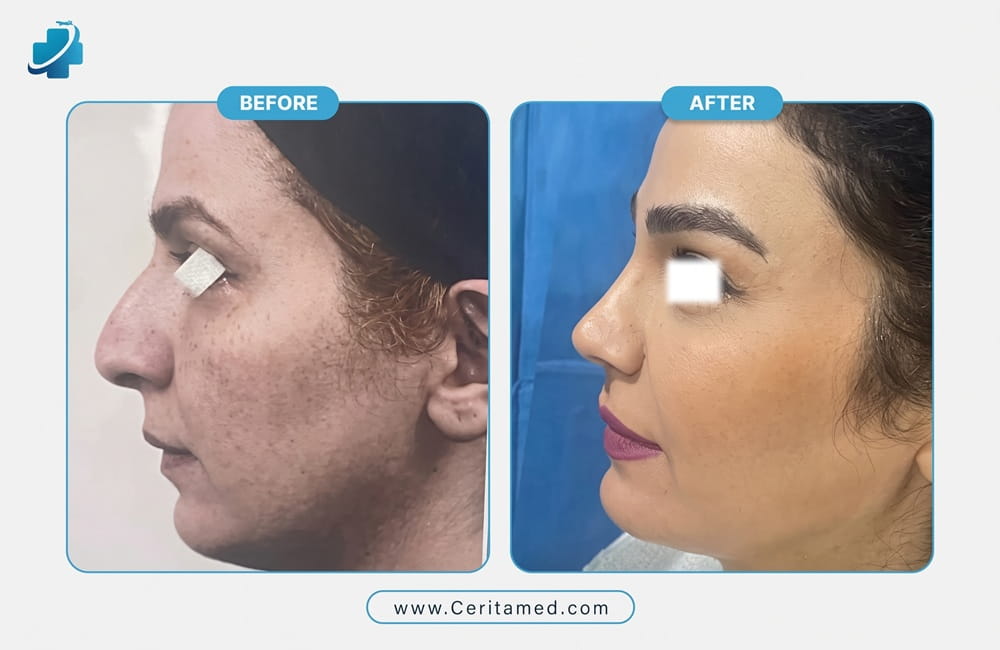
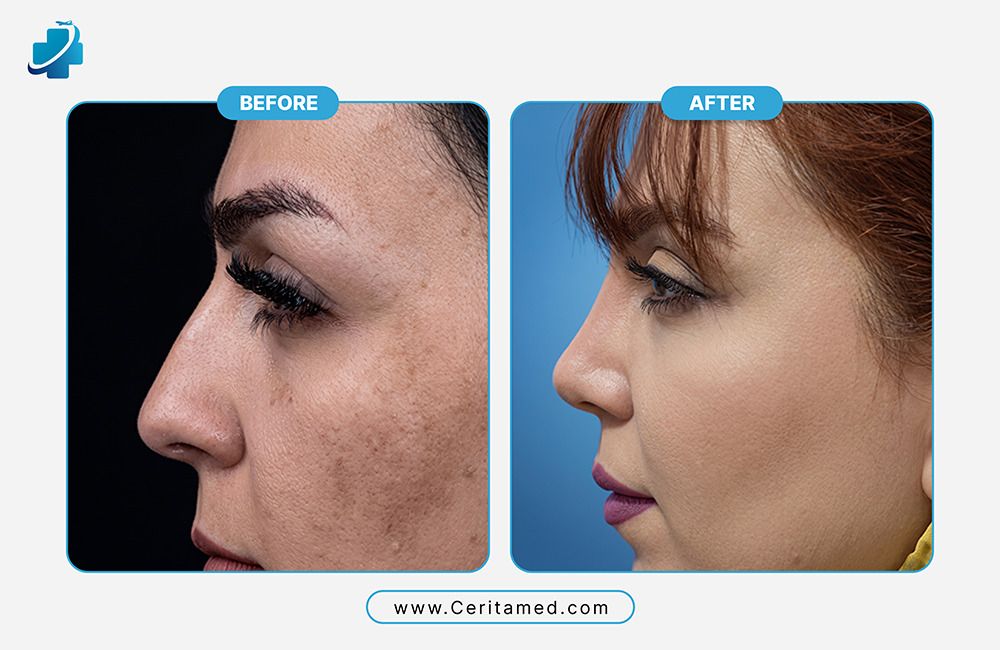
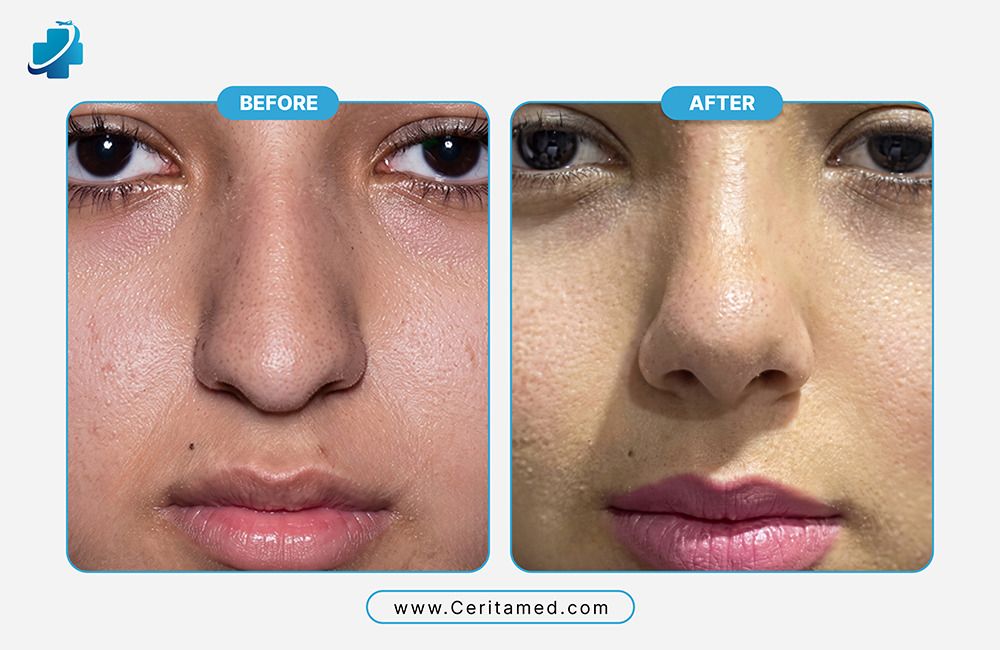
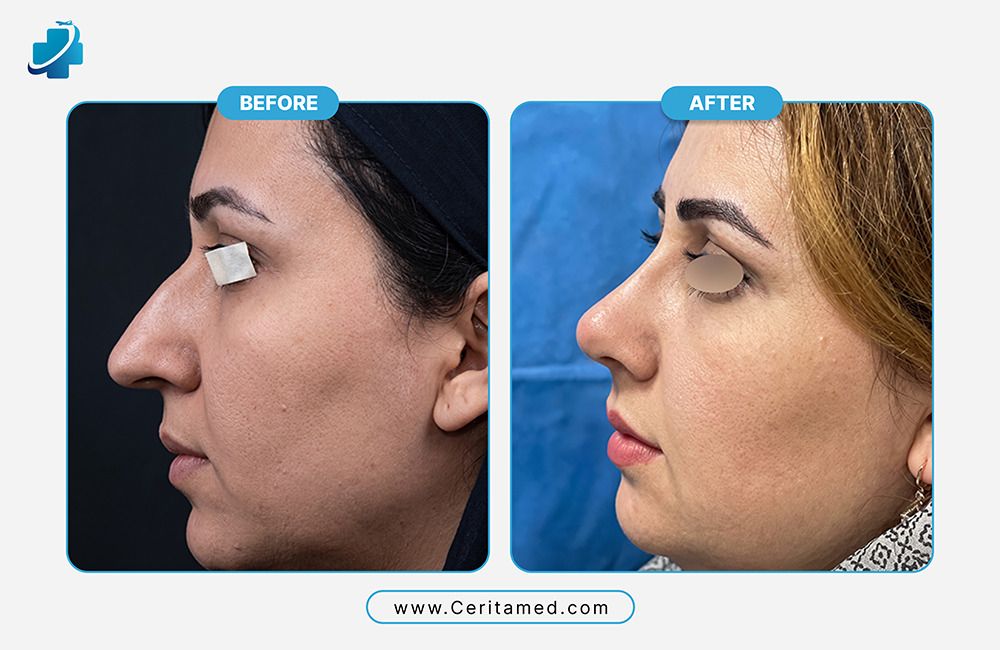
Rhinoplasty Before and After Results
Rhinoplasty Procedure and Recovery
The rhinoplasty procedure begins with a detailed consultation and continues through surgery and postoperative follow-up.
Consultation and Surgery
The process usually includes:
- Nasal and facial analysis
- Surgical planning
- Selection of open or closed approach
- Structural correction and refinement
Rhinoplasty is generally performed under general anesthesia and usually takes around 2–4 hours, depending on the complexity of the case.
Rhinoplasty Recovery Timeline
Recovery after rhinoplasty surgery is gradual:
- First week: Splint placement, swelling, and mild bruising
- Week 2: Most bruising decreases and patients become more socially comfortable
- 1–3 months: Swelling continues to improve
- 12 months: Final results become more stable
Nose Taping After Rhinoplasty
For patients with thicker skin, especially after fleshy nose rhinoplasty, taping may be recommended to help the skin adapt to the new nasal framework.
Flying After Rhinoplasty
Most international patients can usually travel after around 7–10 days, depending on individual healing and surgeon approval.
Rhinoplasty Cost in Iran
The rhinoplasty cost in Iran depends on several factors, including the complexity of the case, surgeon experience, surgical technique, and required services.
At Ceritamed, rhinoplasty surgery typically ranges between $1,200–$4,500. The final cost is determined after evaluating the patient’s nasal structure, goals, and treatment plan.
Rhinoplasty Packages in Iran
Choose from economy, complete and VIP rhinoplasty options based on your surgical needs and preferred level of support.
Economy
Rhinoplasty — Economy
Essential rhinoplasty surgery with a specialist surgeon
1200 USD
- Rhinoplasty surgery by a specialist surgeon
- Required medications
- Hospital stay
- Pre-operative tests
- Pre-operative consultation
- Medical examination
- Post-operative follow-up
- SIM card and internet service
Most Popular
Rhinoplasty — Complete
Complete rhinoplasty package with accommodation and travel support
1650 USD
- Rhinoplasty surgery
- Required medications
- Hospital stay
- Pre-operative tests
- Pre-operative consultation
- Medical examination
- Post-operative follow-up
- 7 nights hotel accommodation
- Interpreter
- Transportation
- SIM card and internet service
Premium
Rhinoplasty — VIP Senior Surgeon
Premium rhinoplasty with an experienced senior surgeon and complete patient support
$3,450 – $3,950
- Rhinoplasty surgery by an experienced senior surgeon
- Required medications
- Hospital stay
- Pre-operative tests
- Specialist pre-operative consultation
- Medical examination
- Post-operative follow-up
- 7 nights hotel accommodation
- Interpreter
- Transportation
- SIM card and internet service
Factors Affecting Rhinoplasty Cost
The price may vary based on:
- Primary or revision rhinoplasty
- Complexity of nasal correction
- Preservation or structural techniques
- Use of ultrasonic (Piezo rhinoplasty) technology
- Surgeon involvement and hospital services
What Is Included in the Rhinoplasty Package?
For international patients, Ceritamed provides coordinated treatment support, which may include:
- Board-certified plastic surgeon fee
- Accredited hospital facilities
- General anesthesia
- Pre-operative consultation
- Post-operative follow-up
- Accommodation assistance
- Airport transfer coordination
Rhinoplasty in Iran vs Other Countries
The lower rhinoplasty cost in Iran is mainly related to economic factors and operational costs, not reduced medical standards.
Compared with:
- USA: approximately $10,000–$20,000
- UK / Europe: approximately $8,000–$15,000
- Turkey: approximately $3,000–$6,000
Iran offers international patients access to experienced surgeons and advanced techniques at a more competitive cost.
Why Choose Ceritamed for Rhinoplasty in Iran?
Choosing the right surgeon is the most important factor in achieving safe and natural rhinoplasty results.
Expert Rhinoplasty Surgeons
Ceritamed works with experienced plastic surgeons:
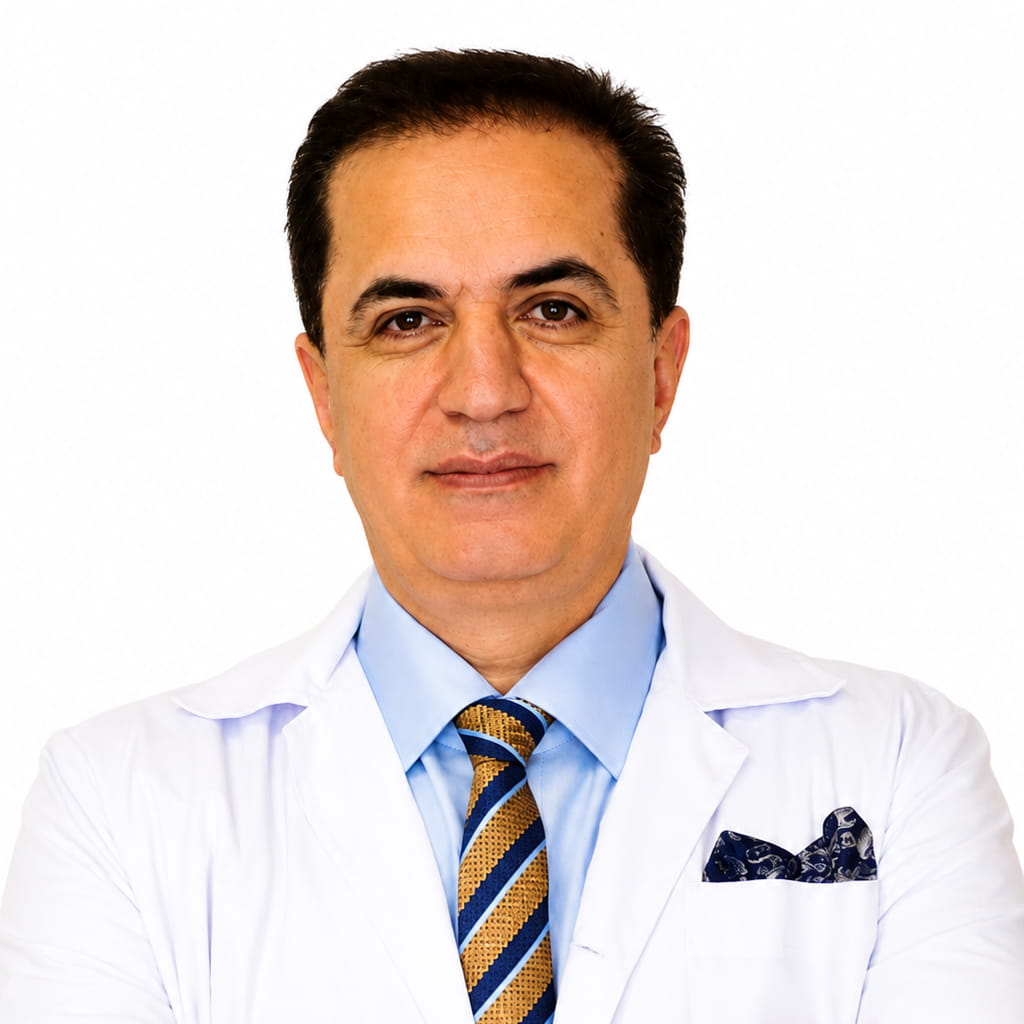
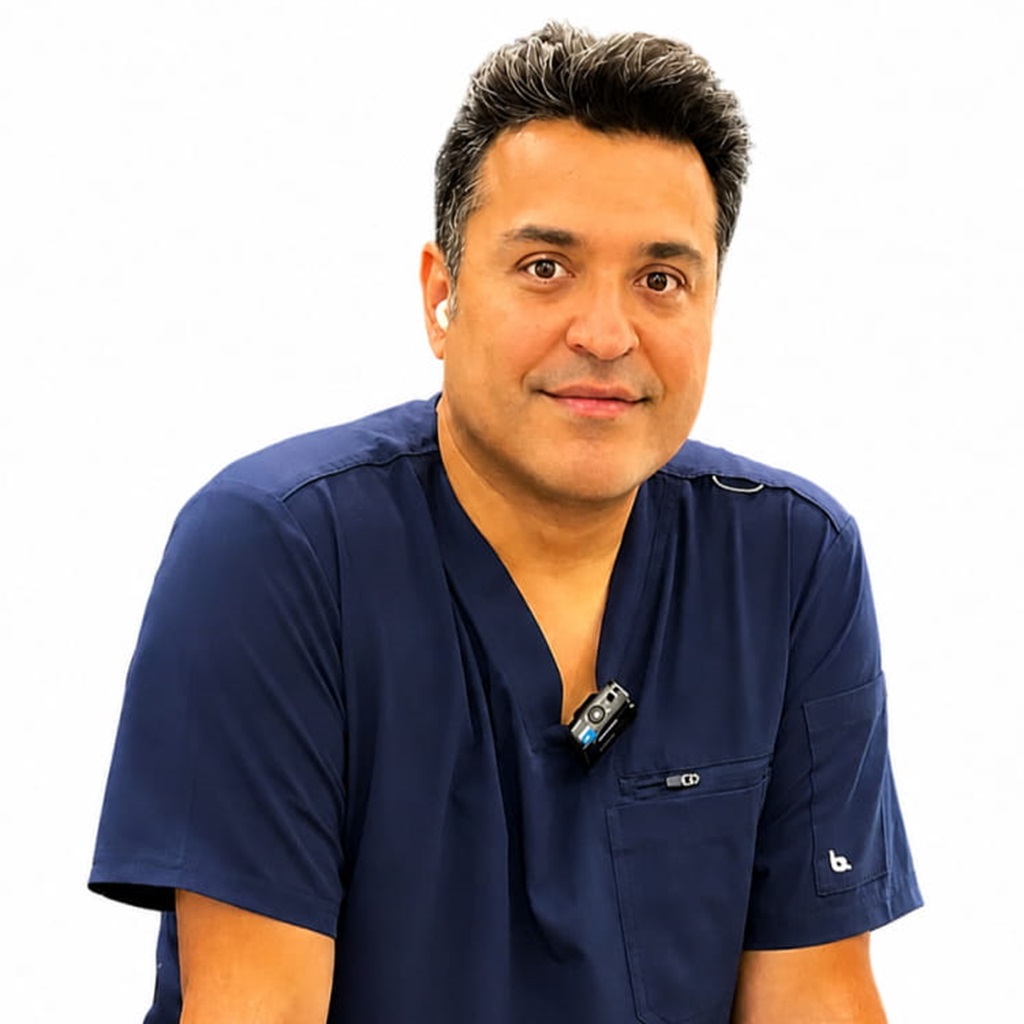
- Dr. Mohsen Fadaei
- Dr. Ataollah Heidari
- Dr. Saeed Shirangi
Their approach focuses on:
- Natural facial harmony
- Structural stability
- Preservation techniques
- Functional and aesthetic improvement
Advanced Technology and Patient Support
Ceritamed provides modern rhinoplasty standards, including:
- Preservation rhinoplasty approaches
- Ultrasonic (Piezo) technology
- Structural planning
- 3D consultation and simulation
International patients also receive support with:
- Online consultation
- Travel coordination
- Follow-up care after returning home
Procedure Overview
Anesthesia: Not required
Procedure Duration:IVF cycle & embryo transfer (varies per case)
Stay Duration: Typically 2–3 weeks in Iran

Frequently Asked Questions About Rhinoplasty in Iran
Does laser rhinoplasty exist?
No. Laser rhinoplasty is not a standard surgical technique. However, ultrasonic (Piezo) rhinoplasty provides precise bone reshaping using ultrasonic technology.
Is rhinoplasty painful?
Most patients experience manageable discomfort after surgery, which can usually be controlled with prescribed medication.
How long should I stay in Iran after rhinoplasty?
International patients are usually advised to stay around 7–10 days for initial follow-up and splint removal.
Can rhinoplasty improve breathing?
Yes. Functional rhinoplasty, often combined with septoplasty, can improve breathing problems caused by structural issues.
When can I exercise after rhinoplasty?
Light activities can usually begin after a few weeks, while intense exercise may require around 6–8 weeks depending on healing progress.