What Is Blepharoplasty?
Blepharoplasty is a cosmetic and, in some cases, functional eyelid surgery that removes excess skin and may remove or reposition fat and adjust surrounding tissues. The goal is to rejuvenate the eye area while preserving natural eyelid shape and facial expression.
The procedure can involve the upper eyelids, lower eyelids, or both. In patients whose excess upper-eyelid skin obstructs the visual field, blepharoplasty may also improve peripheral vision.
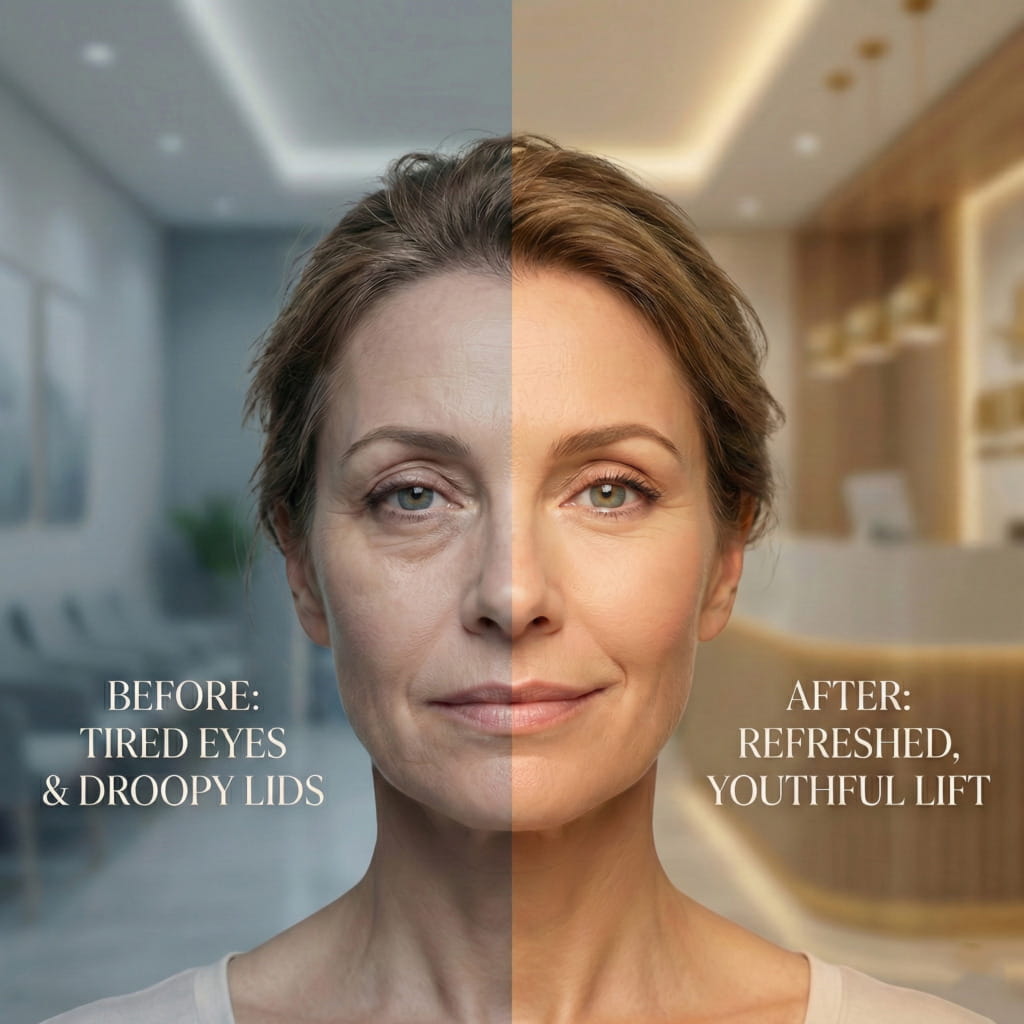
Aging, genetics, and reduced skin elasticity can cause excess upper-eyelid skin, creating a heavy or tired appearance. Upper eyelid surgery (upper blepharoplasty) removes excess skin and, when necessary, adjusts protruding fat to create a more refreshed appearance while preserving the natural eyelid contour.
When excess skin obstructs the upper visual field, surgery may also improve peripheral vision. True eyelid ptosis involves an abnormally low upper eyelid margin and requires a different surgical repair. In patients with both conditions, ptosis correction may be combined with blepharoplasty following specialist assessment.
Persistent under-eye bags and puffiness are often caused by protruding lower-eyelid fat pads rather than fatigue alone. Lower eyelid surgery (lower blepharoplasty) removes or repositions fat and, when necessary, addresses excess skin to create a smoother transition between the lower eyelid and cheek.
The goal is a refreshed, natural-looking under-eye contour while preserving the natural shape of the eyes.
Cat Eye & Double Eyelid Surgery
Beyond traditional eyelid rejuvenation, some patients seek procedures to refine their natural eye shape or enhance eyelid definition.
Cat Eye Surgery
Cat eye surgery may involve lateral canthoplasty to adjust the outer corner of the eye for a more elongated, almond-shaped appearance. The appropriate approach depends on the patient’s eyelid anatomy and the need to preserve normal eyelid function.
Double Eyelid Surgery
Double eyelid surgery (double eyelid blepharoplasty) creates or defines an upper eyelid crease according to the patient’s natural anatomy and aesthetic preferences.
Unlike conventional rejuvenation-focused blepharoplasty, these procedures address specific eye-shape and eyelid-crease goals. A specialist assessment helps determine the most suitable approach.
Blepharoplasty Techniques
Blepharoplasty techniques are selected according to the patient’s eyelid anatomy, the tissues requiring correction, and individual treatment goals. Surgical planning focuses on natural-looking results while preserving normal eyelid function.
Laser vs. Traditional Blepharoplasty
Traditional blepharoplasty uses surgical instruments to make precise incisions and remove or reposition excess skin and fat. In laser blepharoplasty, a CO₂ laser can be used to make incisions and seal small blood vessels during surgery.
Laser assistance may reduce bleeding and, in some patients, early swelling or bruising. However, it does not guarantee faster recovery or better aesthetic results than traditional surgery. Both approaches are surgical procedures, and your surgeon will recommend the most suitable technique based on your eyelid anatomy and treatment needs.
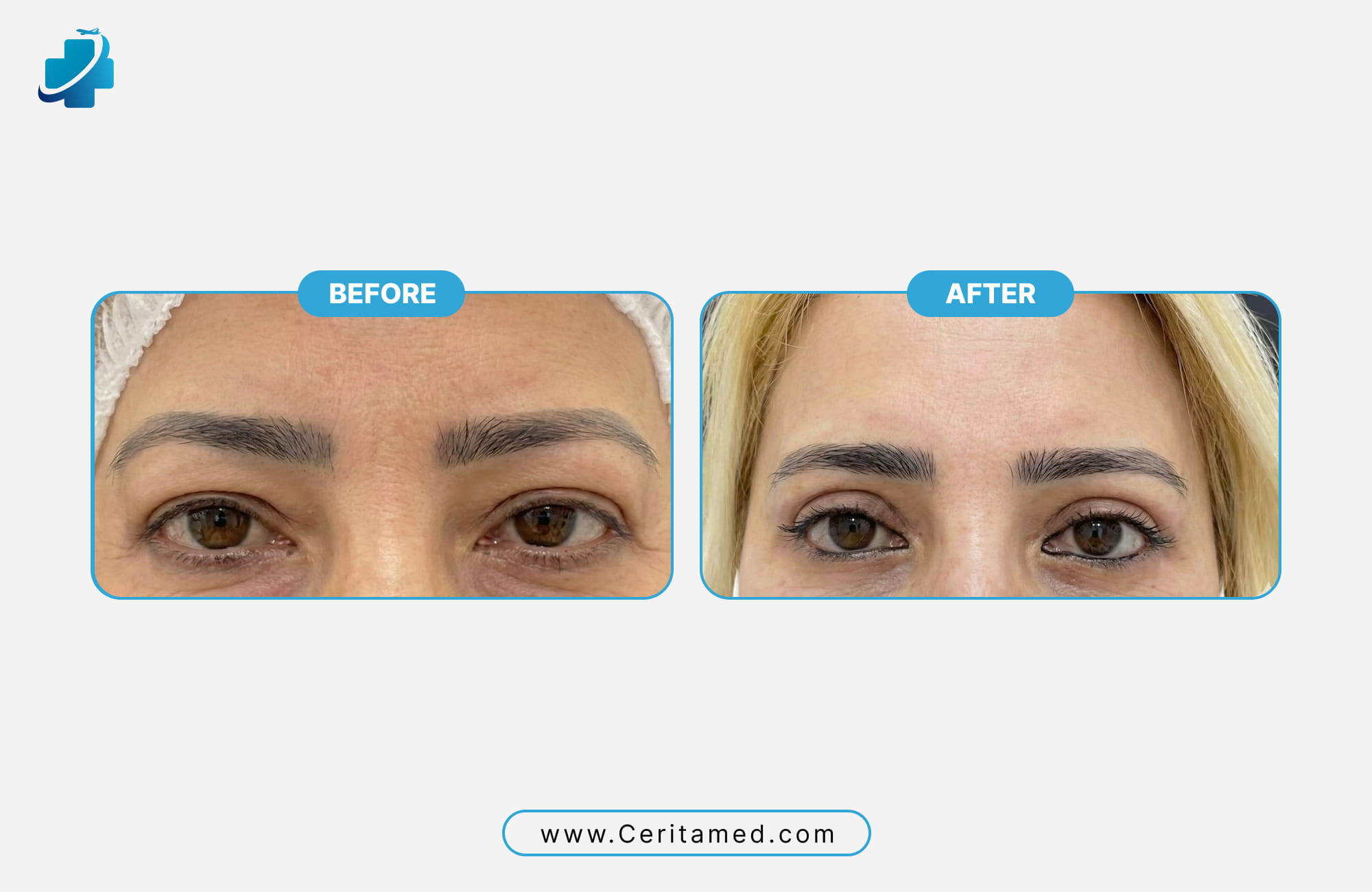
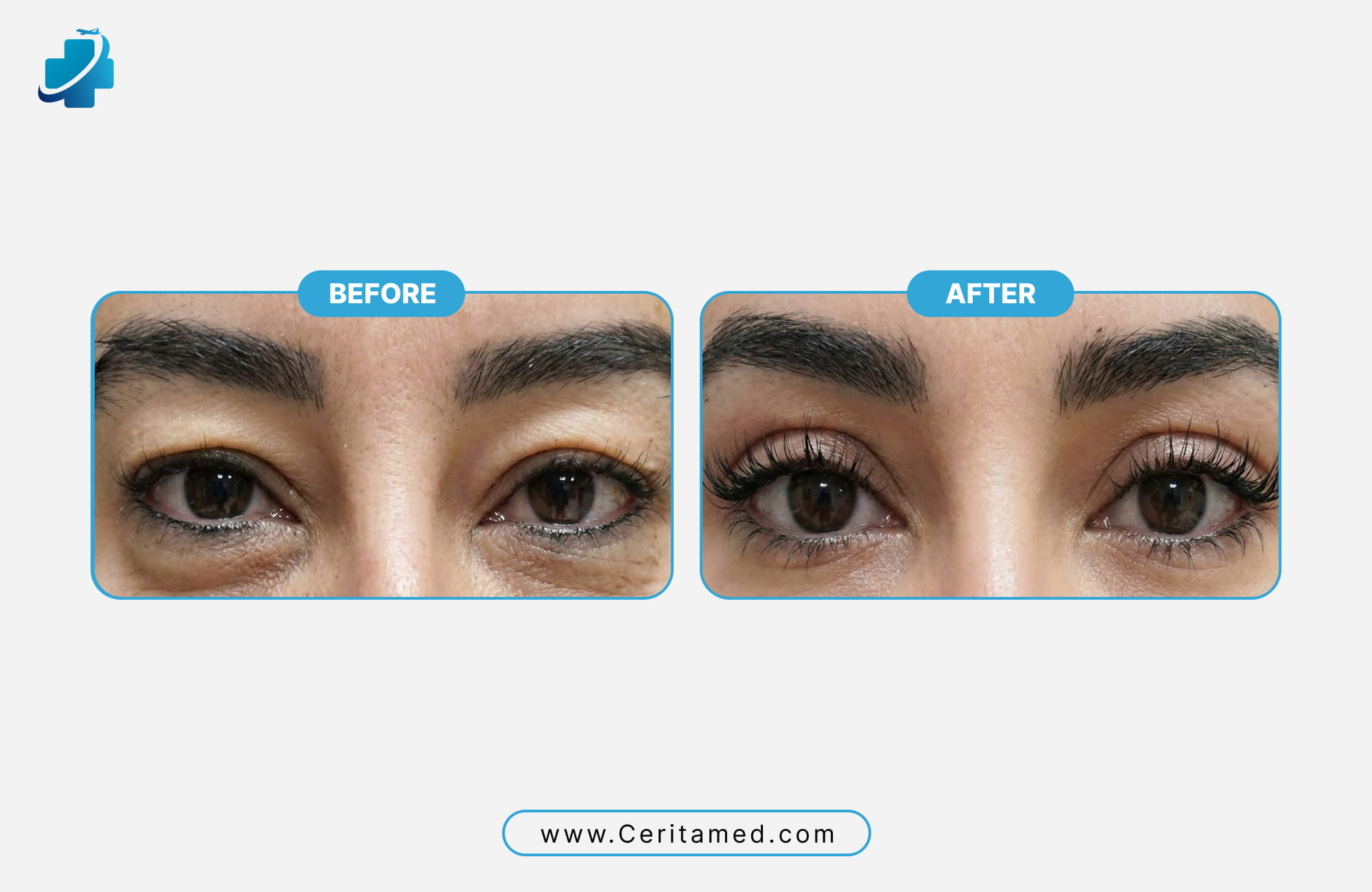
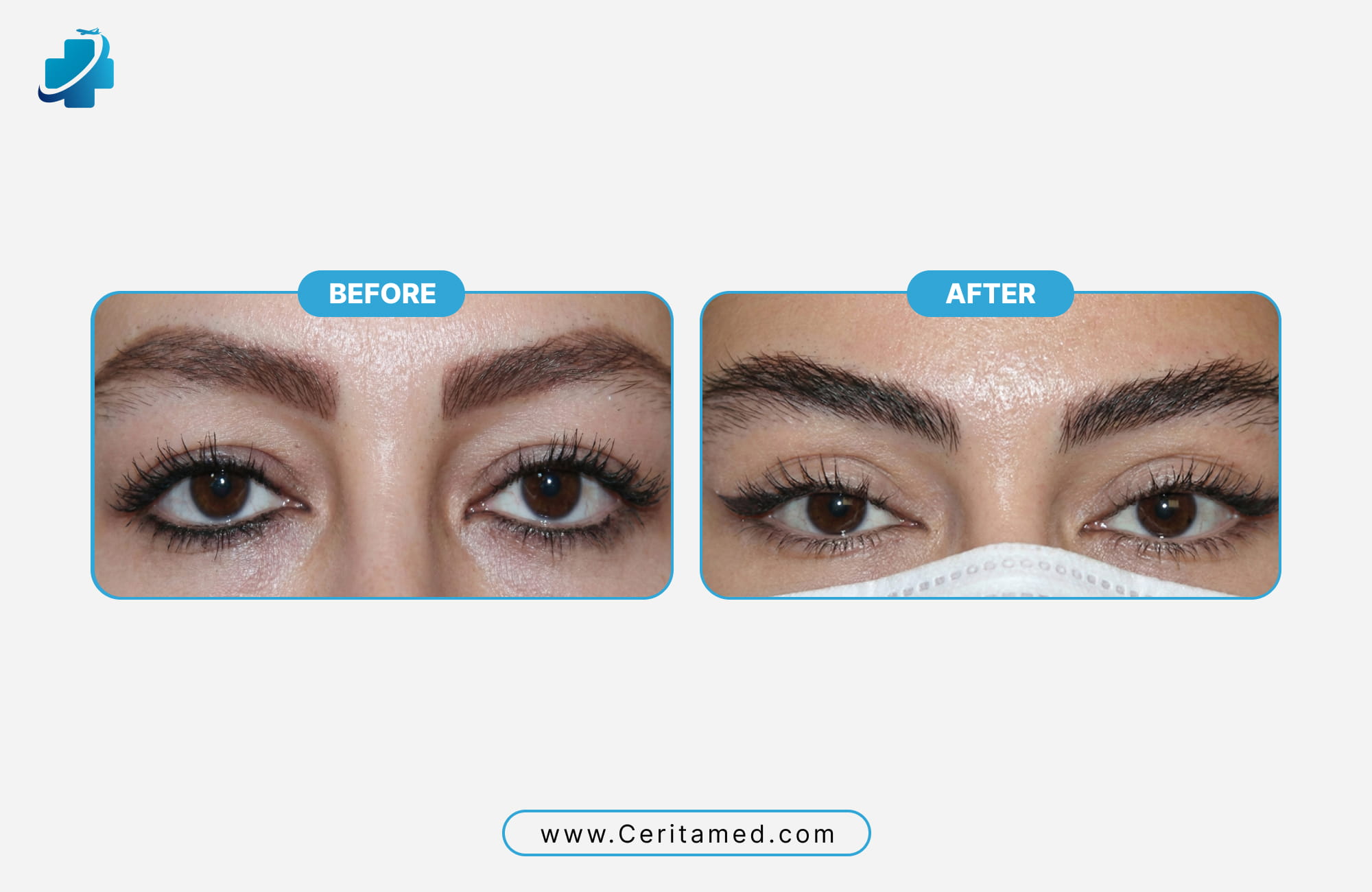
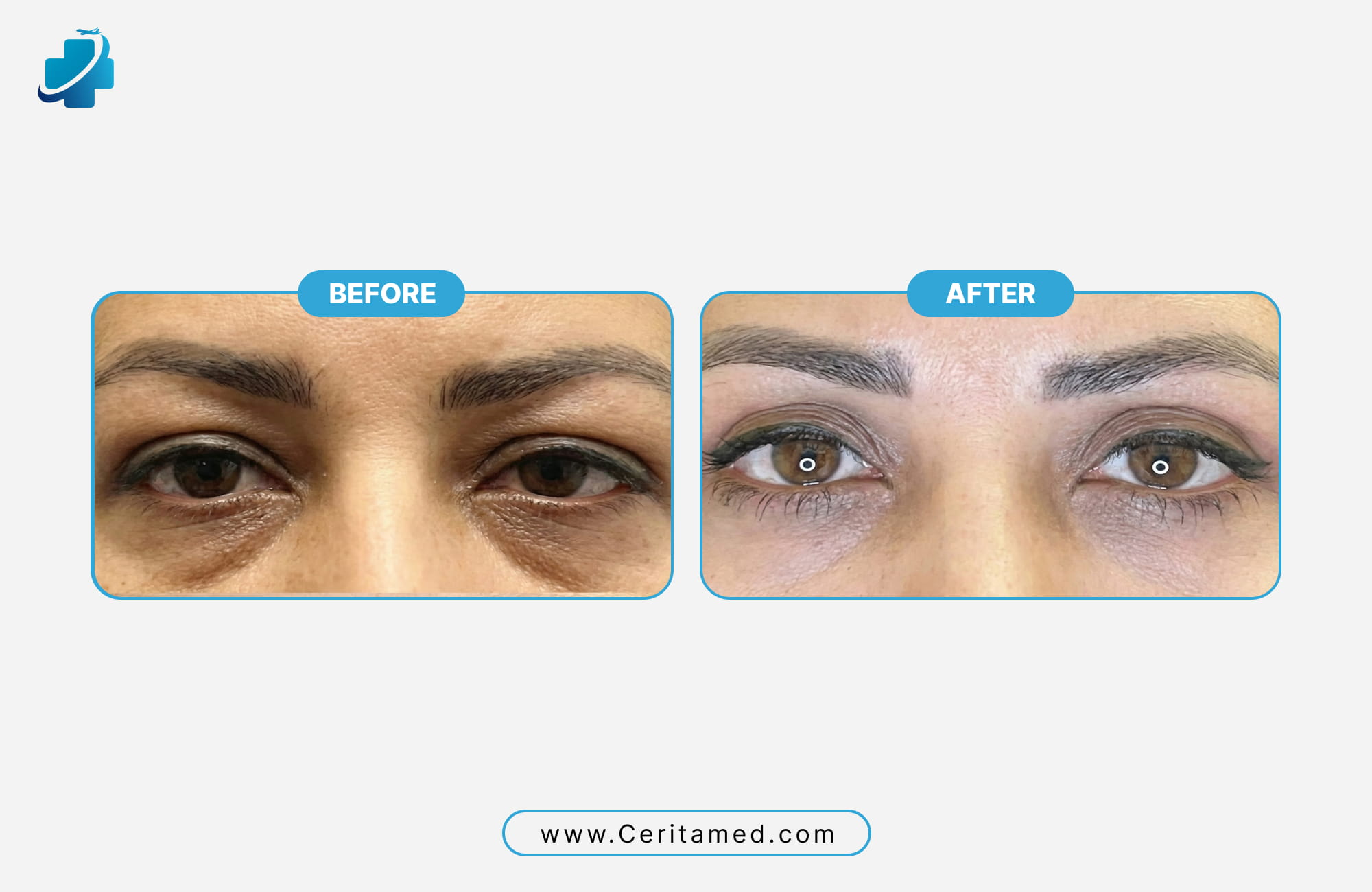
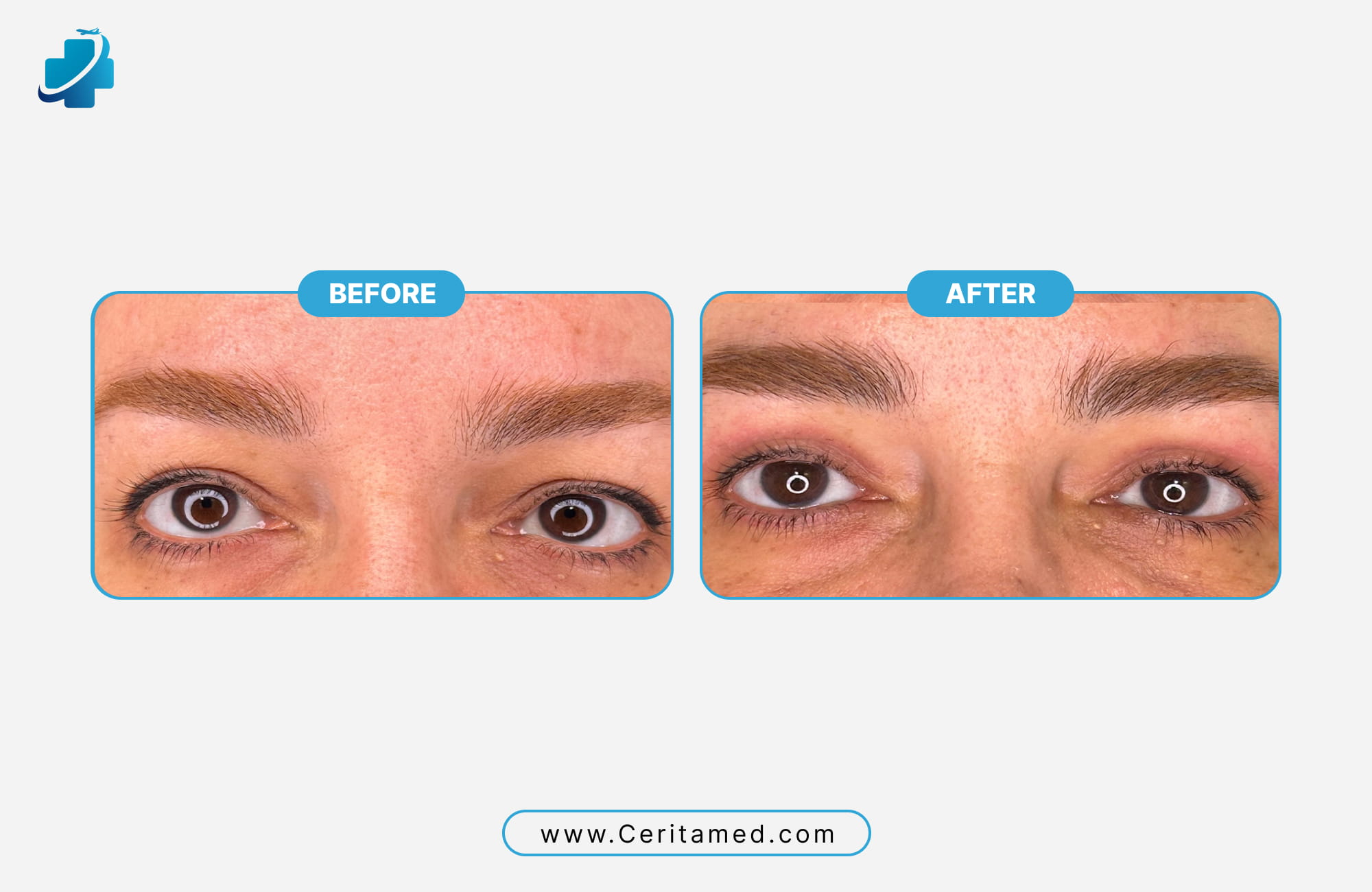
Eyelid Surgery Before and After
Why Choose Ceritamed for Eyelid Surgery in Iran?
Choosing the right surgeon is essential to both the appearance and function of the eyelids. At Ceritamed, international patients can explore personalized surgical planning in Tehran based on their eyelid anatomy, eye health, and cosmetic or functional goals.
Blepharoplasty Surgeons & Oculoplastic Specialists in Iran
Patient Support & Travel Services
Ceritamed helps international patients coordinate treatment, travel arrangements, and postoperative follow-up, with online support when needed. These services are designed to make the medical journey in Iran more organized and convenient.
Who Is a Candidate for Eyelid Surgery?
Good candidates for eyelid surgery are generally healthy adults concerned about excess upper-eyelid skin, persistent under-eye bags, or age-related eyelid changes, with realistic expectations about the results. Eye health, dry eye symptoms, and medical conditions that may affect healing should also be evaluated before surgery.
Age alone does not determine eligibility. While blepharoplasty often addresses age-related changes, younger adults with hereditary eyelid puffiness or naturally hooded eyelids may also be suitable candidates.
Eyelid surgery for men is tailored to individual eyelid anatomy and aesthetic goals, aiming for subtle rejuvenation while preserving natural facial characteristics.
The Blepharoplasty Procedure
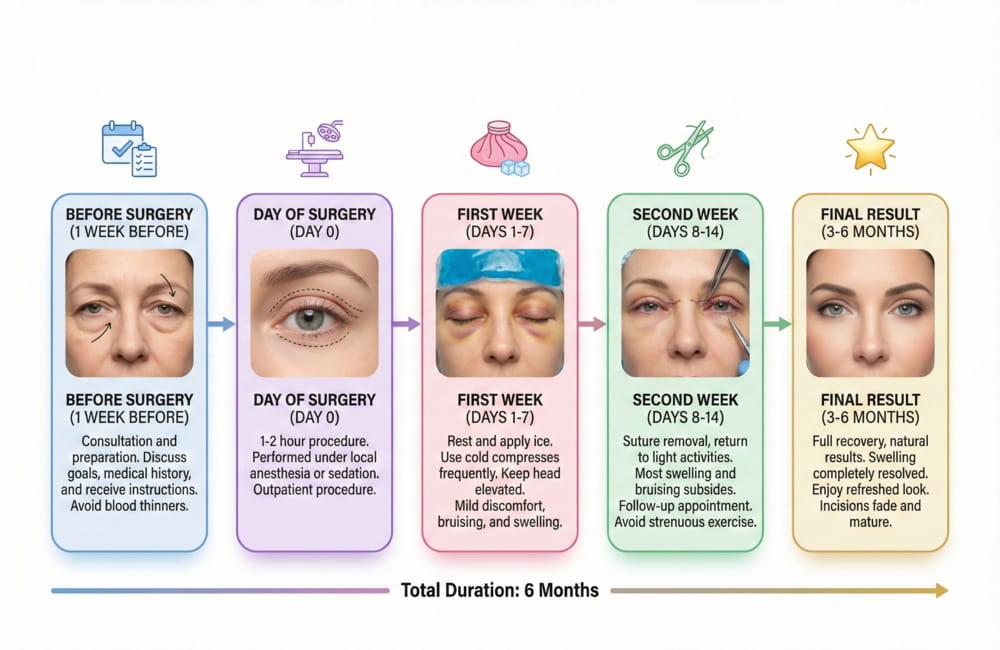
Blepharoplasty begins with a consultation to assess your eyelid anatomy, skin quality, eye health, and treatment goals. Your surgeon then develops a personalized surgical plan based on your individual needs.
The procedure may be performed under local anesthesia, with or without sedation, or under general anesthesia. Upper eyelid incisions are typically placed within the natural eyelid crease, while lower eyelid incisions may be made just below the lash line or inside the eyelid. Excess skin is removed, fat is removed or repositioned, and surrounding tissues are adjusted when necessary to achieve natural-looking results while preserving eyelid function.
Blepharoplasty typically takes one to two hours, although combined or more complex procedures may take longer. Most patients can be discharged on the same day following postoperative assessment.
Blepharoplasty Recovery
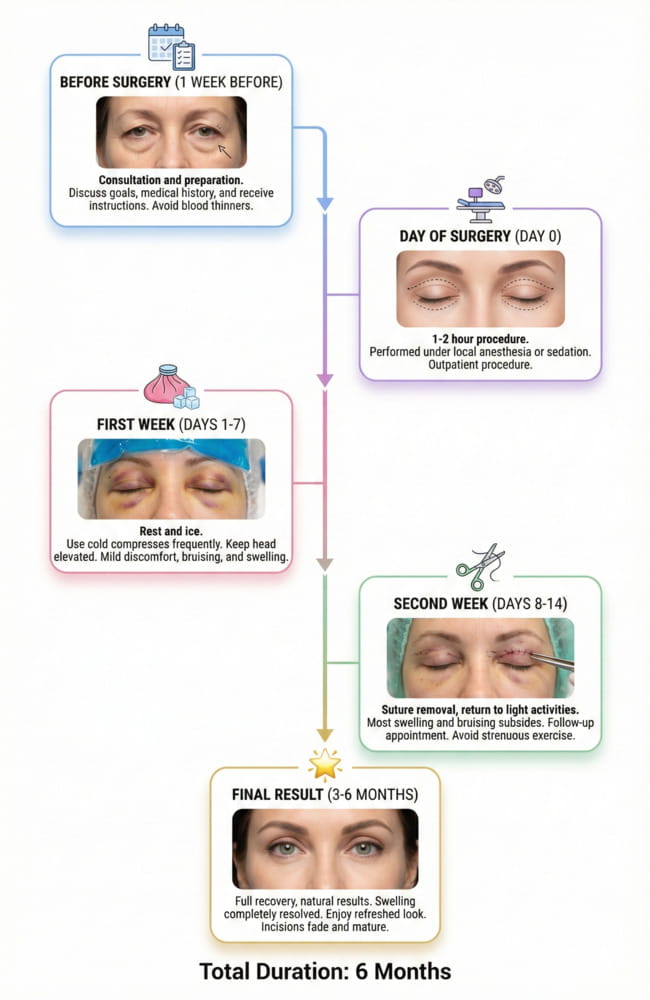
Recovery after blepharoplasty commonly involves mild swelling, bruising, tightness, and temporary eye irritation or dryness. Many patients can resume light daily activities within 7–10 days, while swelling and bruising typically improve over the first two weeks. Complete healing and scar maturation may take several months.
Cold compresses, keeping the head elevated, and avoiding strenuous activities as instructed can support recovery. The timing of returning to work, exercise, and travel depends on the procedure and individual healing.
Is Blepharoplasty Safe?
Blepharoplasty is generally safe for appropriately selected patients, but potential risks include bleeding, infection, dry eyes, eyelid-position changes, and, rarely, vision problems. Following postoperative instructions and attending scheduled follow-up appointments are essential for safe recovery.
Revision blepharoplasty may be considered when previous eyelid surgery leaves persistent asymmetry, visible scarring, excessive skin removal, or changes in eyelid position or closure. Depending on the underlying problem, a secondary procedure may help improve eyelid appearance, comfort, or function.
Revision surgery can be more complex than primary blepharoplasty because of scar tissue and altered eyelid anatomy. At Ceritamed, patients can receive an individualized specialist assessment to evaluate healing, eye health, and possible corrective options. The treatment plan and achievable results depend on each patient’s condition.
Blepharoplasty Cost in Iran
Blepharoplasty in Iran offers international patients access to eyelid surgery at competitive prices. At Ceritamed, Upper Eyelid Surgery typically costs 600–1,800, while Lower Eyelid Surgery ranges from 880–1,800, depending on the complexity of the procedure and the individual treatment plan.
The final eyelid surgery cost in Iran may also vary when upper and lower blepharoplasty are combined or when additional procedures, such as a Brow Lift or Facelift, are considered. Combined procedures require individual assessment, as both pricing and recovery needs may differ.
Contact Ceritamed for a personalized cost estimate and details of the medical and travel services included in your treatment plan.
Considering Eyelid Surgery in Iran?
Considering eyelid surgery in Iran? Ceritamed helps international patients explore suitable blepharoplasty options, from cosmetic eyelid rejuvenation to correcting excess upper-eyelid skin that affects vision.
Contact Ceritamed for a free initial consultation to discuss your goals, explore treatment options, and receive a personalized cost estimate.





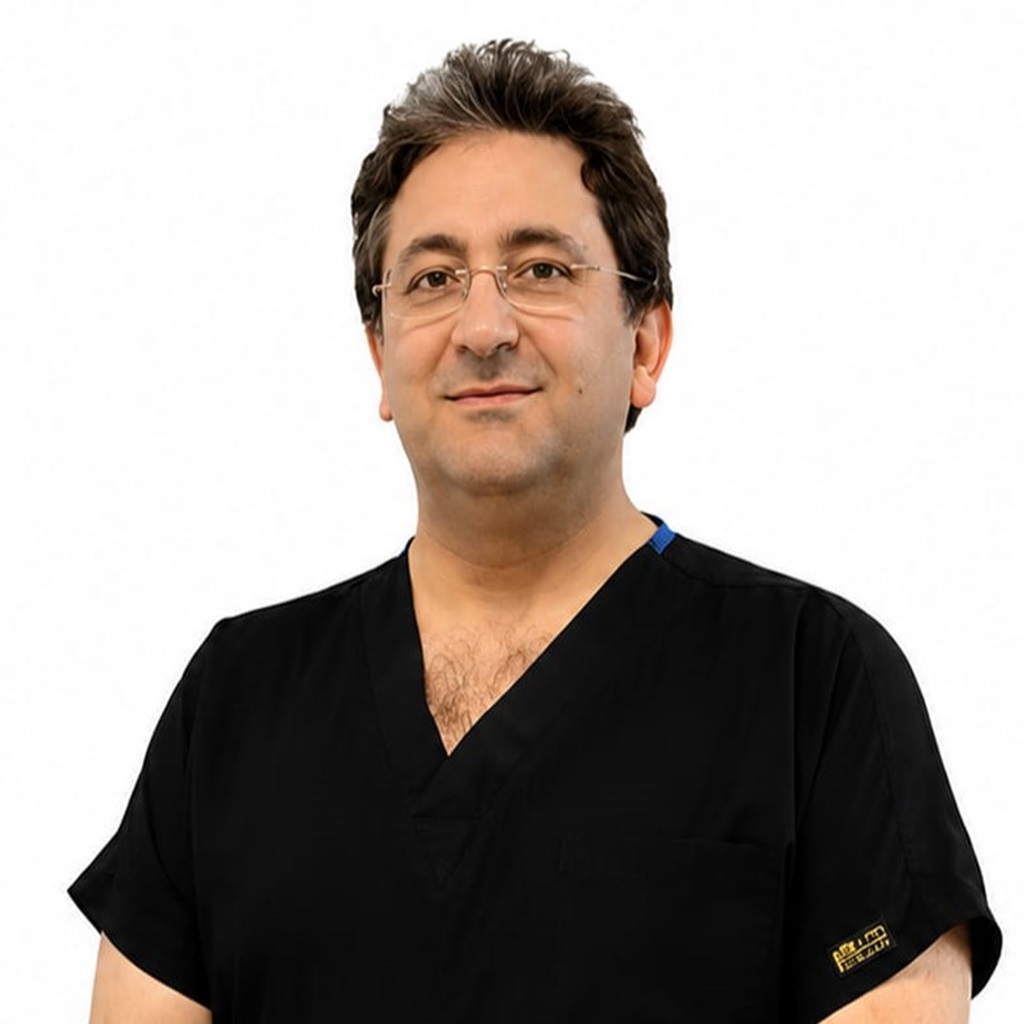 Plastic Surgery Specialist
 Oculoplastic Specialist
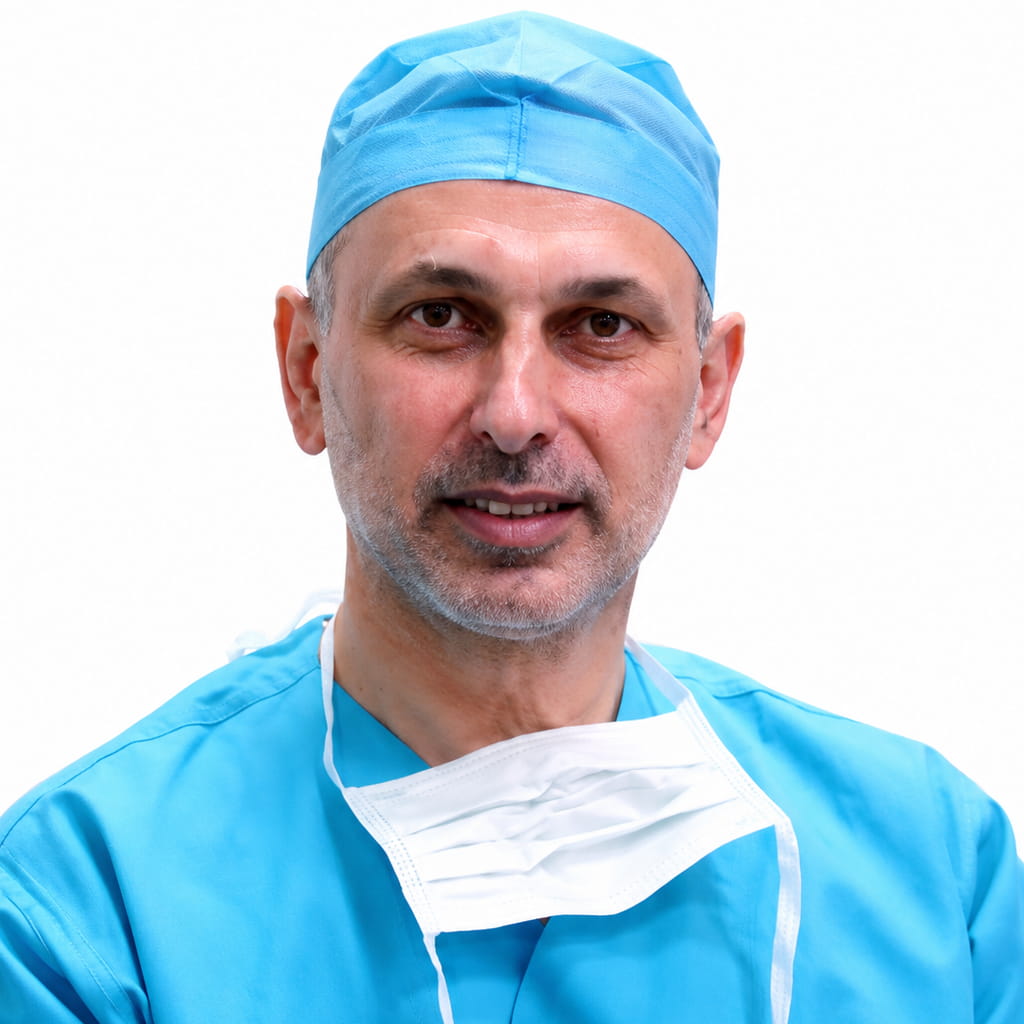 Plastic Surgery Specialist
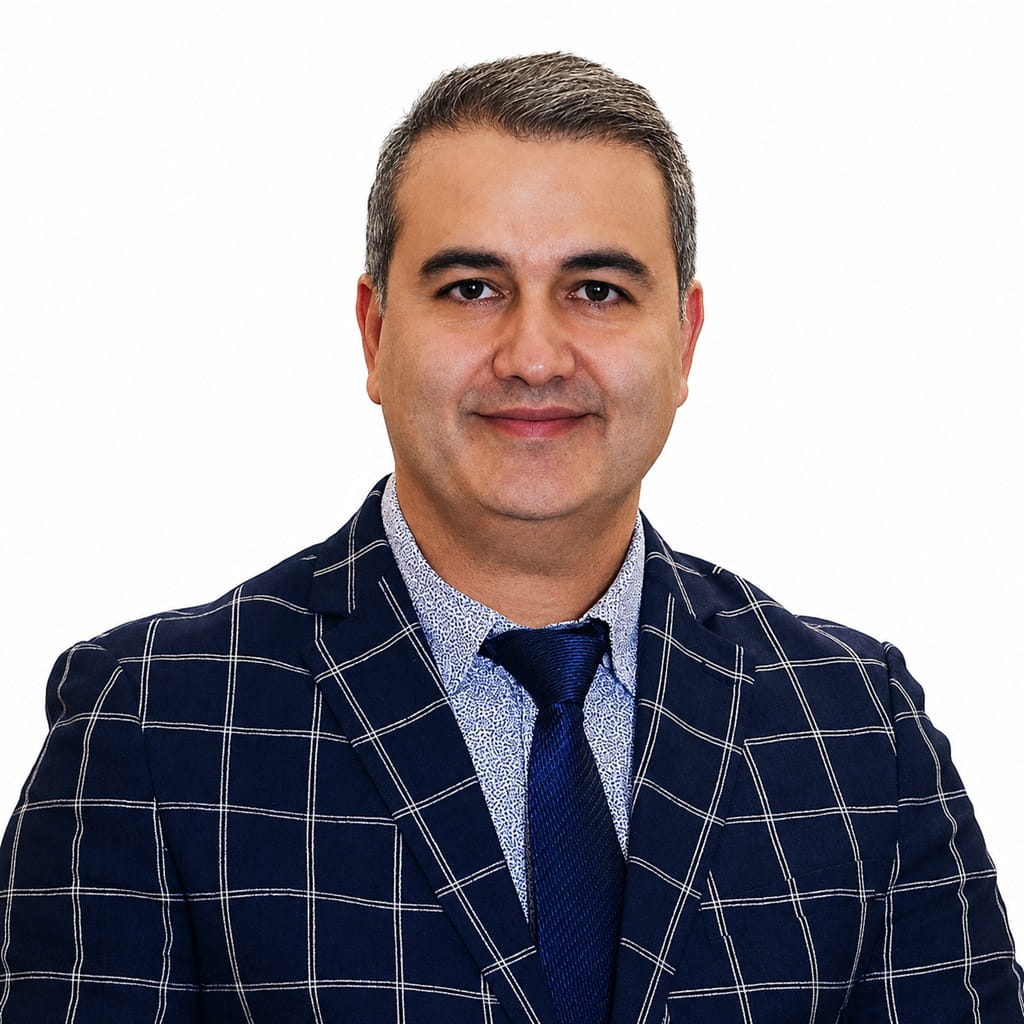 Plastic Surgery Specialist
 Aesthetic Surgery Specialist
 Plastic Surgery Specialist