

Lumbar Disc Surgery in Iran
Lumbar disc surgery in Iran can help relieve pressure on nerves caused by a herniated disc in the lower back. For patients struggling with persistent sciatica, leg pain, or numbness, procedures such as microdiscectomy or endoscopic lumbar disc surgery may offer relief when nonsurgical treatments have not been effective.
For international patients considering herniated disc surgery in Iran, Ceritamed provides access to experienced neurosurgeons and coordinates specialist consultations, hospital arrangements, travel support, and postoperative follow-up.
- Microdiscectomy and minimally invasive lumbar surgery options
- Experienced neurosurgeons and personalized surgical assessment
- Coordinated treatment and travel support for international patients

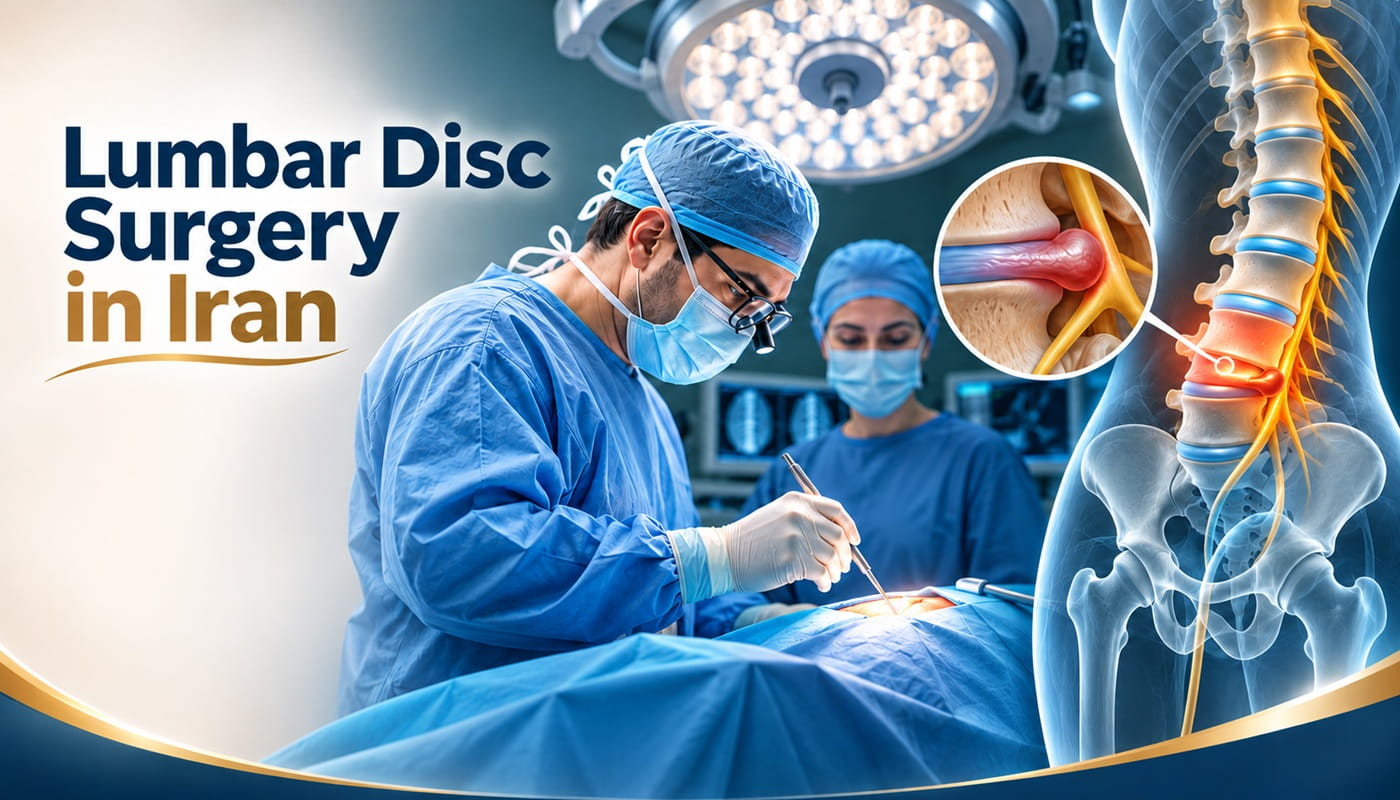
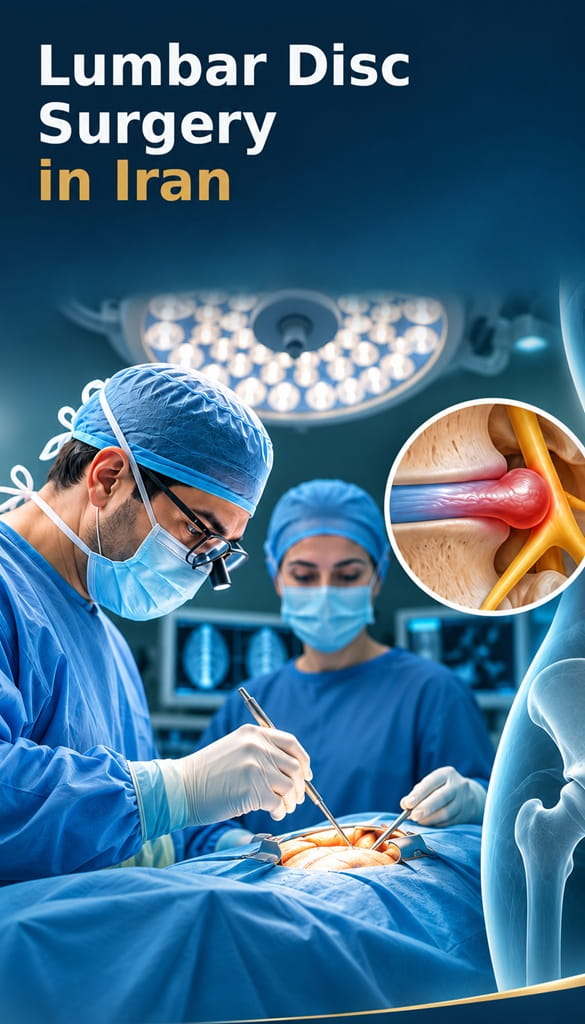
Advanced Lumbar Disc Surgery & International Patient Care in Iran
Choosing the right treatment for a lumbar herniated disc starts with understanding how it affects everyday life—not just what appears on an MRI. Spine specialists assess symptoms, neurological findings, and imaging together to determine whether surgery is appropriate and which approach may be most suitable. When surgery is recommended, the aim is to relieve pressure on the affected nerve and help improve leg-related symptoms.
For international patients considering herniated disc treatment in Iran, Ceritamed helps coordinate the practical side of care, including specialist consultations, hospital arrangements, accommodation, and postoperative follow-up. This allows patients to plan their treatment journey with a clearer understanding of what to expect at each stage.
When Is Lumbar Disc Surgery Necessary?
Most people with a lumbar herniated disc improve without surgery. However, when persistent sciatica or leg pain makes it difficult to work, sleep, or manage everyday activities despite treatments such as medication and physical therapy, surgery may be considered.
Progressive leg weakness requires prompt specialist assessment. New difficulty urinating, loss of bladder or bowel control, or numbness around the groin or buttocks requires emergency medical attention rather than waiting for a planned treatment trip.
For suitable patients, herniated disc surgery aims to relieve pressure on the affected nerve and improve symptoms, particularly pain that travels into the leg. A spine specialist will consider the expected benefits and potential risks before recommending an operation.
Symptoms of Lumbar Disc Herniation
A lumbar herniated disc can cause lower back pain, but symptoms often become more noticeable when the affected disc irritates or compresses a nearby nerve. Pain may travel through the buttock and down one leg—a pattern commonly known as sciatica—and may be accompanied by numbness, tingling, or muscle weakness in the leg or foot.
Symptoms vary from person to person. Some patients experience pain that worsens with sitting, bending, coughing, or sneezing, while others have a herniated disc with few or no symptoms. Since back and leg pain can have different causes, a specialist assessment helps identify the source and guide appropriate treatment.
Diagnosis of Lumbar Disc Herniation
Diagnosing a lumbar herniated disc begins with understanding where the pain occurs, how it travels into the leg, and how it affects daily movement. A spine specialist examines muscle strength, sensation, and reflexes to look for signs of nerve involvement. When appropriate, a lumbar MRI helps identify the affected disc and any pressure on nearby nerve roots. These findings are considered together, since an abnormality seen on an MRI does not always explain a patient’s symptoms or mean surgery is needed.
Before traveling to Iran, patients can share their MRI scans and medical reports with Ceritamed for a preliminary specialist review. This helps clarify possible treatment options and plan the next steps, while the final recommendation depends on a complete clinical assessment.
Types of Lumbar Disc Surgery
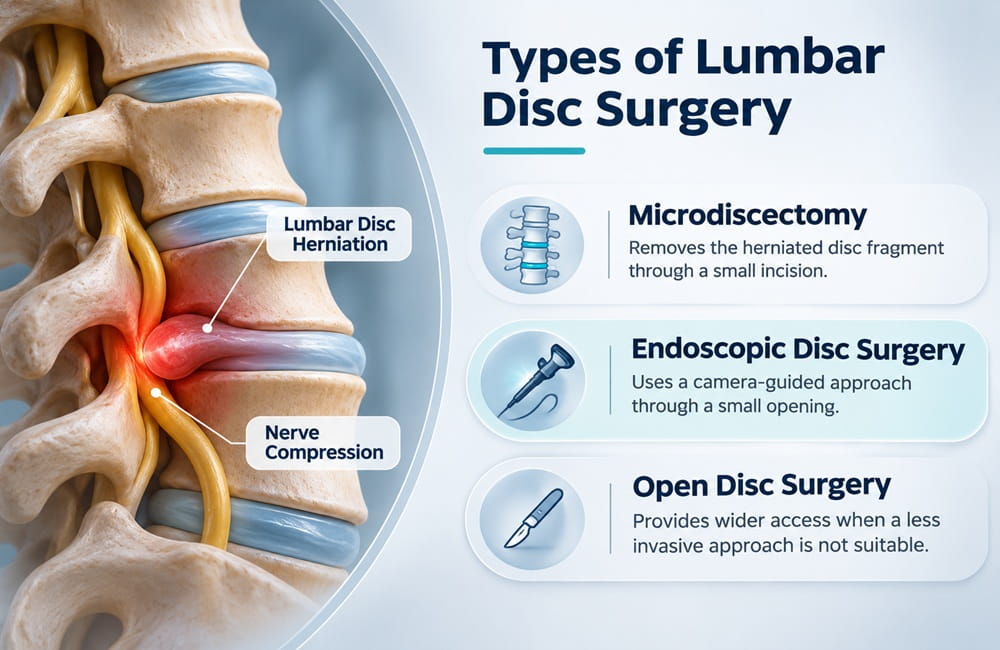
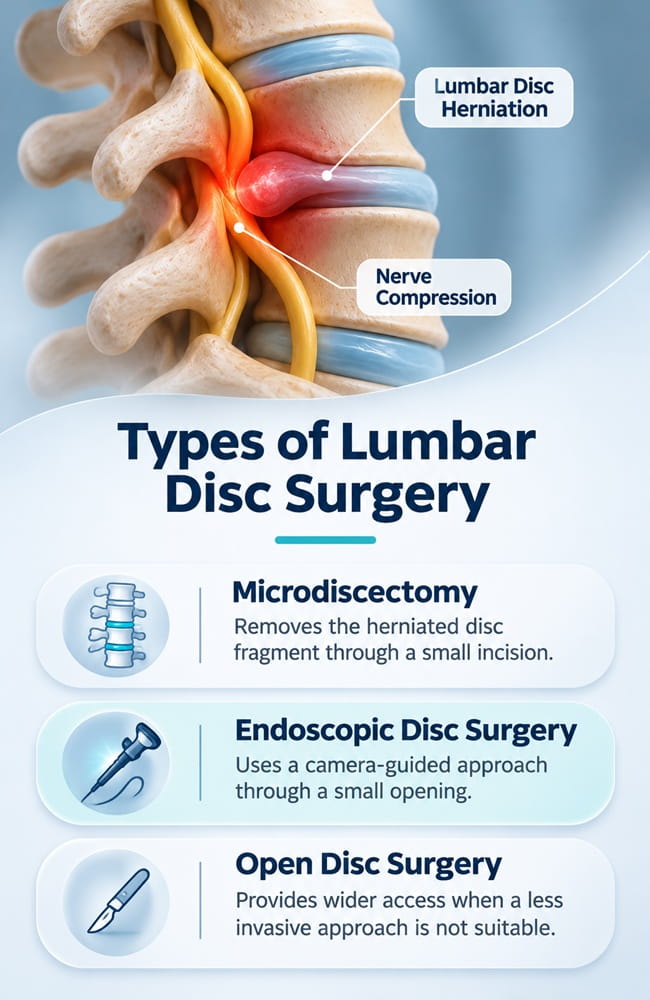
Several surgical approaches can treat a lumbar herniated disc when it presses on a nerve and causes persistent symptoms. The choice depends on the location and severity of the disc herniation, the patient’s symptoms, and overall spinal condition. Each approach aims to relieve nerve pressure while considering spinal stability and the patient’s individual needs.
Microdiscectomy
Microdiscectomy is a commonly performed procedure for lumbar disc herniation. Through a small incision, the surgeon typically uses a surgical microscope to remove the portion of the herniated disc pressing on a nerve root. The goal is to relieve nerve compression and improve symptoms such as sciatica, leg pain, or numbness, while preserving most of the disc.
Endoscopic Lumbar Disc Surgery
Endoscopic lumbar disc surgery uses a small incision and a thin camera-equipped instrument to reach the affected disc. The surgeon removes the disc material compressing the nerve while limiting disruption to surrounding tissues. This minimally invasive approach may offer a shorter recovery for suitable patients, although not every disc herniation can be treated endoscopically.
Open Lumbar Disc Surgery
In more complex cases, an open surgical approach may provide the wider access needed to remove herniated disc material and relieve nerve compression. It may be considered when the location or extent of the problem makes a less invasive approach unsuitable. If spinal instability is also present, additional treatment may be needed depending on the surgeon’s assessment.
Meet Our Spine Surgeons at CeritaMed
Ceritamed works with experienced neurosurgeons and spine specialists involved in the evaluation and surgical treatment of lumbar disc conditions.
For patients considering lumbar disc surgery in Iran, the appropriate specialist and surgical approach are selected based on symptoms, imaging findings, and the patient’s overall spinal condition.
 Neurosurgeon
Dr. Fahim Baghban
Board-Certified Neurosurgeon & Spine Surgeon
 Neurosurgeon
Prof. Giv Sharifi
Professor of Neurosurgery & Skull Base Surgery
 Neurosurgeon
Dr. Hassan Reza Mohammadi
Board-Certified Neurosurgeon & Spine Surgeon
 Neurologist
Dr. Maryam Abed Nazari
Board-Certified Neurologist
Recovery After Lumbar Disc Surgery
Recovery after lumbar disc surgery depends on the procedure performed and the patient’s overall condition. Many patients can begin walking soon after surgery and gradually return to light daily activities with their surgeon’s guidance. Some temporary back soreness or leg discomfort may occur during the early healing period.
Returning to work, exercise, and more demanding activities takes longer and varies between patients. Following postoperative instructions, gradually increasing walking, and attending recommended follow-up appointments can support recovery. Rehabilitation may also be recommended depending on individual needs.
For international patients, Ceritamed helps coordinate postoperative care and medical support during their stay in Iran. The length of hospital stay, overall recovery period, and timing of the return flight should be planned individually with the treating surgeon.
Cost of Lumbar Disc Surgery in Iran
The cost of lumbar disc surgery in Iran depends on the surgical approach, the complexity of the herniated disc, and the hospital selected. Procedures such as microdiscectomy and endoscopic lumbar disc surgery may involve different equipment and surgical costs. The number of affected spinal levels and any additional procedures can also influence the final price.
For international patients considering herniated disc surgery in Iran, understanding what is included in the quotation is just as important as the price itself. Medical expenses such as surgeon and anesthesia fees, hospital care, preoperative tests, and follow-up appointments should be clearly distinguished from travel services, including accommodation and transportation.
Ceritamed helps patients arrange a personalized cost estimate based on their MRI scans, medical reports, and proposed treatment plan. This allows patients to review the expected medical expenses and available travel support before making arrangements for their treatment in Iran.
Why Choose Ceritamed for Lumbar Disc Surgery?
Undergoing lumbar disc surgery abroad means planning more than the operation itself. Knowing how appointments, hospital visits, transportation, and communication will be handled can make the experience easier to navigate. Ceritamed helps international patients organize these practical steps around the treatment plan established by their medical team.
The support options below are designed to make your stay in Iran more convenient and well-organized. Services can be arranged according to your needs, with package inclusions and any additional costs clarified before travel.
Considering Lumbar Disc Surgery in Iran?
If you have persistent lower back or leg pain, sciatica, numbness, or weakness related to a lumbar disc problem, Ceritamed can arrange a specialist review of your MRI scans and medical reports.
A spine specialist can help determine whether nonsurgical treatment, microdiscectomy, endoscopic lumbar disc surgery, or another surgical approach may be appropriate for your condition.
Procedure Overview
Anesthesia: General anesthesia
(in most surgical cases)
Success Rate: 85–95%
(depending on severity and surgical technique)
Stay Duration: 5–7 days

Frequently Asked Questions About Lumbar Disc Surgery in Iran
Is herniated disc surgery always necessary?
No. Many people with a lumbar herniated disc improve without surgery. An operation may be considered when persistent sciatica or leg pain does not respond to nonsurgical treatment, or when neurological symptoms require surgical assessment. The decision depends on your symptoms, examination findings, and MRI results.
How long should I stay in Iran after surgery?
Most international patients stay in Iran for about 7 to 10 days for postoperative monitoring and medical evaluation.
When can I return to normal activities after surgery?
Light daily activities typically resume within a few weeks, while full recovery depends on individual healing and rehabilitation.
Can Ceritamed arrange the entire treatment trip?
Yes. Ceritamed coordinates medical consultation, hospital admission, accommodation, and patient support throughout the treatment journey.