

Facelift Surgery in Iran
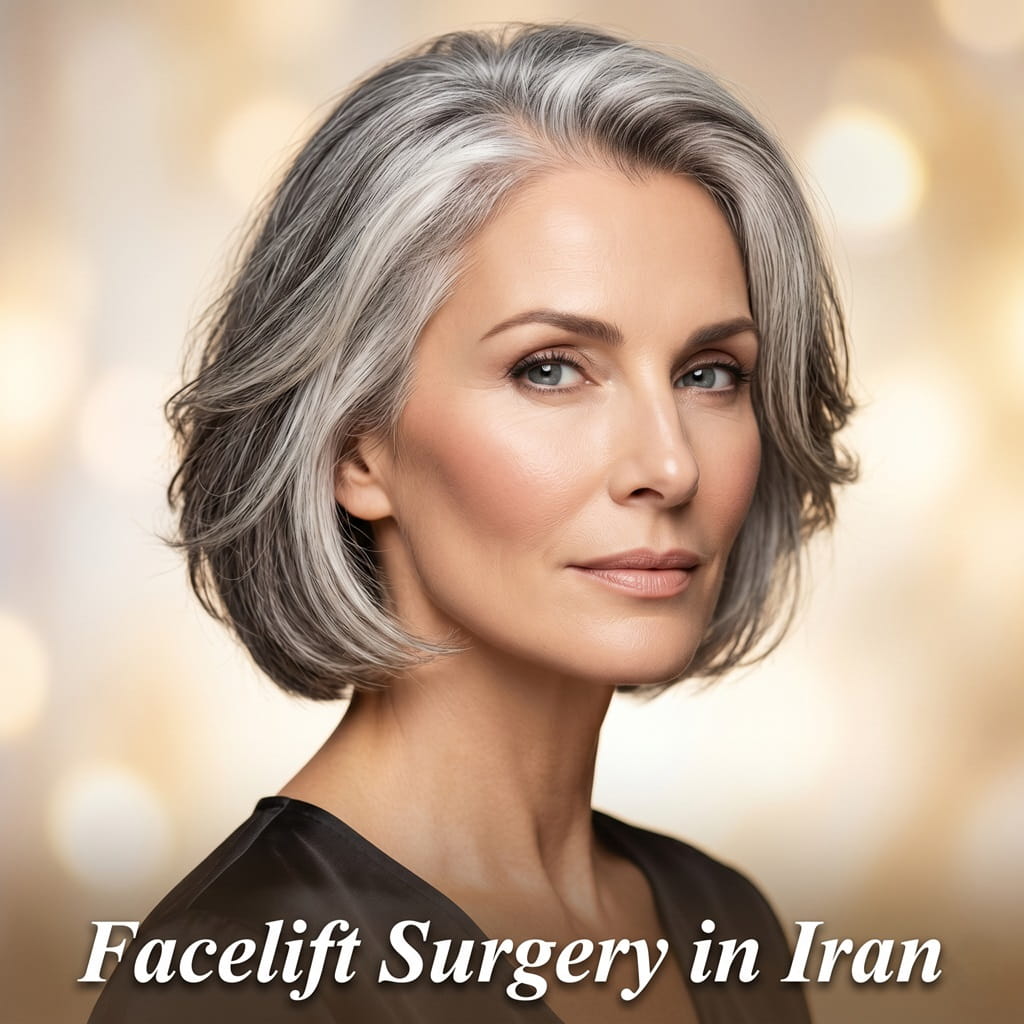
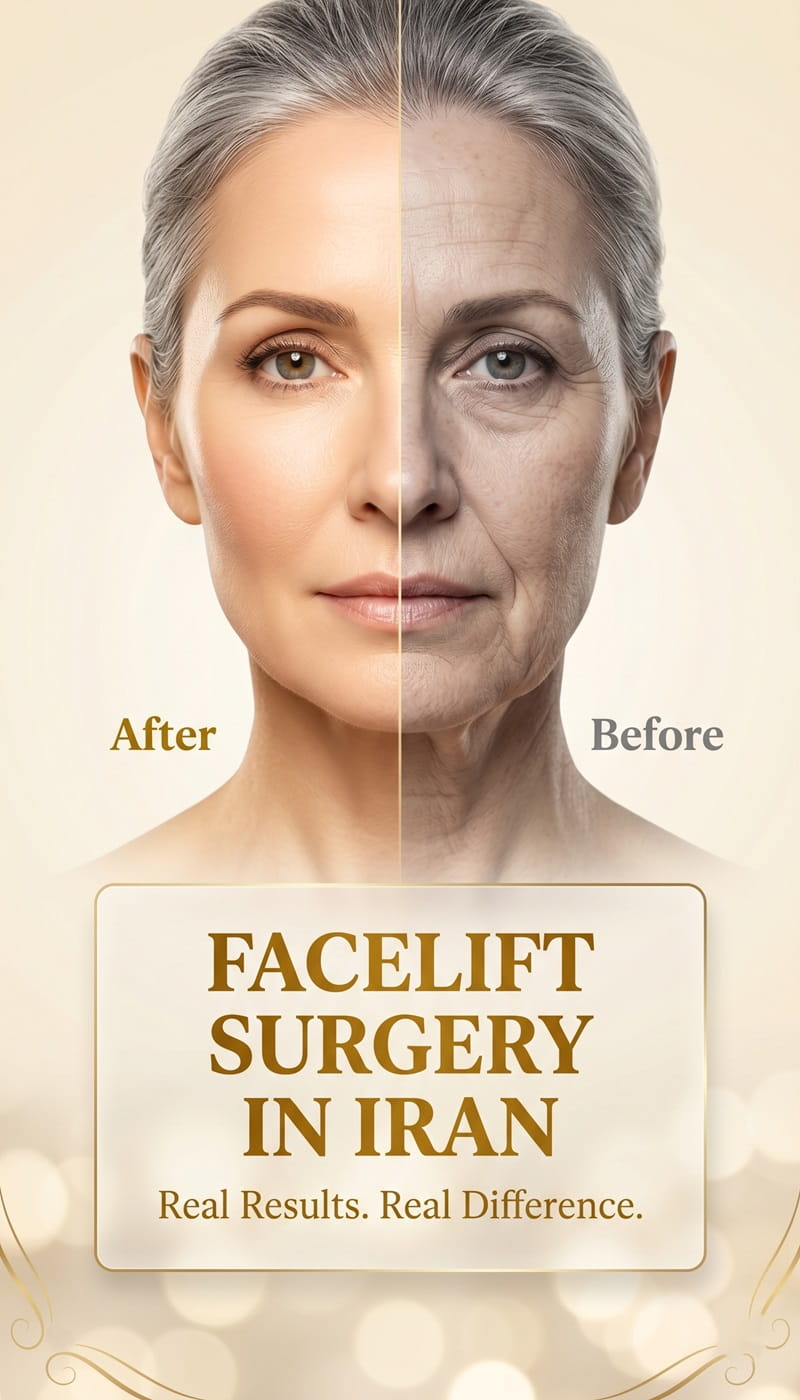
Facelift surgery in Iran is designed to improve facial sagging, jowls, and loss of definition caused by aging by repositioning facial tissues and, when needed, removing excess skin.
At CeritaMed, patients considering a facelift in Iran can be evaluated for deep plane facelift, full facelift, or mini facelift, with the surgical approach selected according to facial anatomy, degree of tissue laxity, and the desired result.
- Customized Face Lift Solutions Designed for Natural Facial Rejuvenation
- Advanced Face Lift Techniques for Firmer, Smoother & More Defined Features
- Advanced Anti-Aging Techniques Focused on Youthful, Harmonious Contours
What Is Facelift Surgery?
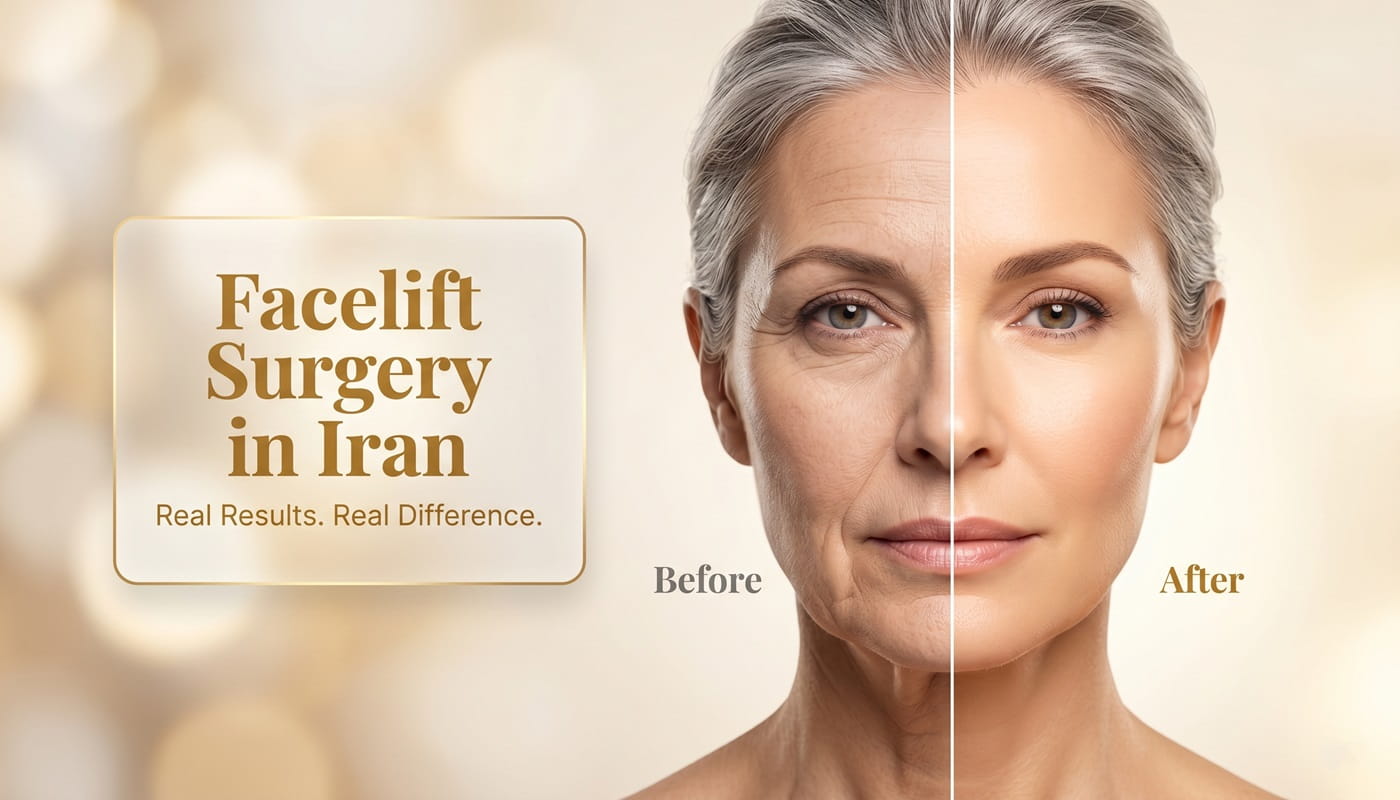
A facelift (rhytidectomy) is a surgical procedure that improves visible signs of facial aging by repositioning deeper facial tissues and redraping excess skin.
It can address concerns such as sagging cheeks, jowls, deeper facial folds, and loss of jawline definition. Modern facelift planning focuses on restoring facial support rather than simply tightening the skin.
Signs You May Need a Facelift
Facelift surgery may be considered when age-related changes affect the deeper tissues and contours of the face rather than only the skin surface.
Common concerns include:
- Sagging in the cheeks or lower face
- Jowls and reduced jawline definition
- Deeper folds around the nose and mouth
- Loose facial skin that is not adequately addressed by nonsurgical treatments
- A tired or aged appearance caused by tissue descent
There is no single “right age” for a facelift. Suitability depends more on facial anatomy, tissue laxity, general health, and treatment goals.
Types of Facelift Surgery in Iran
Different facelift techniques address different degrees and patterns of facial aging. The appropriate approach is selected according to facial anatomy, tissue laxity, and the areas that require correction.
Deep Plane Facelift in Iran
A deep plane facelift in Iran repositions deeper facial tissues beneath the SMAS layer rather than relying mainly on tension at the skin surface.
By releasing selected facial retaining ligaments and repositioning the deeper tissues, the technique can address sagging in the cheeks, lower face, and jawline while allowing the skin to be redraped with less surface tension.
Deep plane facelift is not automatically the right technique for every patient; suitability depends on facial anatomy and the surgeon’s assessment.
Full Facelift in Iran
A full facelift in Iran provides more comprehensive correction for patients with moderate to more advanced facial sagging.
It typically addresses the cheeks, jowls, lower face, and jawline by repositioning deeper supporting tissues and redraping or removing excess skin where required.
Mini Facelift in Iran
A mini facelift in Iran is a more limited surgical approach generally intended for earlier or less extensive laxity, particularly around the lower face and jawline.
It involves a smaller treatment area than a full facelift and provides a more limited degree of correction.
Facelift with Neck Lift
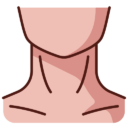
In some patients, facial aging also affects the neck and the area below the jawline. In these cases, a facelift may be combined with a neck lift as part of the overall surgical plan.
For detailed information about neck correction, see our Neck Lift in Iran page.
Our Expert Plastic Surgeons
At Ceritamed, cosmetic procedures are performed by a highly experienced team of board-certified plastic and reconstructive surgeons with expertise across facial and body aesthetic surgery. Our medical team specializes in procedures such as facelift, rhinoplasty, breast surgery, and advanced reconstructive procedures, with treatment plans tailored to each patient’s individual needs and aesthetic goals.
All consultations, surgical planning, and procedures are coordinated through Ceritamed Specialty Clinics, with a strong focus on patient safety, personalized care, and natural-looking results.
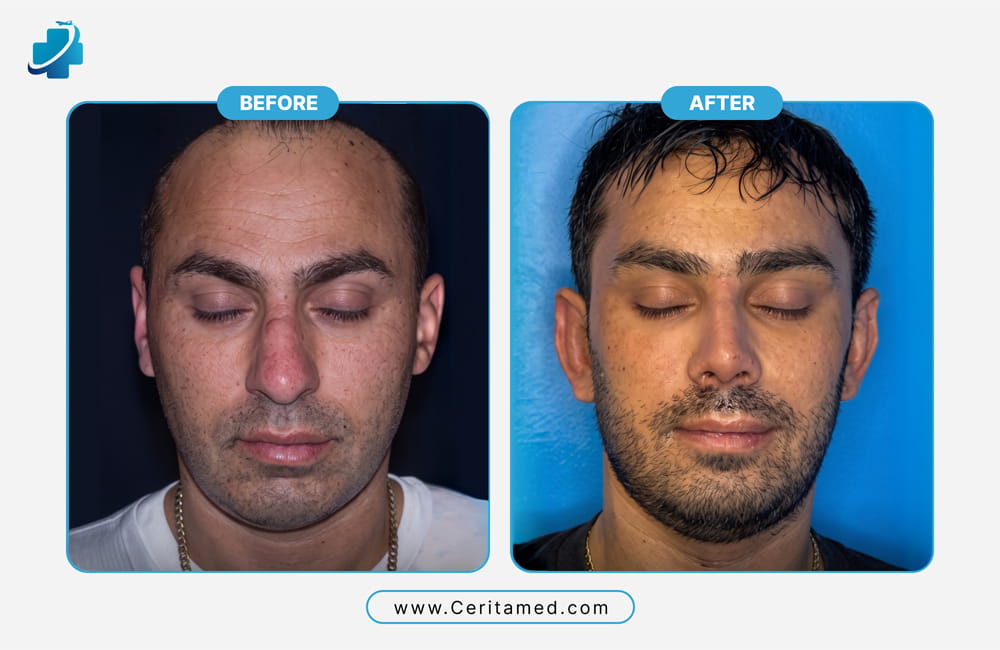
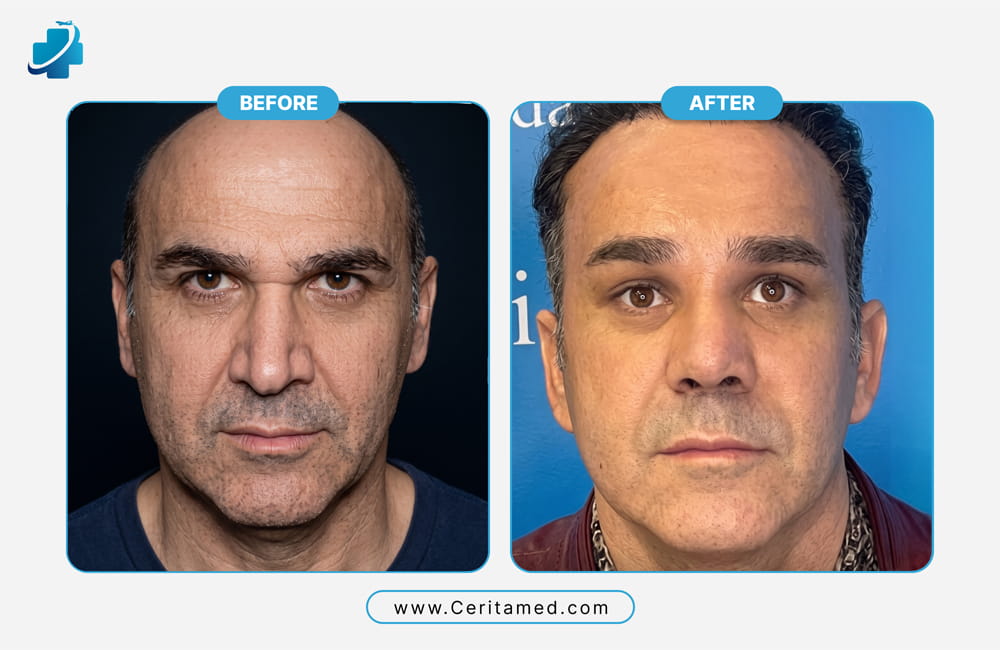
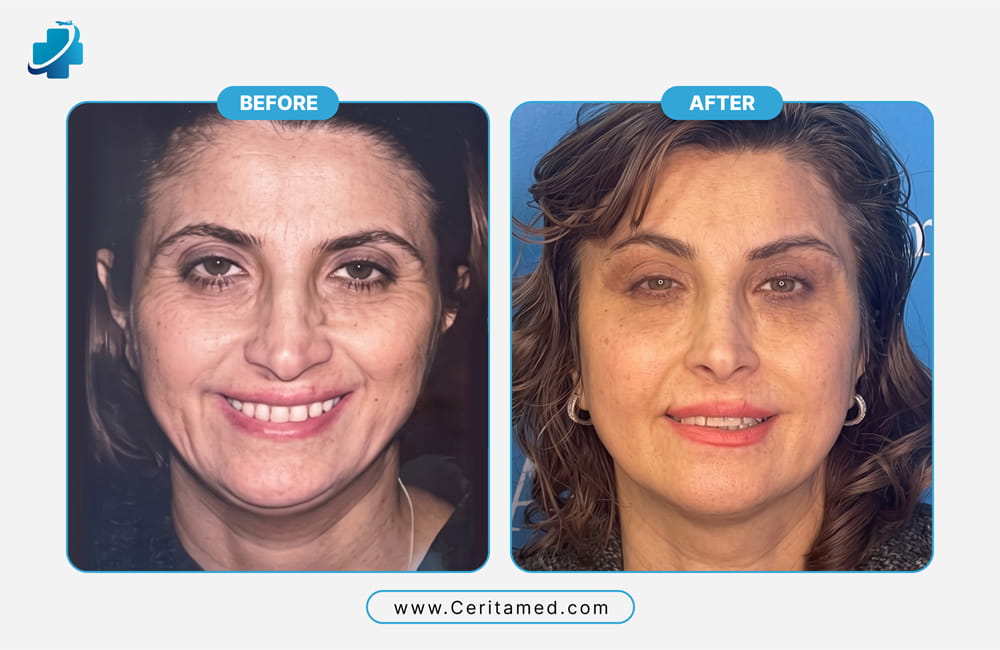
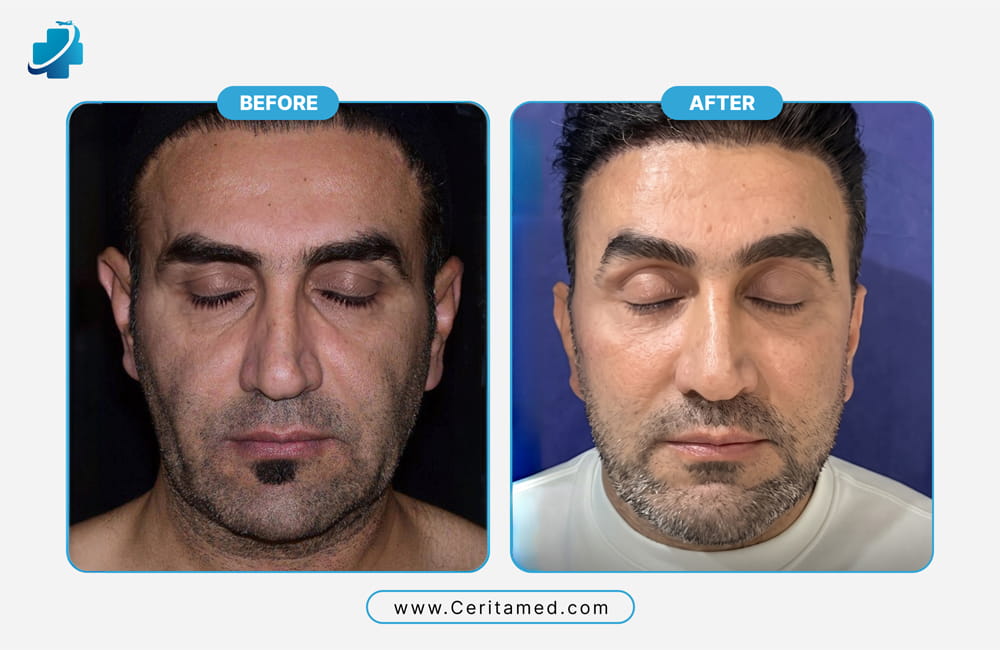
Natural-Looking Facelift Results
A natural-looking facelift is not simply about tightening the skin. Surgical planning focuses on repositioning descended tissues while preserving the patient’s natural facial features and proportions.
The goal is a refreshed and better-defined appearance rather than an overly tight or noticeably operated look. Results vary according to anatomy, surgical technique, skin quality, healing, and the extent of correction required.
How Facelift Surgery Is Performed
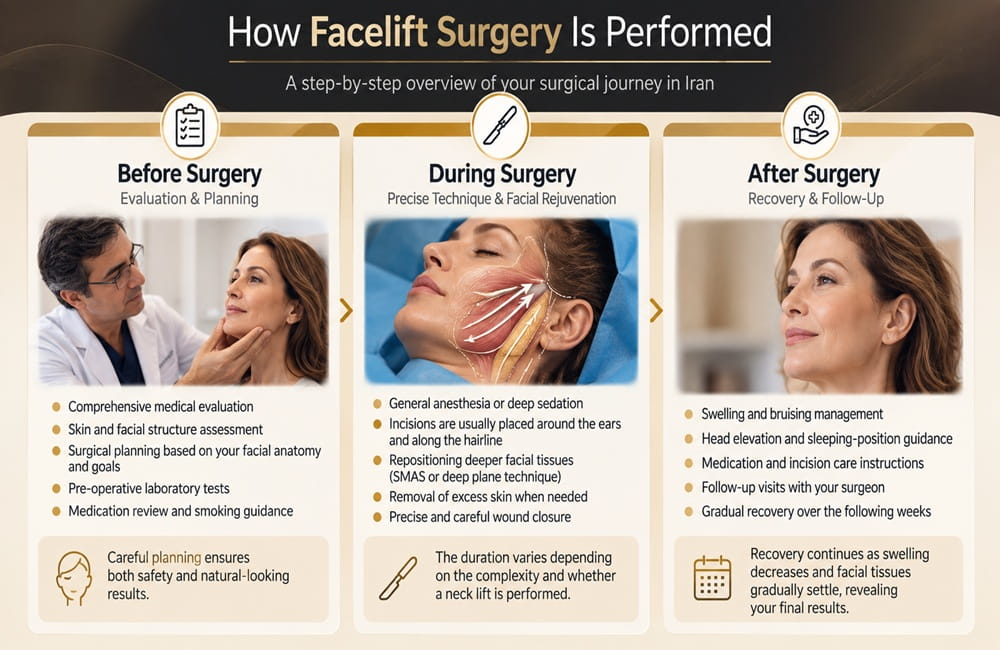
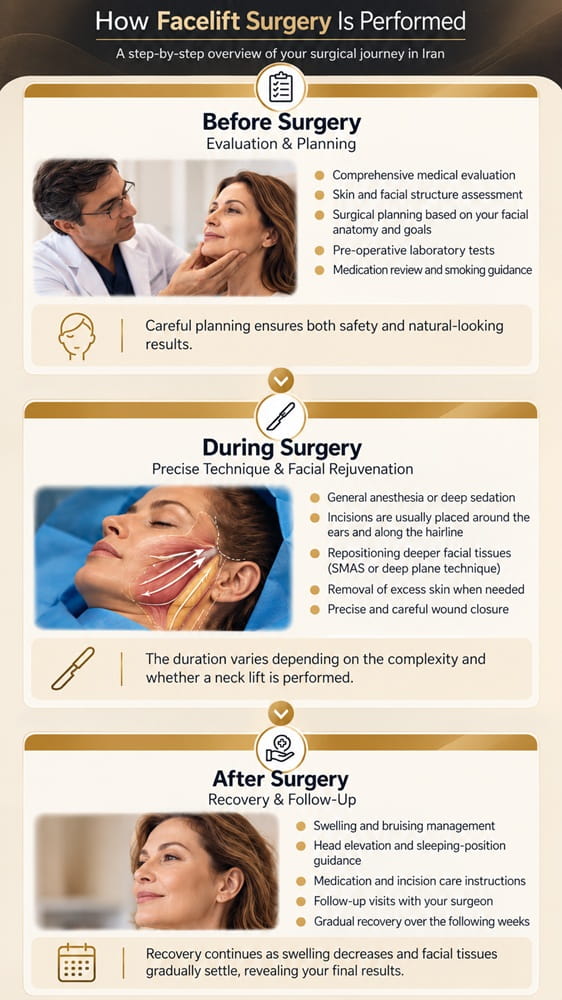
The exact technique varies according to the type of facelift and the patient’s anatomy.
Before Surgery
the surgeon evaluates facial structure, skin and tissue laxity, and the areas requiring correction.
During Surgery
incisions are usually positioned around the hairline and natural contours near the ears. Deeper facial tissues are repositioned as required, the skin is carefully redraped, and excess skin is removed before the incisions are closed.
The operation typically takes around 2–5 hours, depending on the technique, extent of correction, and whether another procedure is performed at the same time.
After Surgery
the patient receives instructions for incision care, swelling management, medications, and follow-up.
Facelift Cost in Iran
Facelift surgery in Iran generally costs between $2,500 and $5,000 at CeritaMed. The final price depends on the facelift technique, surgical complexity, surgeon, and whether additional procedures are included in the treatment plan.
A personalized cost is confirmed after the surgeon evaluates facial anatomy and the extent of correction required.
Facelift treatment in Iran is often priced below many Western destinations, partly because of differences in local healthcare costs and currency values.
Deep Plane Facelift Cost in Iran
The cost of a deep plane facelift in Iran depends on the extent of tissue repositioning and the individual surgical plan. The final price is confirmed after specialist evaluation.
Facelift Surgery Package
Upper Face Lift / Forehead Lift
Forehead lift for upper-face rejuvenation and brow repositioning
$2,500 – $4,500 USD
- Forehead lift surgery
- Correction of upper facial sagging
- Forehead and eyebrow lifting and reshaping
- Pre-operative consultation and evaluation
- Initial post-operative medications
- Initial post-operative examination and follow-up
- 1 week hotel accommodation
- Interpreter
- Transportation
- SIM card and internet service
Face & Neck Lift — Standard
Standard face and neck lift package in Iran, including combined surgery, initial post-operative care, hotel accommodation, interpreter, and transportation.
4000 USD
- Facelift surgery
- Neck lift surgery
- Correction of facial skin sagging
- Improvement of jawline definition and facial contours
- Neck lifting and reshaping
- Pre-operative consultation and evaluation
- Initial post-operative medications
- Post-operative examination and follow-up
- 1 week hotel accommodation
- Interpreter
- Transportation
- SIM card and internet service
VIP
Face & Neck Lift — VIP
VIP face and neck lift package in Iran featuring a senior surgeon, VIP hospital services, dedicated treatment coordination, hotel accommodation, and patient support.
5000 USD
- Comprehensive face and neck lift surgery
- Procedure performed by a senior surgeon
- Correction of facial and neck sagging
- Improvement of jawline definition and facial contours
- Comprehensive pre-operative evaluation
- VIP hospital and surgical services
- Initial post-operative medications
- Post-operative examination and follow-up
- Dedicated treatment coordination
- 1 week hotel accommodation
- Interpreter
- Transportation
- SIM card and internet service
Who Is a Good Candidate for Facelift Surgery?
Good candidates are generally healthy adults with visible facial laxity who are seeking surgical improvement in facial contour.
Important factors include good general health, realistic expectations, suitable skin and tissue quality, and the absence of conditions that could significantly interfere with healing. Smoking is also an important consideration because it can increase the risk of wound-healing problems.
A surgeon consultation is required to determine whether a deep plane, full, or mini facelift is appropriate.
Facelift Risks and Safety Considerations
Like any surgical procedure, facelift surgery carries potential risks.
Possible complications include bleeding or hematoma, infection, numbness, unfavorable scarring, delayed wound healing, fluid accumulation, and facial nerve injury. Swelling and bruising are expected during early recovery, while more serious complications are less common but still possible.
Careful pre-operative evaluation, appropriate surgical planning, and postoperative follow-up are important for reducing avoidable risks and managing complications if they occur.
Facelift Recovery Time
Recovery depends on the surgical technique, extent of correction, and individual healing.
Swelling, bruising, tightness, and temporary numbness are common during the early recovery period. Many patients become socially presentable within around 10–14 days, although swelling and tissue settling can continue for several weeks or longer.
More limited procedures such as a mini facelift may have a shorter early recovery than a full or deep plane facelift.
Patients should avoid strenuous activity during early healing and follow their surgeon’s instructions for incision care, medications, sleeping position, and follow-up.
How Long Should You Stay in Iran?
International patients should generally plan to stay in Iran for 7–10 days after facelift surgery.
This allows time for surgery, early postoperative checks, wound and swelling assessment, and initial follow-up before traveling home.
| Recovery Stage | Expected Progress |
|---|---|
| First few days | Swelling, bruising, tightness, and temporary numbness are common during early recovery. |
| Around 10–14 days | Many patients become socially presentable as swelling and bruising decrease. |
| Several weeks | Swelling continues to improve and facial tissues gradually settle. |
| Several months | Facial tissues continue to settle and the final result becomes more refined. |
How Long Do Facelift Results Last?
Facelift results are long-lasting, but not permanent, because the natural aging process continues after surgery.
The improvement can remain visible for many years, although longevity varies with facial anatomy, skin quality, surgical technique, sun exposure, smoking, weight changes, and natural aging.
Maintaining a stable weight, avoiding smoking, and protecting the skin from excessive sun exposure may help preserve the result.
Why Choose Iran for Facelift Surgery?
Iran offers international patients access to experienced plastic surgeons and established cosmetic surgery services at comparatively competitive costs.
For facelift surgery in Iran, the main treatment process and initial follow-up can generally be completed during a 7–10 day stay, making treatment practical for patients traveling specifically for surgery.
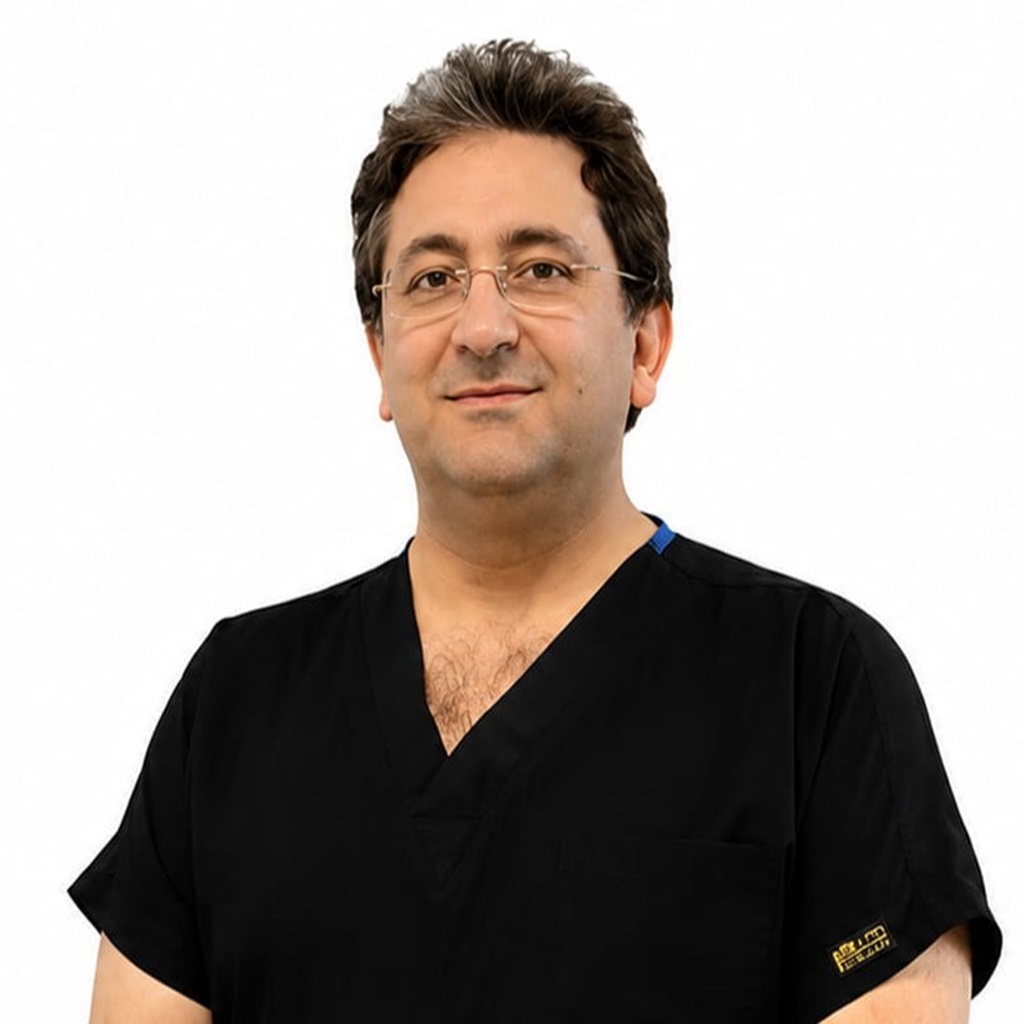
Facelift Surgeons at CeritaMed
Facelift procedures at CeritaMed are performed by experienced plastic and facial surgeons.
Patients can review each surgeon’s specialties, background, and credentials in the profiles below.
 Plastic Surgery Specialist
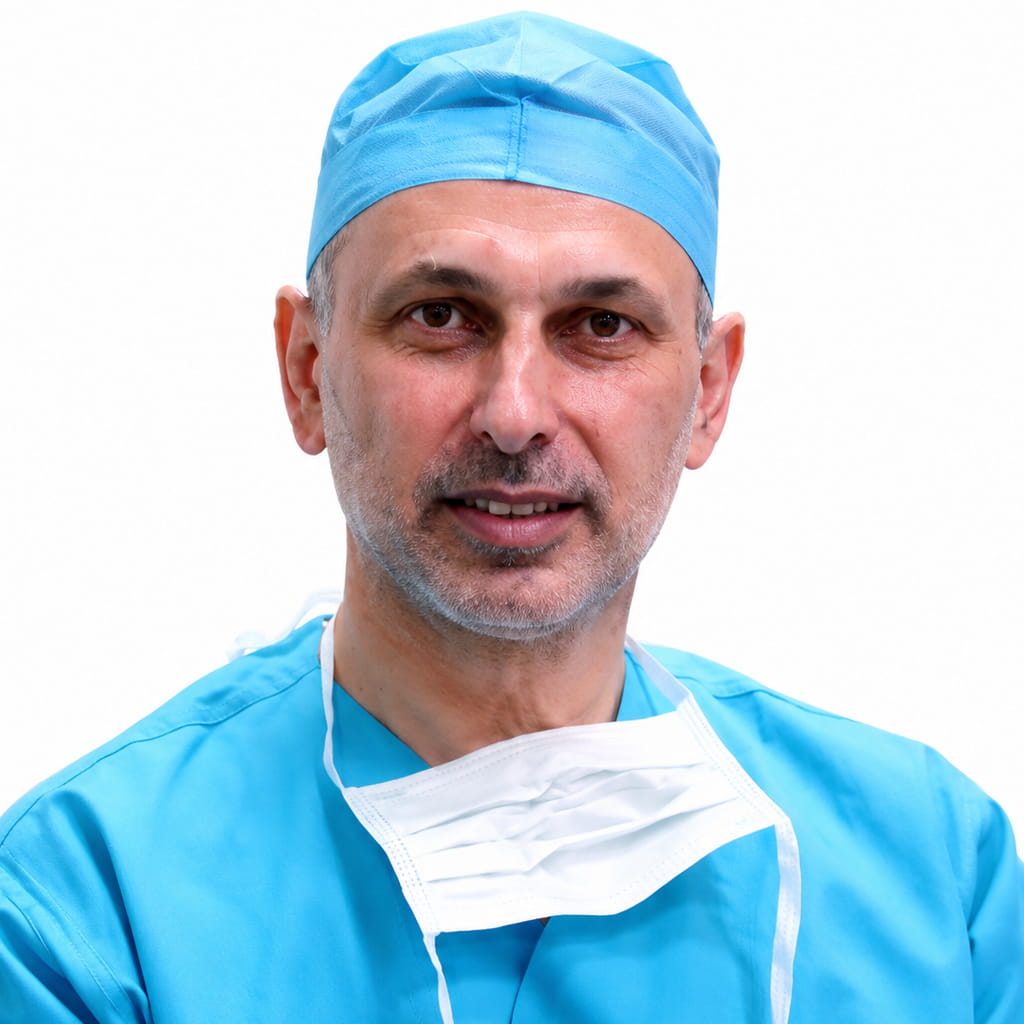
Dr. Ataollah Heydari
Plastic, Reconstructive & Aesthetic Surgeon
 Plastic Surgery Specialist
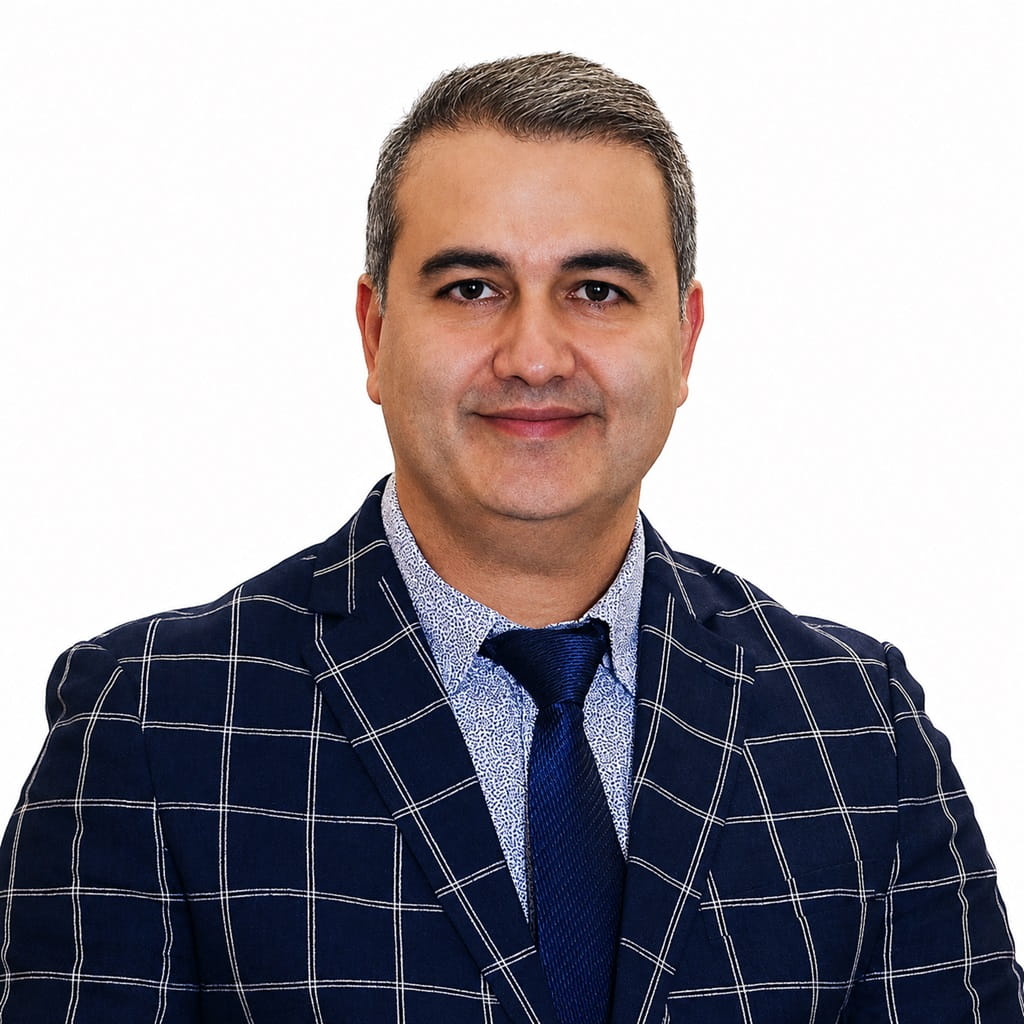
Dr. Ghasemali Khorasani
Plastic, Reconstructive & Aesthetic Surgeon
 Plastic Surgery Specialist
Dr. Hadi Amali
Plastic, Reconstructive & Aesthetic Surgeon
 Aesthetic Surgery Specialist
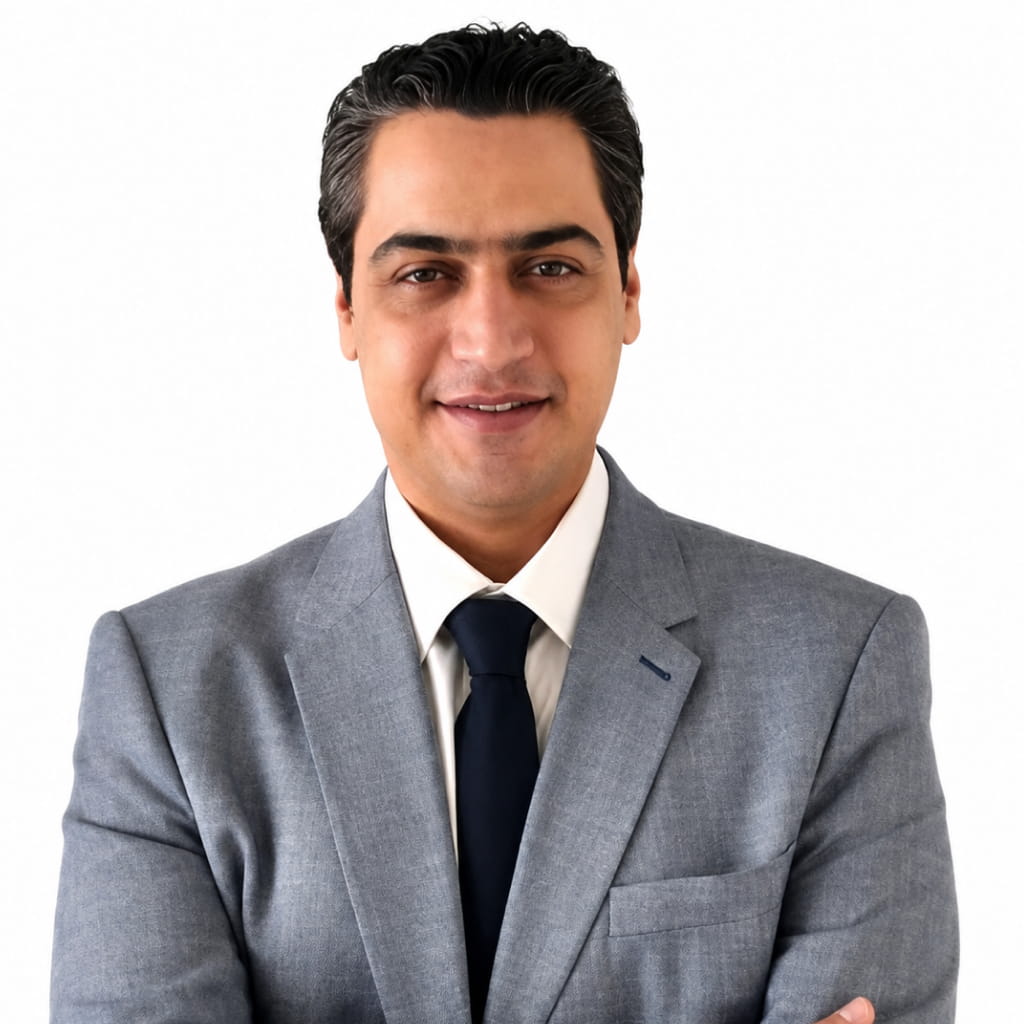
Dr. Hamid Asherlou
General & Aesthetic Surgeon
 Plastic Surgery Specialist
Dr. Mahmoud Nazemian
Plastic, Reconstructive & Aesthetic Surgeon
 Aesthetic Surgery Specialist
Dr. Mohammad Moradmand
General & Aesthetic Surgeon
Why Choose CeritaMed for Facelift Surgery?
CeritaMed coordinates the treatment journey for international patients considering facelift surgery in Iran, from surgeon selection and pre-operative planning to surgery, follow-up, and travel arrangements.
Support can include:
- Surgeon and appointment coordination
- Pre-operative testing and treatment planning
- Hospital and surgery scheduling
- Hotel and airport transfer arrangements
- Interpreter support when required
- Postoperative follow-up during the stay in Iran
The goal is to keep the medical and travel stages of treatment organized through one coordinated process.
Considering Facelift Surgery in Iran?
If you are considering a deep plane, full, or mini facelift, the first step is a surgeon evaluation to determine the most appropriate approach for your facial anatomy and goals.
Contact CeritaMed to receive your treatment plan, personalized cost estimate, surgeon options, and travel coordination in Iran.
Procedure Overview
Anesthesia: General Anesthesia or IV Sedation
Procedure Duration: 2–5 Hours
Stay Duration in Iran: 7–10 Days

Frequently Asked Questions About Facelift Surgery in Iran
How long do facelift results last?
Facelift results are long-lasting, but the natural aging process continues. How long the improvement remains visible varies according to surgical technique, skin quality, lifestyle, sun exposure, and weight changes.
Is facelift surgery painful?
Most patients describe discomfort rather than severe pain. Symptoms are usually manageable with medication.
When will I see the final results?
Initial improvement appears after swelling decreases, while final refinement develops gradually over several months.
Can men undergo facelift surgery?
Yes. Facelift surgery can be performed for both men and women. In male patients, surgical planning takes facial structure, hairline, beard-bearing skin, and masculine facial proportions into account
Can facelift surgery be combined with a neck lift?
Yes. Combining facelift and neck lift procedures is very common and often improves overall facial harmony.