Crossed Eyes Surgery for Children and Adults
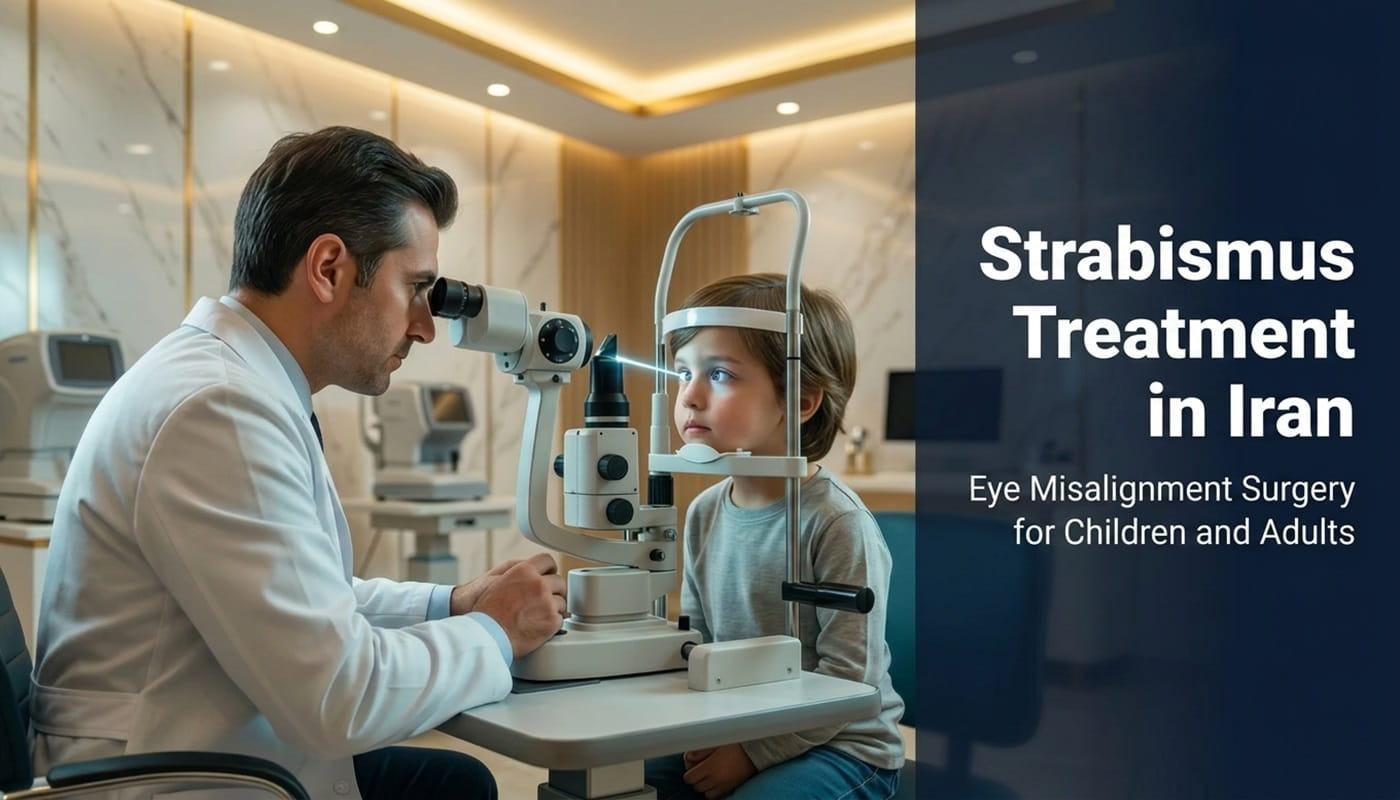
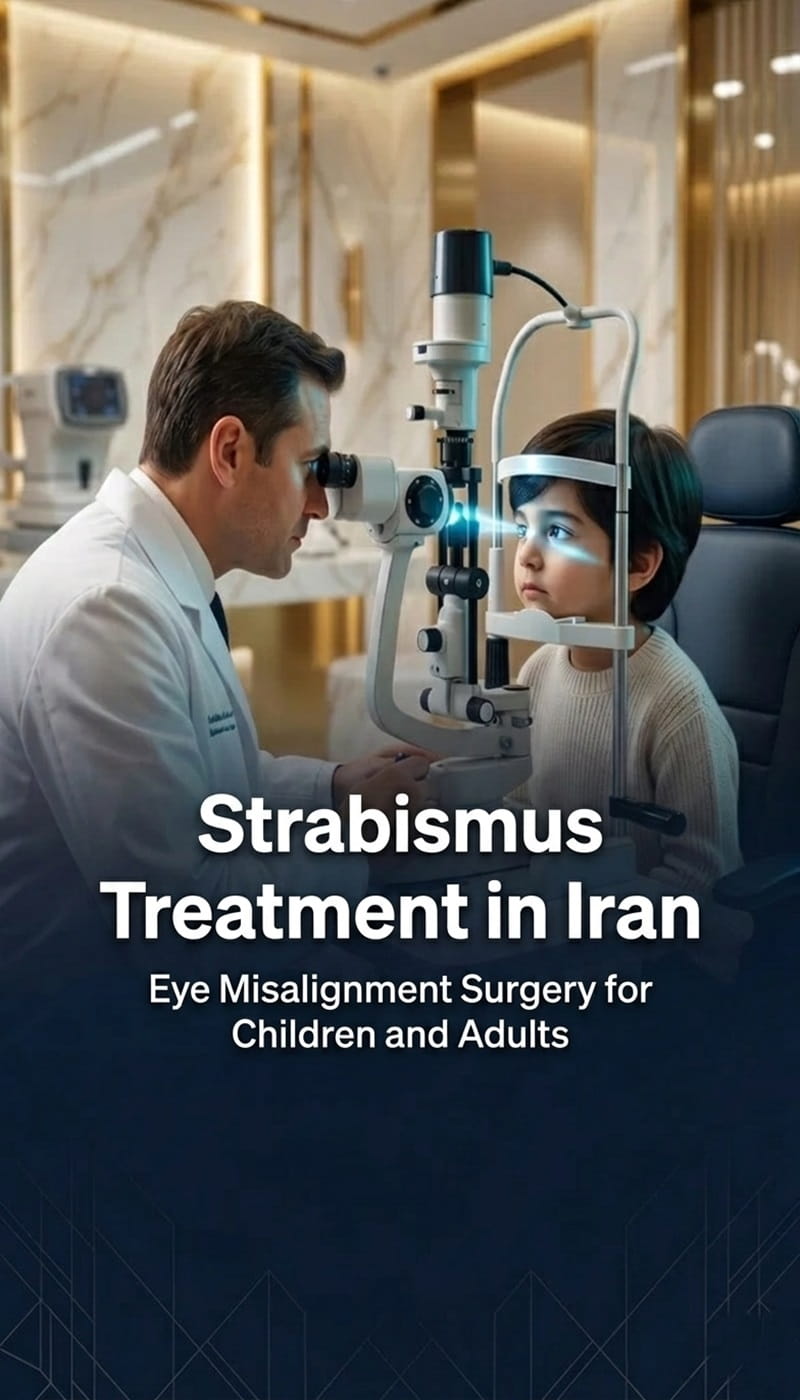
Strabismus surgery in Iran, also known as crossed-eye or squint surgery, corrects eye misalignment by adjusting the muscles that control eye position. Treatment is available for both children and adults.
Depending on the case, surgery may improve eye alignment, binocular vision, double vision, and everyday visual comfort.
Strabismus, commonly called crossed eyes, is a condition in which the eyes are not properly aligned and fail to focus on the same point at the same time. The deviation may be constant or intermittent and can turn inward, outward, upward, or downward.
It can begin in childhood or develop later in life and may be related to refractive errors, eye muscle or nerve problems, trauma, thyroid eye disease, or neurological conditions. In children, untreated strabismus can affect visual development and lead to amblyopia; in adults, it may cause double vision, reduced depth perception, or difficulty using both eyes together.
Can Strabismus Be Treated Without Surgery?
Yes. Depending on the type and cause, treatment may include prescription glasses, prism lenses, selected eye exercises or orthoptic therapy, and in some cases botulinum toxin injections.
Surgery is considered when non-surgical options do not adequately control the misalignment or when a more stable structural correction is required. A strabismus specialist determines the appropriate approach after assessing the deviation, eye movements, binocular vision, and underlying cause.
When Is Strabismus Treatment Recommended?
Treatment may be recommended when eye misalignment affects visual development, binocular function, daily comfort, or quality of life.
- Eye misalignment is constant, frequent, or becoming more noticeable
- Double vision interferes with daily activities
- Depth perception or binocular vision is reduced
- Non-surgical treatment does not provide adequate control
- A child is at risk of amblyopia or abnormal visual development
- Eye alignment affects appearance or quality of life
In children, timely treatment can support visual development. In adults, treatment may improve alignment, reduce double vision, and improve binocular function.
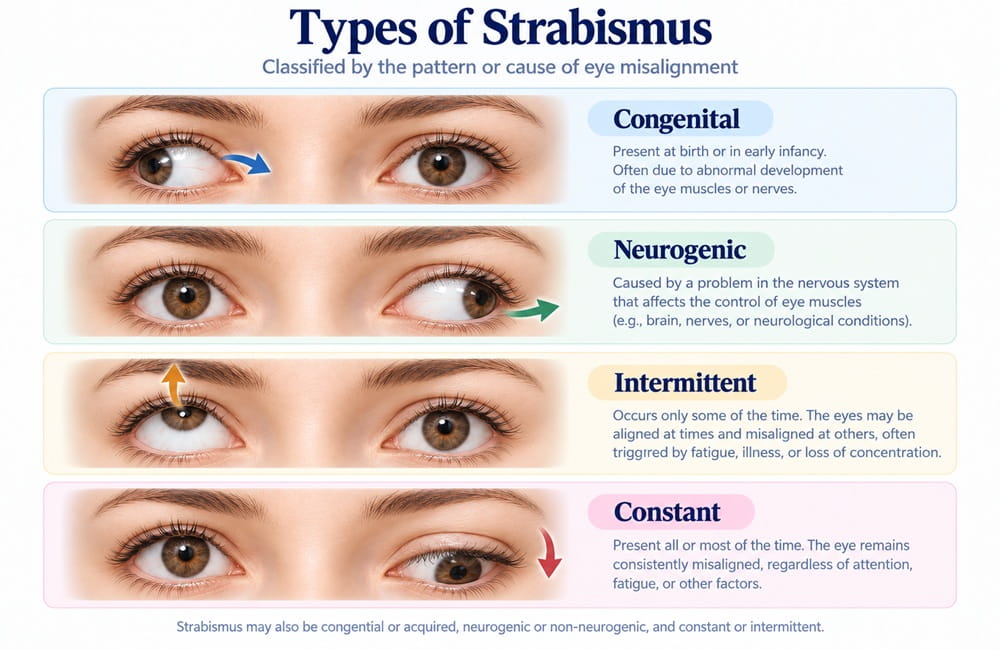
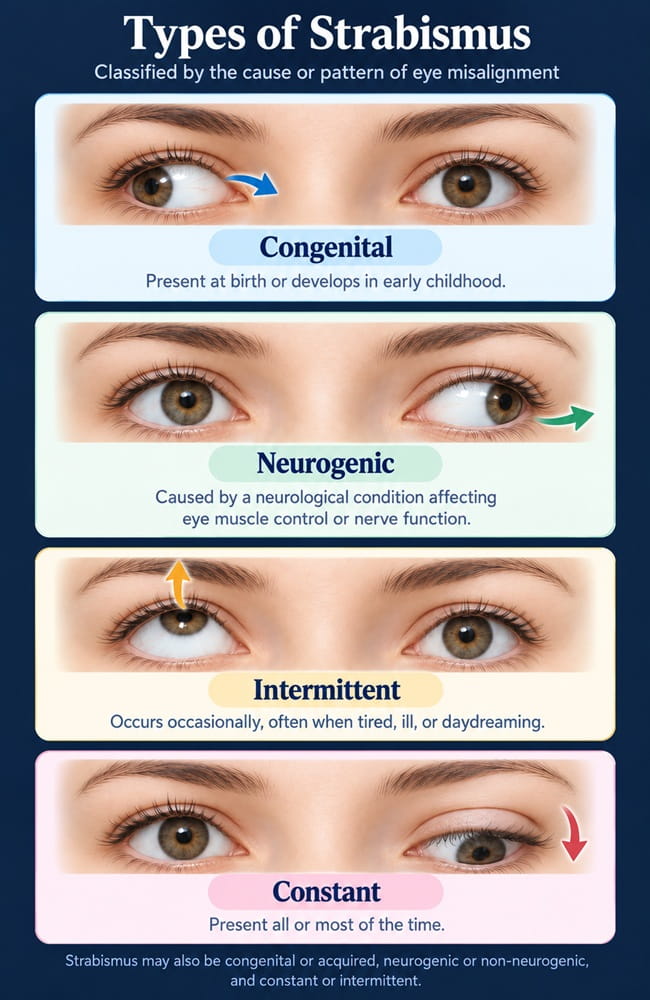
Strabismus can be classified by its onset, cause, direction, and whether it is constant or intermittent. By direction, common forms include esotropia, exotropia, hypertropia, and hypotropia.
Congenital Strabismus
Congenital or early-onset strabismus appears at birth or during infancy. Early evaluation is important because persistent misalignment can affect visual development and increase the risk of amblyopia.
Acquired Strabismus
Acquired strabismus develops later in childhood or adulthood and may be related to refractive problems, eye injury, thyroid eye disease, previous eye surgery, or neurological conditions.
Neurogenic Strabismus
Neurogenic strabismus occurs when a neurological condition or cranial nerve palsy affects control of the eye muscles. It may develop suddenly and cause double vision.Identifying the underlying cause is an important part of the evaluation before treatment is planned.
Intermittent and Constant Strabismus
Intermittent strabismus comes and goes, while constant strabismus remains present most or all of the time. Treatment depends on the type, size, symptoms, and effect on visual function.
How Is Strabismus Surgery Performed?
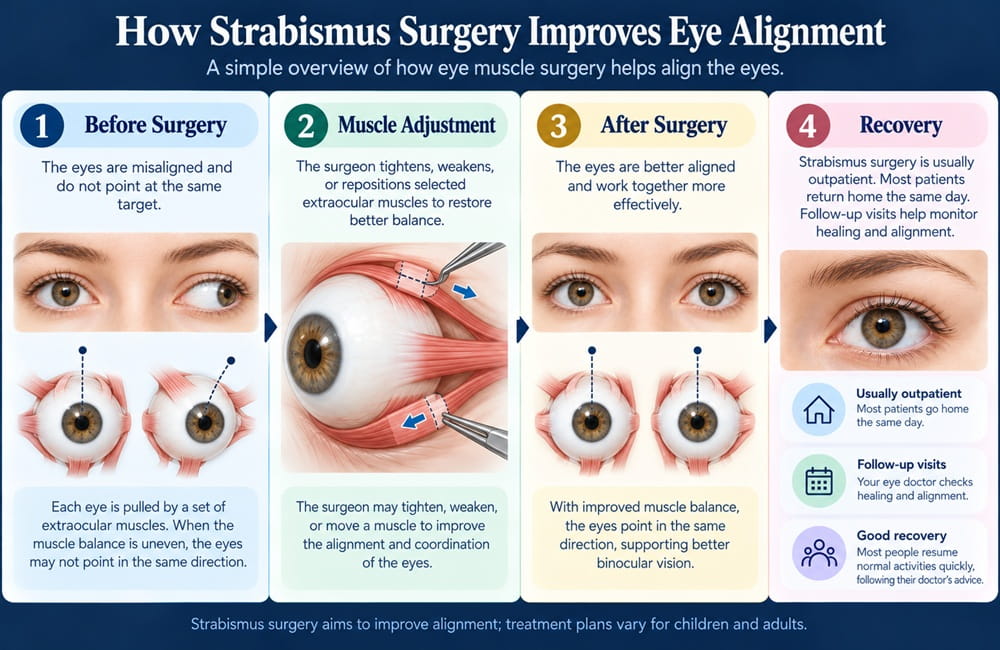
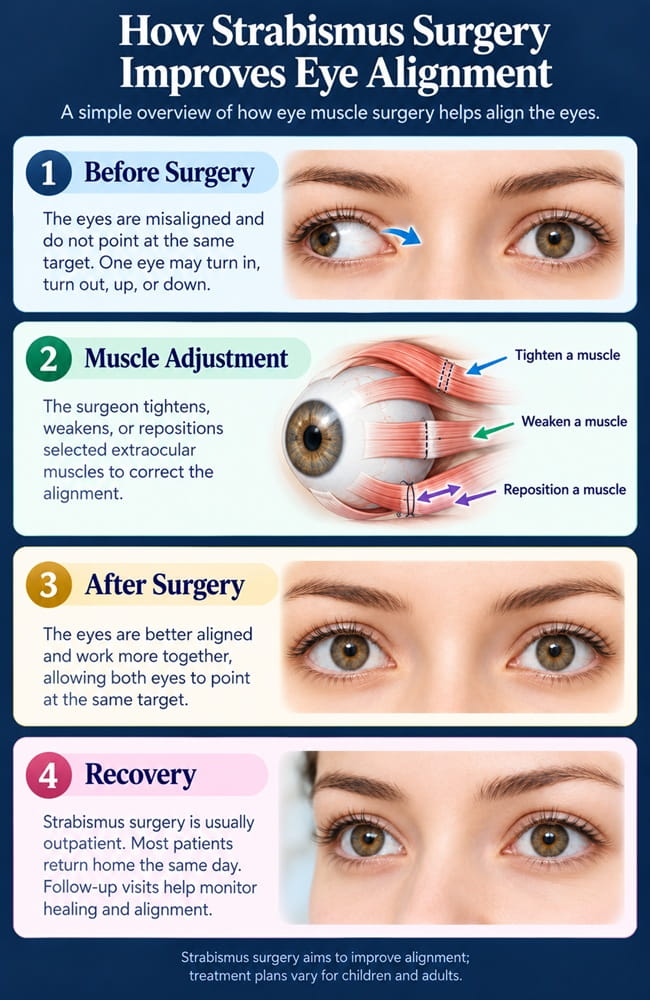
Before surgery, the ophthalmologist measures the eye deviation, evaluates eye movements and binocular vision, and determines which muscles require adjustment.
During surgery, the surgeon reaches the extraocular muscles through a small opening in the conjunctiva. One or more muscles may then be weakened, strengthened, or repositioned to improve eye alignment. Children usually receive general anesthesia, while adults may have general or local anesthesia with sedation. Most procedures are performed on an outpatient basis.
Is Strabismus Surgery Performed with a Laser?
No. Standard strabismus surgery is an eye muscle procedure, not a laser treatment. The surgeon adjusts the position or tension of one or more extraocular muscles to improve alignment.
Strabismus Surgery Recovery
Most patients return to light daily activities within a few days. Mild soreness, redness, swelling, a gritty sensation, or temporary blurred vision may occur early in recovery.
Healing and adaptation continue over the following weeks, and redness may take several weeks to fade. Patients should avoid eye rubbing, swimming, and strenuous activity until cleared by their surgeon, and attend follow-up examinations to monitor healing and alignment.
Expected Results
The goal of strabismus surgery is to improve eye alignment and, when possible, visual function. Depending on the individual case, treatment may reduce double vision, improve binocular function or depth perception, and create a more balanced eye appearance.
Some patients may still need glasses, prisms, orthoptic treatment, or additional surgery, and eye alignment can change over time.
Patient Experience After Strabismus Surgery
Is Strabismus Surgery Safe?
Strabismus surgery is a well-established eye muscle procedure, but like any surgery, it carries potential risks. The most common concerns include undercorrection or overcorrection and temporary or persistent double vision.
Less common risks include infection, bleeding, scarring, eyelid changes, anesthesia-related complications, or the need for additional surgery. Careful surgical planning and postoperative follow-up help identify and manage problems early.
When Should You Contact Your Surgeon?
Contact your ophthalmologist promptly for increasing pain, worsening redness or swelling, sudden vision loss, significant discharge, or unexpected worsening of double vision.
Strabismus Surgery Cost in Iran
Strabismus surgery in Iran generally costs between $700 and $1,600. The final price depends on the complexity of the misalignment, number of muscles treated, surgical plan, hospital fees, anesthesia, and required testing.
For patients who do not require surgery, overall strabismus treatment cost varies according to the recommended non-surgical care.
What Affects the Cost of Strabismus Surgery?
Main factors include the type and complexity of strabismus, number of muscles treated, one- or two-eye surgery, hospital and anesthesia fees, diagnostic testing, and postoperative follow-up.
Lower treatment costs in Iran mainly reflect local medical expenses and currency differences, not a simpler surgical procedure.
Why Choose Iran for Strabismus Surgery?
Iran offers access to ophthalmologists experienced in pediatric and adult strabismus, specialized eye centers in Tehran, and both surgical and non-surgical treatment options at comparatively lower local medical costs.
CeritaMed coordinates strabismus care for international patients from specialist evaluation and treatment planning through surgery and postoperative follow-up.
Strabismus Specialists in CeritaMed
International Patient Services
Our international patient team provides comprehensive assistance throughout your treatment, including:
- Personalized treatment planning
- Appointment coordination
- Airport transfers
- Hotel arrangements
- Arabic- and English-speaking support
- Local SIM card and internet assistance
- Visa guidance when required
- Postoperative follow-up
Our goal is simple: you focus on your treatment while we take care of the logistics.
Considering Strabismus Treatment in Iran?
If you or your child has strabismus, persistent eye misalignment, or double vision, CeritaMed can arrange a specialist evaluation and help determine whether non-surgical treatment or eye muscle surgery may be appropriate.
Request a Strabismus Evaluation




 Pediatric Ophthalmology Specialist
 Cornea Specialist
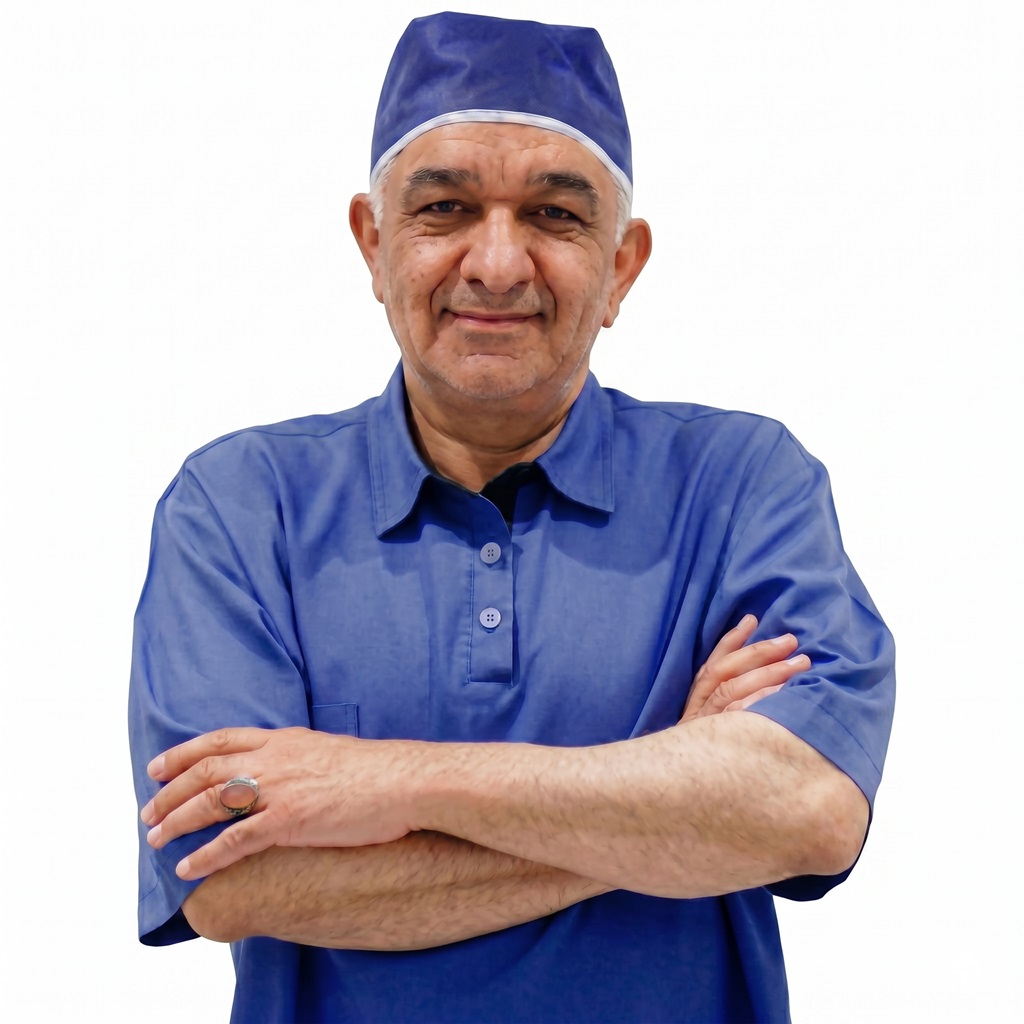 Cornea Specialist
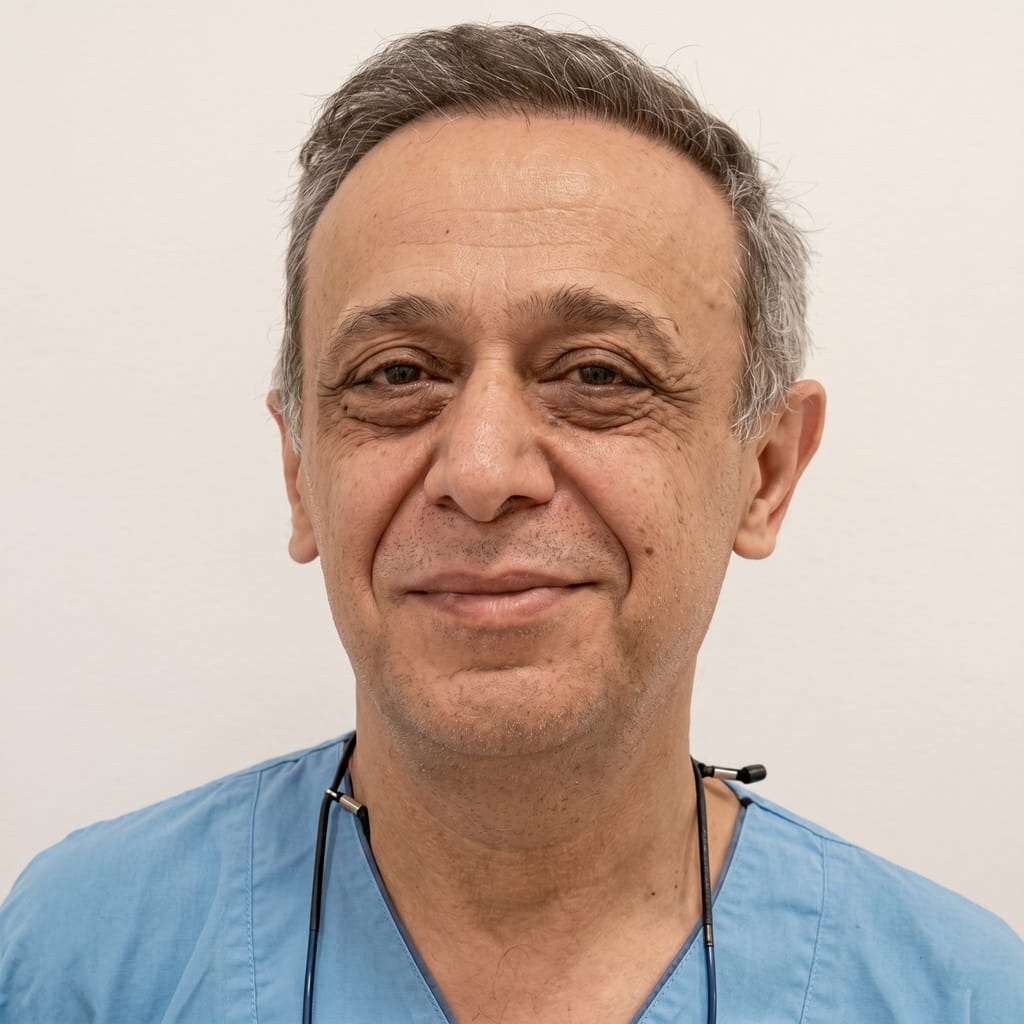 Neuro-Ophthalmology Specialist
 Cornea & Refractive Specialist