



Dental Bridge vs. Dental Implant: Which Is Right for You?
Missing one or more teeth can affect more than just your smile. It may also impact chewing, speech, and overall oral health. Fortunately, modern dentistry offers effective solutions to replace missing teeth, with dental bridges and dental implants being two of the most common options.
While both treatments restore function and appearance, they differ in how they work, their longevity, and who they are best suited for.
In this article, you’ll learn the differences between dental bridges and dental implants, along with the factors dentists consider when recommending the most appropriate treatment.
Understanding Tooth Replacement Options
Replacing missing teeth helps restore oral function, improve appearance, and maintain the alignment of surrounding teeth.
Among the available treatment options, dental bridges and dental implants are the most commonly recommended. Although both replace missing teeth, they differ in treatment approach, durability, and long-term oral health benefits.
Dental Bridge
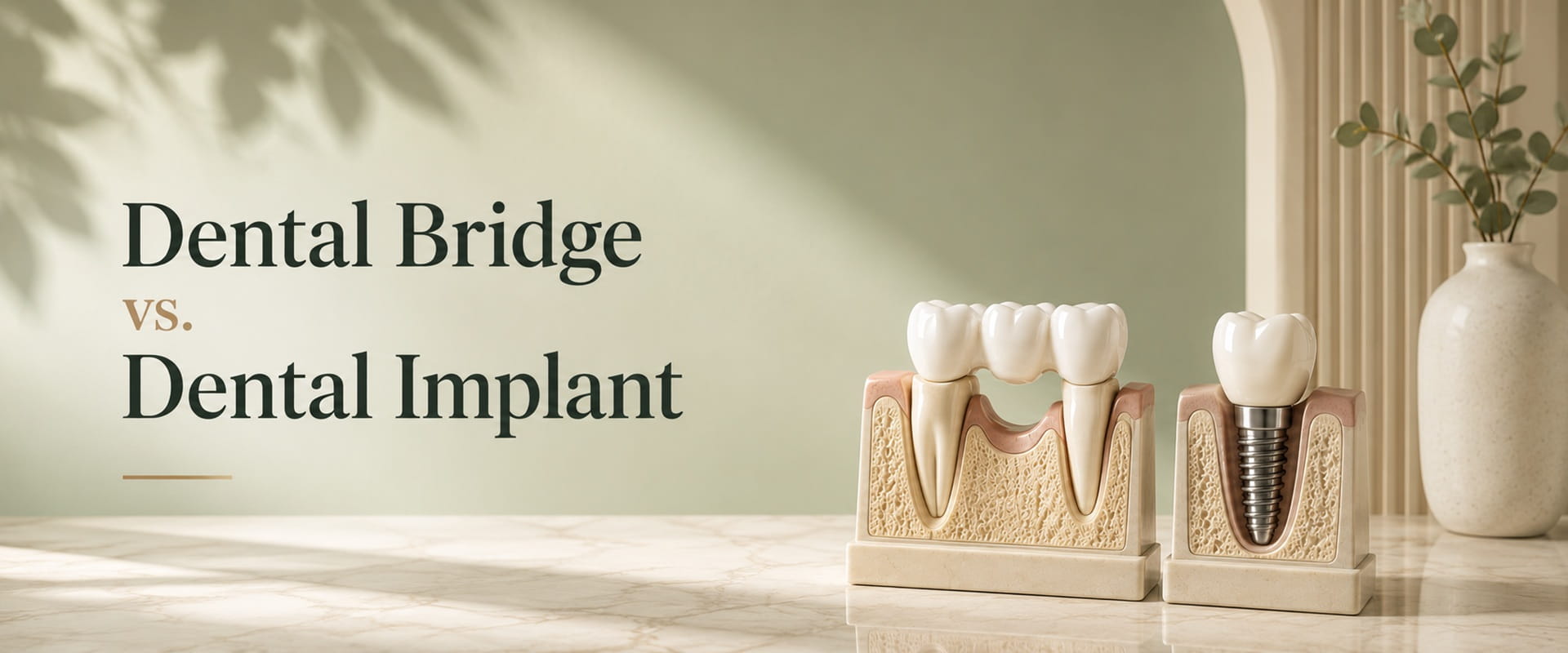
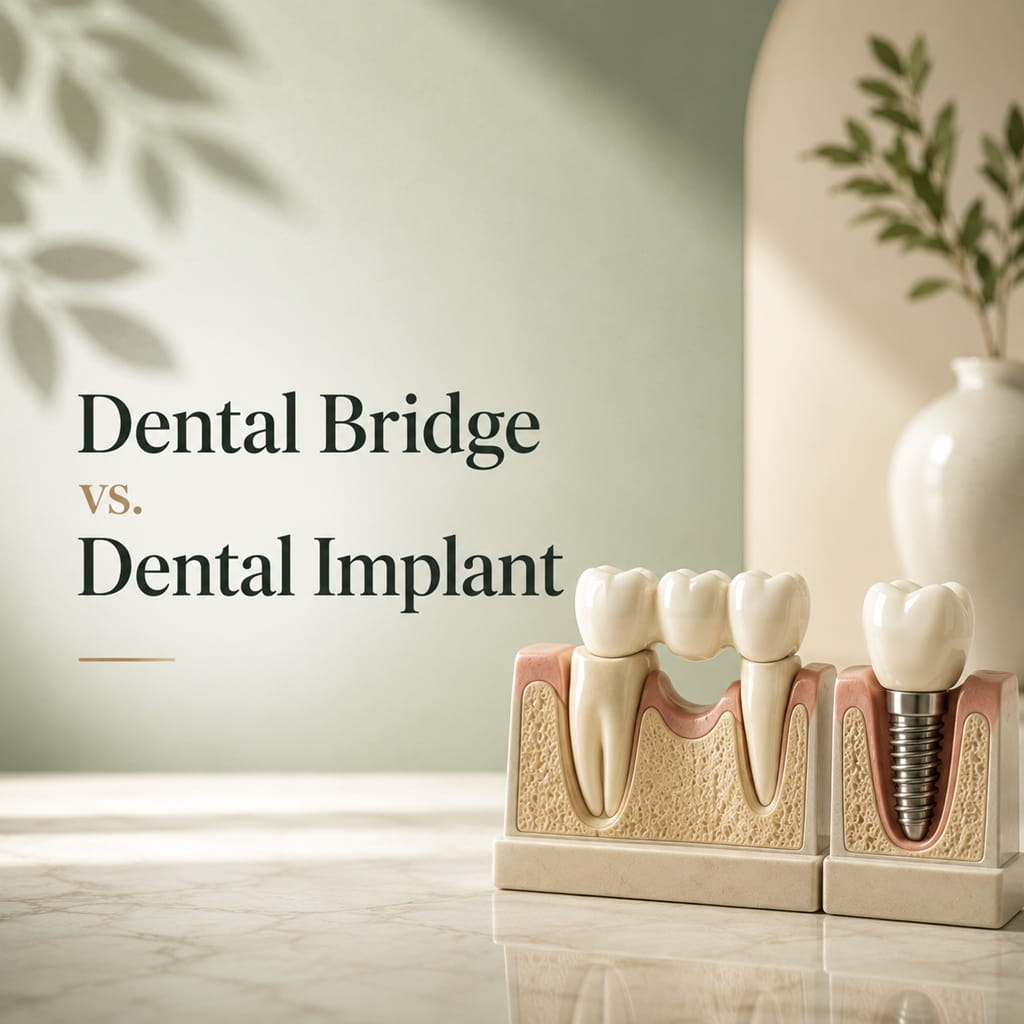
A dental bridge replaces one or more missing teeth by attaching an artificial tooth to the adjacent natural teeth or existing dental crowns.
It is generally completed in fewer appointments and provides a faster treatment process. However, preparing a bridge often requires reshaping the neighboring teeth to support the restoration.
Dental Implant
A dental implant replaces the missing tooth root with a titanium implant placed in the jawbone. After healing, a custom dental crown is attached to restore both function and appearance.
Because implants replace the tooth independently, they help preserve the jawbone and do not require altering adjacent healthy teeth.
Comparing Dental Bridges and Dental Implants
Feature | Dental Bridge | Dental Implant |
Support | Adjacent teeth | Titanium implant in the jawbone |
Effect on Nearby Teeth | Requires preparation of neighboring teeth | Adjacent teeth remain untouched |
Treatment Time | Shorter | Longer |
Jawbone Preservation | Does not prevent bone loss | Helps preserve jawbone |
Cleaning & Maintenance | May require special cleaning techniques | Similar to caring for a natural tooth |
Longevity | Good with proper care | Long-lasting with proper care |
Cost | Generally lower | Generally higher |
Who Is a Candidate for Tooth Replacement?
Both dental bridges and dental implants are effective treatment options, but not every patient is a suitable candidate for both.
The choice depends on several factors, including:
- Number of missing teeth
- Jawbone quantity and quality
- Condition of adjacent teeth
- Overall oral health
- Gum health
- Medical history
- Personal treatment goals
A comprehensive dental examination is essential before selecting the most appropriate treatment.
Which Option Is Right for You?
There is no single tooth replacement solution that is best for everyone.
For some patients, a dental bridge may be the most practical option because it offers a shorter treatment time and does not require surgery.
For others, a dental implant may provide greater long-term benefits by preserving the jawbone and replacing the missing tooth without affecting neighboring teeth.
The most suitable option should always be determined after a thorough clinical evaluation by an experienced dentist.
Conclusion
Dental bridges and dental implants are both reliable solutions for replacing missing teeth, but they serve different clinical needs.
Rather than asking which treatment is better, the more important question is which treatment is most appropriate for your oral health and long-term goals.
A detailed dental examination, including an assessment of your jawbone, surrounding teeth, and overall oral health, helps determine the treatment that best fits your individual needs.