

Removable Dentures: Types, Benefits, and Who They're For
Missing teeth can affect your ability to eat, speak, and smile with confidence. While dental implants and fixed bridges are popular tooth replacement options, they may not be suitable for everyone.
For many patients, removable dentures provide a practical and cost-effective solution for restoring missing teeth and improving everyday function.
In this article, you’ll learn about the different types of removable dentures, their advantages and limitations, and the factors dentists consider when recommending them.
What Are Removable Dentures?
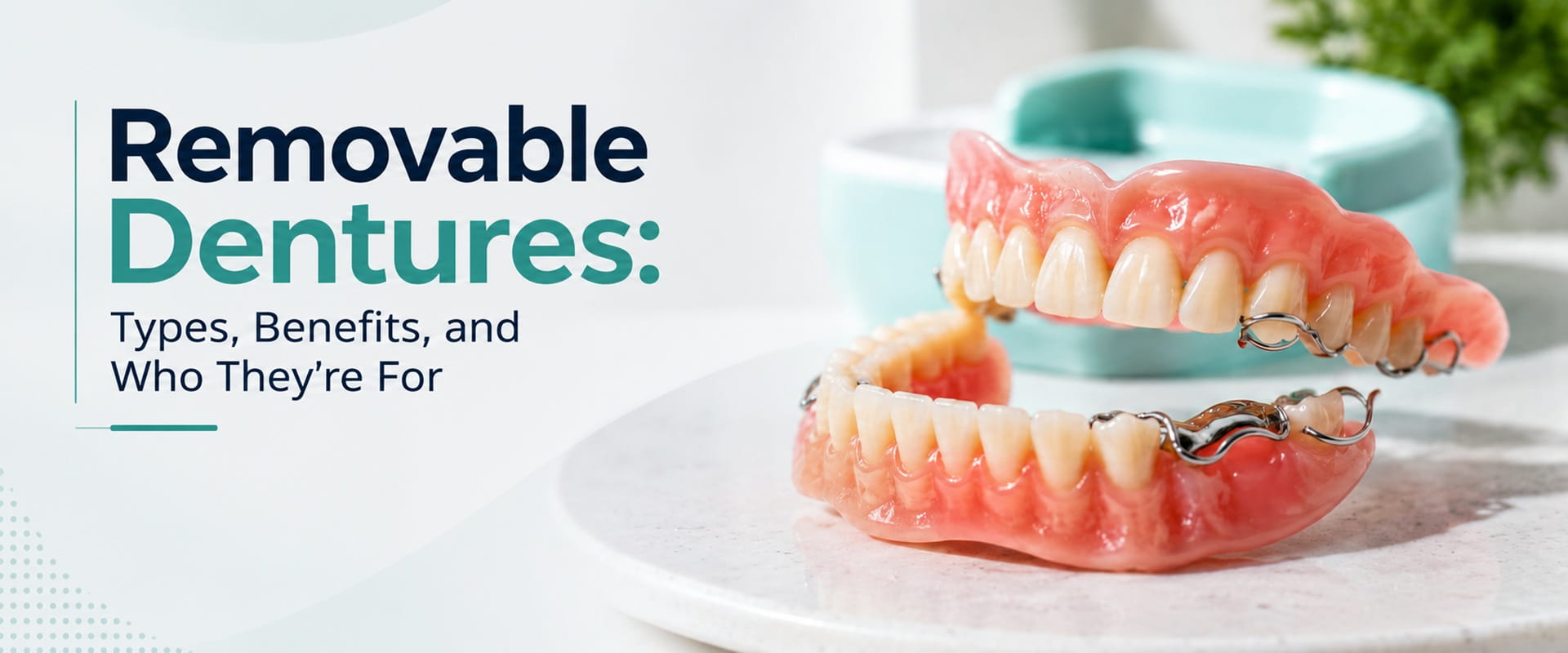
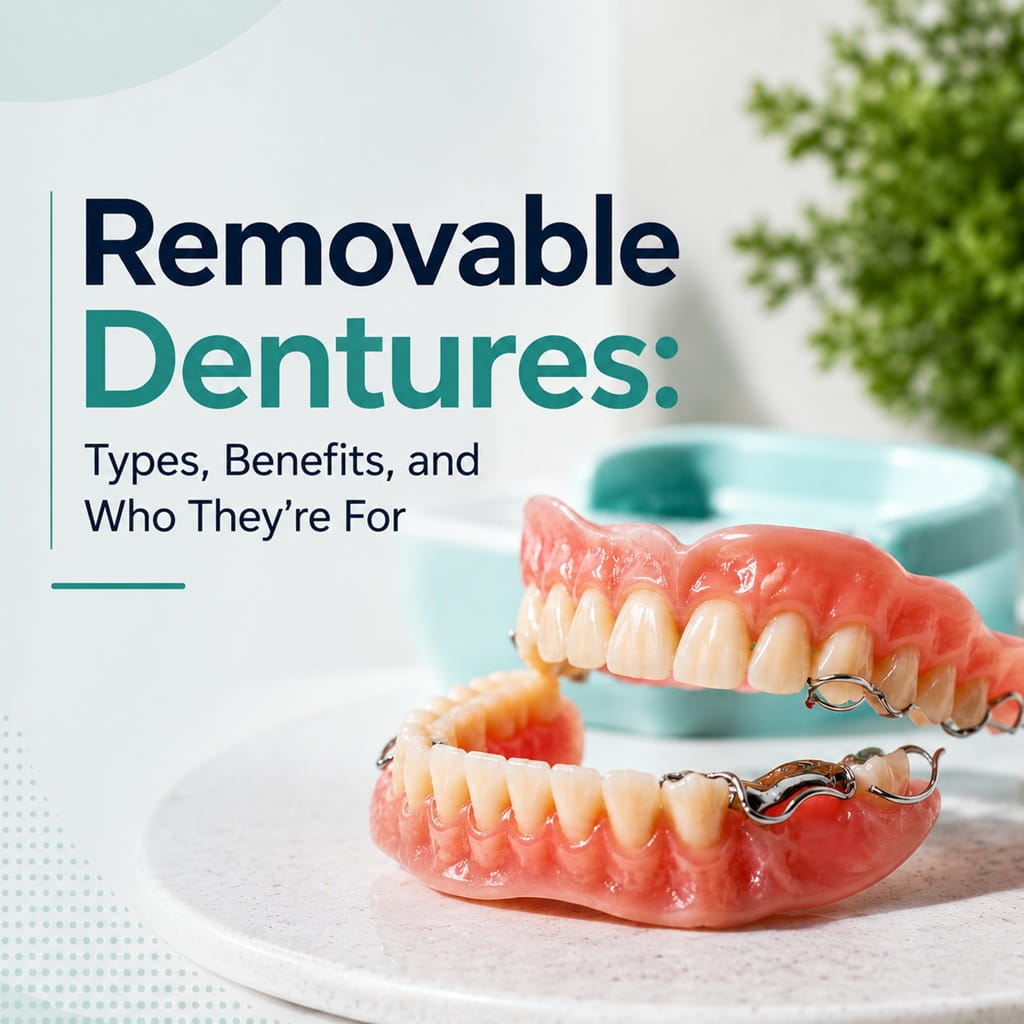
Removable dentures are custom-made prosthetic devices designed to replace missing teeth. Unlike fixed restorations, they can be removed for cleaning and reinserted when needed.
Depending on the number of missing teeth, dentures may replace a few teeth or an entire dental arch.
Types of Removable Dentures
Several types of removable dentures are available to replace missing teeth, with the most suitable option depending on the number of missing teeth, oral health, and individual functional and aesthetic needs.
Partial Dentures
Partial dentures are recommended for patients who still have some healthy natural teeth.
Several types are available, including:
- Acrylic Partial Dentures – Often used as a temporary or economical solution.
- Cobalt-Chromium Partial Dentures – Stronger, more durable, and generally more stable during chewing and speaking.
- Flexible Partial Dentures – Made from flexible materials without visible metal clasps, providing improved comfort and aesthetics for selected patients.
Complete Dentures
Complete dentures are used when all teeth in the upper jaw, lower jaw, or both are missing. They consist of artificial teeth attached to a gum-colored acrylic base that rests on the gums to restore appearance and basic oral function.
Overdentures
Overdentures are removable dentures supported by one or more remaining natural teeth or dental implants.
Compared with conventional complete dentures, they generally offer:
- Improved stability
- Better chewing efficiency
- Greater comfort
- Easy removal for cleaning
Soft Liners
Soft liners are resilient materials placed on the inner surface of a denture to cushion the gums.
They may be recommended temporarily to:
- Reduce pressure on sensitive tissues
- Improve comfort
- Help relieve irritation during healing
Because they can wear over time and may retain bacteria if not properly maintained, they are generally intended for temporary use.
Benefits of Removable Dentures
Removable dentures offer several advantages, including:
- Replacing missing teeth
- Improving chewing ability
- Supporting clearer speech
- Restoring facial appearance
- Easy removal for cleaning
- Lower cost compared with many fixed treatment options
- Ability to modify the denture if additional teeth are lost
Limitations of Removable Dentures
Although removable dentures are effective for many patients, they also have some limitations.
They may:
- Feel less stable than fixed restorations
- Require periodic adjustments as the gums and jawbone change over time
- Need replacement after years of use
- Require daily cleaning and proper maintenance
Many patients also need a short adjustment period before becoming fully comfortable with wearing dentures.
Who Is a Candidate for Removable Dentures?
Removable dentures may be recommended for patients who:
- Have multiple missing teeth
- Are missing all teeth in one or both jaws
- Are not suitable candidates for dental implants
- Prefer a removable tooth replacement option
- Are looking for a more affordable treatment
A comprehensive dental examination is necessary to determine whether removable dentures are the most appropriate solution.
Are Removable Dentures Right for You?
There is no single tooth replacement solution that is best for everyone.
The most suitable treatment depends on factors such as:
- Number of missing teeth
- Oral and gum health
- Jawbone condition
- Personal preferences
- Budget
- Long-term treatment goals
A dentist can evaluate these factors and recommend the option that best meets your individual needs.
Conclusion
Removable dentures remain a reliable and widely used solution for replacing missing teeth. Modern materials and improved fabrication techniques have made today’s dentures more comfortable, functional, and natural-looking than ever before.
Choosing the right type of denture depends on your oral health, the number of missing teeth, and your personal treatment goals. A professional dental evaluation is the best way to determine which option is most suitable for your needs.