



Gum Graft Surgery: Types, Benefits, Recovery, and Who Is a Candidate?
Healthy gums play an essential role in protecting your teeth and supporting a healthy smile. When gum tissue recedes, the roots of the teeth become exposed, increasing the risk of tooth sensitivity, root decay, and further gum damage.
If gum recession is left untreated, it may gradually affect both oral health and the appearance of your smile. In many cases, gum graft surgery is an effective treatment for restoring lost gum tissue and protecting exposed tooth roots.
In this article, you’ll learn how gum graft surgery works, the different types of gum grafts, their benefits, the recovery process, and who may be a suitable candidate.
What Is Gum Graft Surgery?
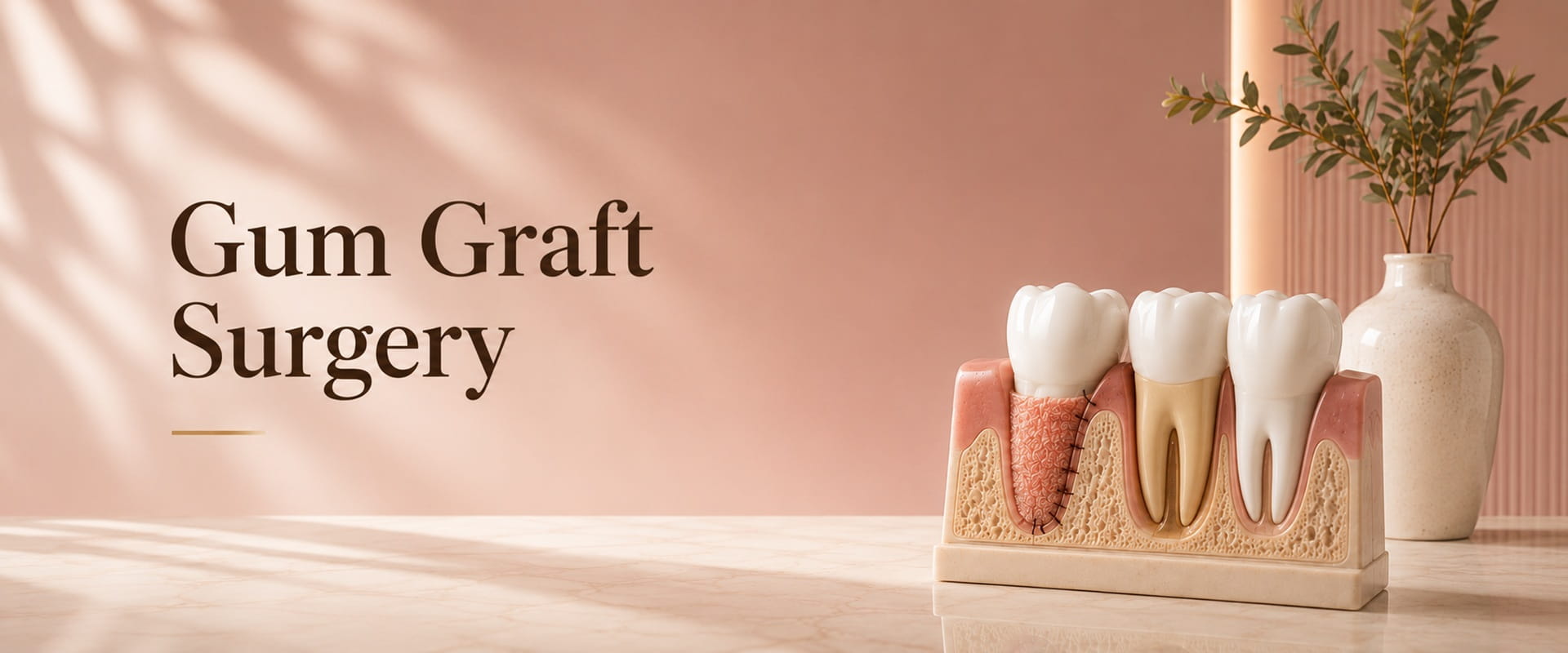
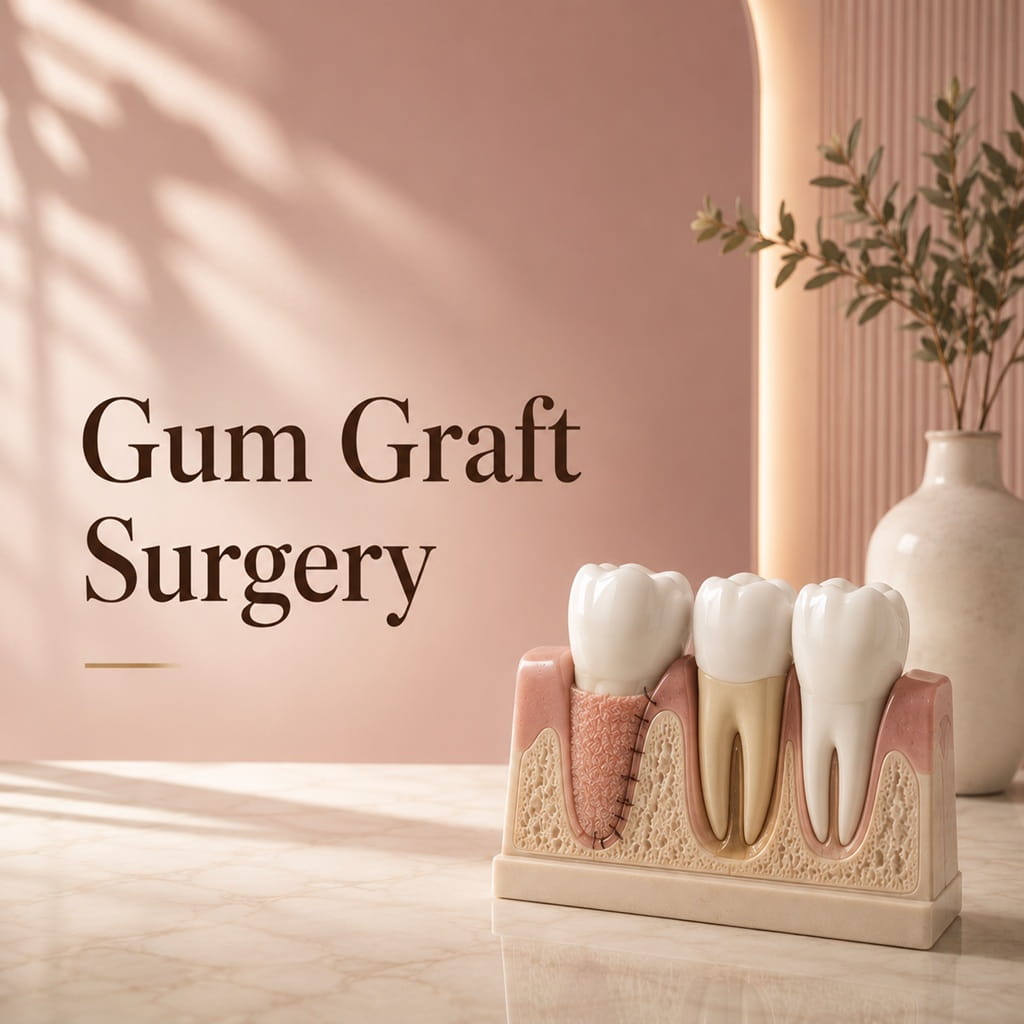
Gum graft surgery is a periodontal procedure used to treat gum recession by covering exposed tooth roots with healthy gum tissue.
Depending on the patient’s condition, the graft may be taken from the roof of the mouth, nearby gum tissue, or processed donor tissue. The procedure is usually performed under local anesthesia and is designed to improve both oral health and the appearance of the gums.
Types of Gum Graft Surgery
Several gum graft surgery techniques are available, and the most appropriate option depends on the severity of gum recession, the amount of healthy gum tissue available, and your overall oral health. After a comprehensive evaluation, your periodontist will recommend the technique that provides the best functional and aesthetic outcome.
Connective Tissue Graft
A connective tissue graft is the most commonly performed type of gum graft surgery.
During the procedure, tissue is taken from beneath the surface of the palate and placed over the exposed tooth root. This technique is commonly used to treat localized gum recession and provide long-term root coverage.
Free Gingival Graft
A free gingival graft involves removing a thin layer of tissue directly from the roof of the mouth and placing it in the treatment area.
This technique is often recommended for patients with naturally thin gums who require additional tissue to strengthen the affected area.
Pedicle Graft
A pedicle graft uses healthy gum tissue from an area adjacent to the affected tooth instead of taking tissue from the palate.
This method is suitable only when there is enough healthy gum tissue surrounding the recession site.
Benefits of Gum Graft Surgery
Gum graft surgery can provide several important benefits, including:
- Covering exposed tooth roots
- Reducing tooth sensitivity
- Improving the appearance of the smile
- Helping prevent further gum recession
- Protecting the underlying bone and tooth roots
- Reducing the risk of root decay
Recovery After Gum Graft Surgery
Most patients experience mild discomfort during the first few days after surgery, and recovery generally progresses over the following weeks.
Your dentist or periodontist may recommend:
- Avoid brushing the treated area until advised
- Use a prescribed antimicrobial mouth rinse
- Take medications as directed
- Eat soft foods during the initial healing period
- Avoid smoking
- Avoid strenuous physical activity for several days
Following post-operative instructions carefully can help promote proper healing and improve treatment outcomes.
Are There Any Risks?
Like any surgical procedure, gum graft surgery carries some potential risks, although serious complications are uncommon.
Possible temporary side effects include:
- Mild bleeding
- Swelling
- Temporary tooth sensitivity
- Minor discomfort
- Temporary inflammation around the surgical site
Most of these symptoms improve as healing progresses.
Who Is a Candidate for Gum Graft Surgery?
Not everyone with gum recession requires gum graft surgery.
This procedure may be recommended for patients who:
- Have exposed tooth roots
- Experience tooth sensitivity caused by gum recession
- Have progressive gum recession
- Need additional gum tissue around affected teeth
- Have healthy periodontal tissues suitable for grafting
A comprehensive periodontal examination is necessary to determine whether gum graft surgery is the most appropriate treatment.
Is Gum Graft Surgery Right for You?
The most appropriate treatment depends on several factors, including:
- Severity of gum recession
- Overall gum health
- Bone support
- Number of affected teeth
- Personal treatment goals
After a clinical examination, your dentist or periodontist can recommend the treatment option that best suits your condition.
Conclusion
Gum graft surgery is an effective treatment for restoring receded gums, protecting exposed tooth roots, and improving both oral health and smile aesthetics.
Modern grafting techniques offer predictable outcomes for many patients, but the most appropriate treatment depends on the severity of gum recession and your overall periodontal health. A professional dental evaluation is the best way to determine whether gum graft surgery is the right option for your needs.