



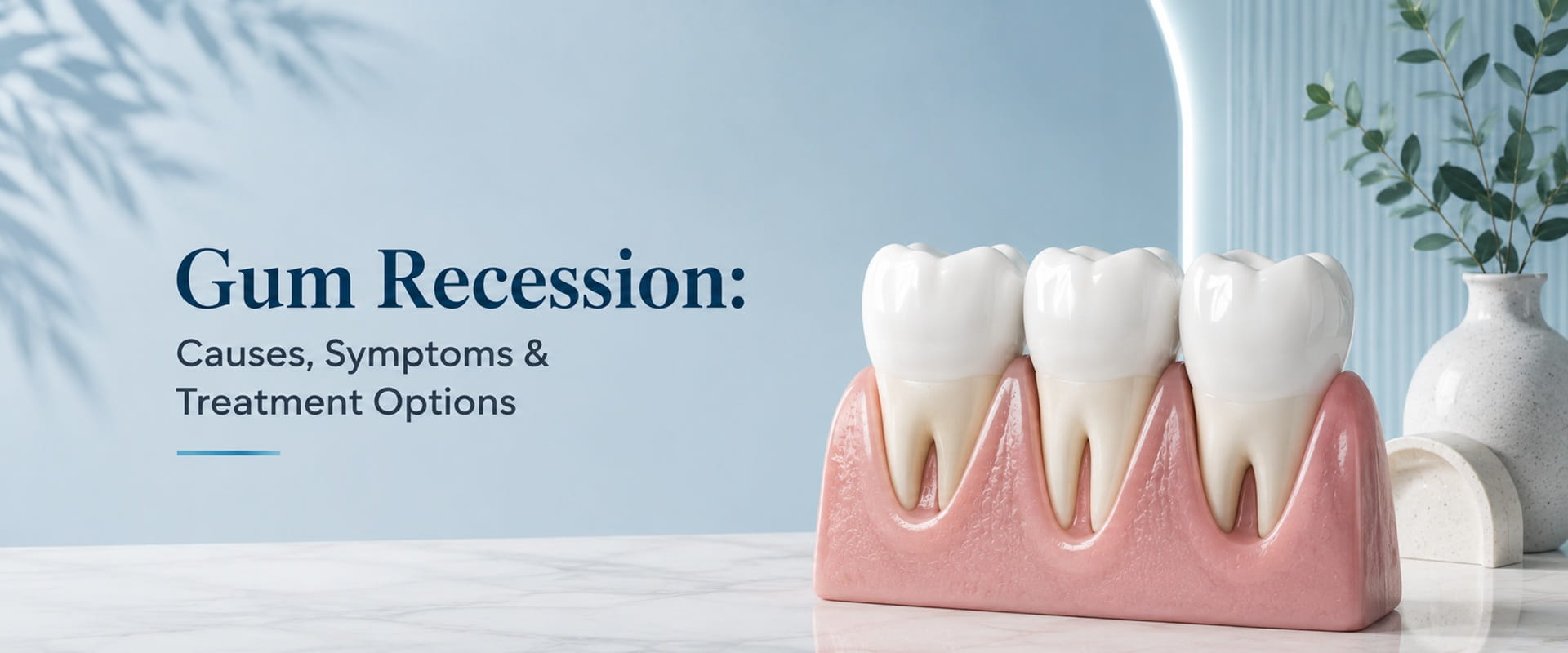
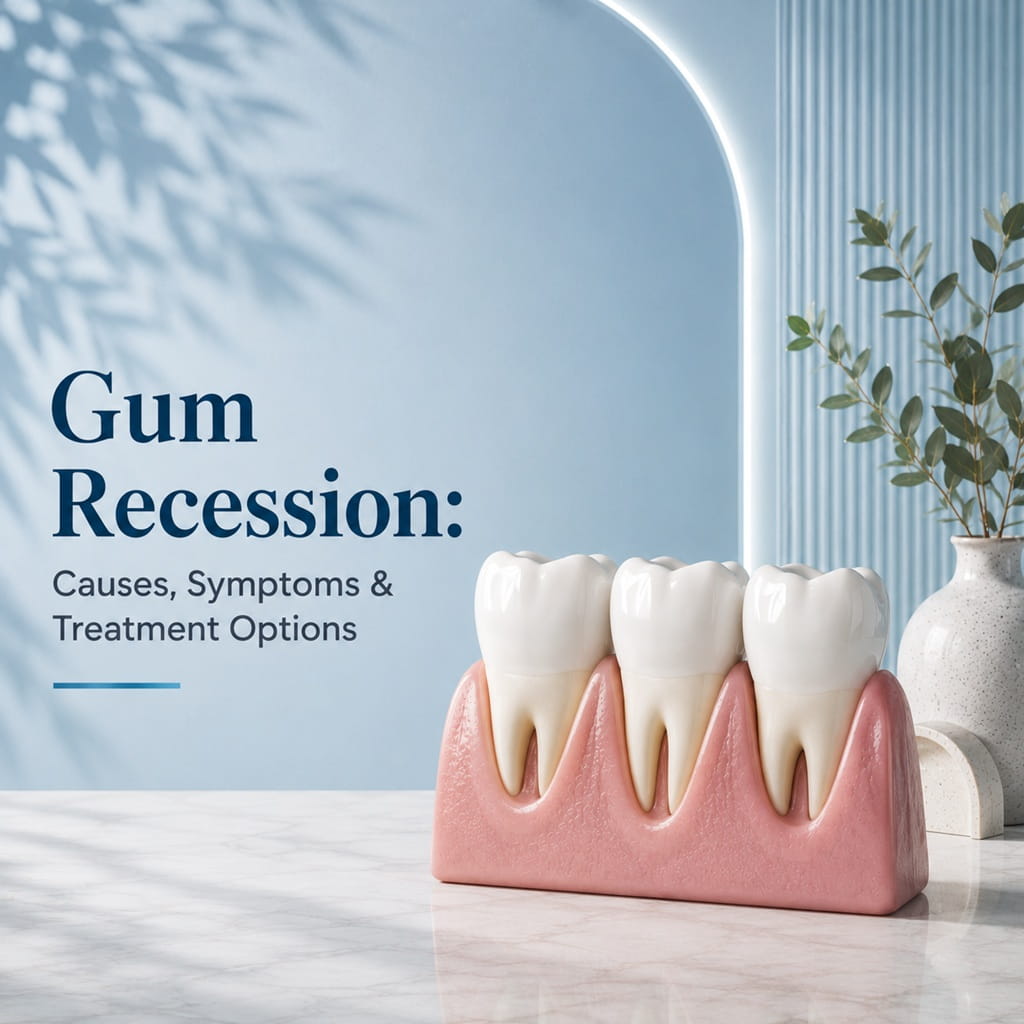
Gum Recession: Causes, Symptoms & Treatment Options
Gum recession is a common dental condition in which the gum tissue gradually pulls away from the teeth, exposing the tooth roots. If left untreated, it can increase tooth sensitivity, raise the risk of root decay, and eventually affect the supporting bone and tooth stability.
Although gum recession often develops slowly, early diagnosis and appropriate treatment can help prevent further damage and preserve long-term oral health.
In this article, you’ll learn what causes gum recession, its common symptoms, and the treatment options available.
What Is Gum Recession?
What Are the Symptoms of Gum Recession?
Common signs and symptoms include:
- Tooth sensitivity
- Teeth that appear longer than usual
- Exposed tooth roots
- Bleeding gums
- Swollen or inflamed gums
- Persistent bad breath
- Spaces developing between teeth
- Tooth mobility in advanced cases
- Root decay
If you notice any of these symptoms, it’s important to schedule a dental examination as early as possible.
What Causes Gum Recession?
Several factors may contribute to gum recession, including:
- Periodontal (gum) disease
- Aggressive tooth brushing
- Poor oral hygiene
Smoking
Teeth grinding (bruxism)
Misaligned or crowded teeth
Hormonal changes
Genetic predisposition
Lip or tongue piercings
Changes following orthodontic treatment in selected cases
Identifying and addressing the underlying cause is an essential part of successful treatment.
Treatment Options for Gum Recession
Treatment depends on the severity of gum recession and its underlying cause.
Non-Surgical Treatment
In mild cases, treatment may include:
- Professional scaling and root planing
- Improving oral hygiene
- Desensitizing agents for exposed roots
- Orthodontic treatment when tooth position contributes to the recession
These approaches aim to control the cause of recession and prevent further progression.
Gum Graft Surgery
For moderate to severe gum recession, gum graft surgery may be recommended.
The procedure involves placing healthy gum tissue over exposed tooth roots to:
- Protect the roots
- Reduce tooth sensitivity
- Improve gum appearance
- Help prevent further recession
Regenerative Procedures
When gum recession is associated with bone loss, regenerative procedures may be considered.
These treatments use specialized regenerative materials to encourage the body’s natural healing process and support the regeneration of bone and surrounding tissues.
Can Gum Recession Be Prevented?
While not every case can be prevented, the risk of gum recession can often be reduced by:
- Brushing with proper technique
- Maintaining good oral hygiene
- Attending regular dental check-ups
- Treating gum disease early
- Avoiding tobacco products
- Managing teeth grinding when present
Early intervention is one of the most effective ways to prevent progression.
Who Is a Candidate for Gum Recession Treatment?
Treatment may be recommended for people who:
- Have exposed tooth roots
- Experience tooth sensitivity
- Have progressive gum recession
- Show signs of periodontal disease
- Have aesthetic concerns related to receding gums
A comprehensive periodontal examination is necessary to determine the most appropriate treatment approach.
Which Treatment Is Right for You?
There is no single treatment that is appropriate for every patient.
The most suitable option depends on:
- Severity of gum recession
- Cause of the condition
- Gum health
- Bone support
- Number of affected teeth
- Individual treatment goals
Following a thorough examination, a dentist or periodontist can recommend the treatment plan that best fits your condition.
Conclusion
Gum recession is a common condition that can affect both oral health and the appearance of your smile. Fortunately, a variety of treatment options are available, ranging from non-surgical therapies to gum graft surgery and regenerative procedures.
Early diagnosis and appropriate treatment can help protect your teeth, reduce sensitivity, and prevent further damage to the gums and supporting structures.