



Liposuction vs. Tummy Tuck: Which Is Right for You?
Liposuction and tummy tuck surgery can both improve the shape of your abdomen, but they address different concerns. Liposuction removes stubborn fat deposits, while a tummy tuck removes excess skin and can also address abdominal muscle separation.
The better choice depends on whether your main concern is stubborn fat, loose skin, or both. Here’s a clear comparison to help you understand your options before speaking with a surgeon.
Liposuction vs. Tummy Tuck: Key Differences
Both procedures can improve abdominal contours, but they work differently. Here’s a quick comparison of their main purposes, results, recovery, and other important factors.
| Feature | Liposuction | Tummy Tuck |
|---|---|---|
| Main purpose | Removes stubborn fat deposits | Removes excess skin and some fat |
| Loose skin | Does not remove excess skin | Removes loose abdominal skin |
| Muscle separation | Does not repair muscles | May include muscle repair |
| Results | Improves body contours | Creates a smoother, firmer abdomen |
| Scarring | Small incision scars | Longer lower-abdominal scar |
| Recovery | Generally shorter | Generally longer |
| Cost | Usually less expensive | Usually more expensive |
What Does Each Procedure Actually Do?
Liposuction uses a thin tube called a cannula to remove localized fat through small incisions. It targets stubborn fat deposits to improve body contours, but it doesn’t remove excess skin or repair separated abdominal muscles.
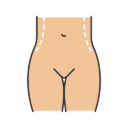
A tummy tuck (abdominoplasty) removes loose abdominal skin and may also remove some fat. When needed, it can repair separated abdominal muscles to improve the abdominal contour.
Which Is Right for You: Fat, Skin, or Muscle?
The right procedure depends on what’s causing your abdominal fullness or loose appearance. Consider these common situations:
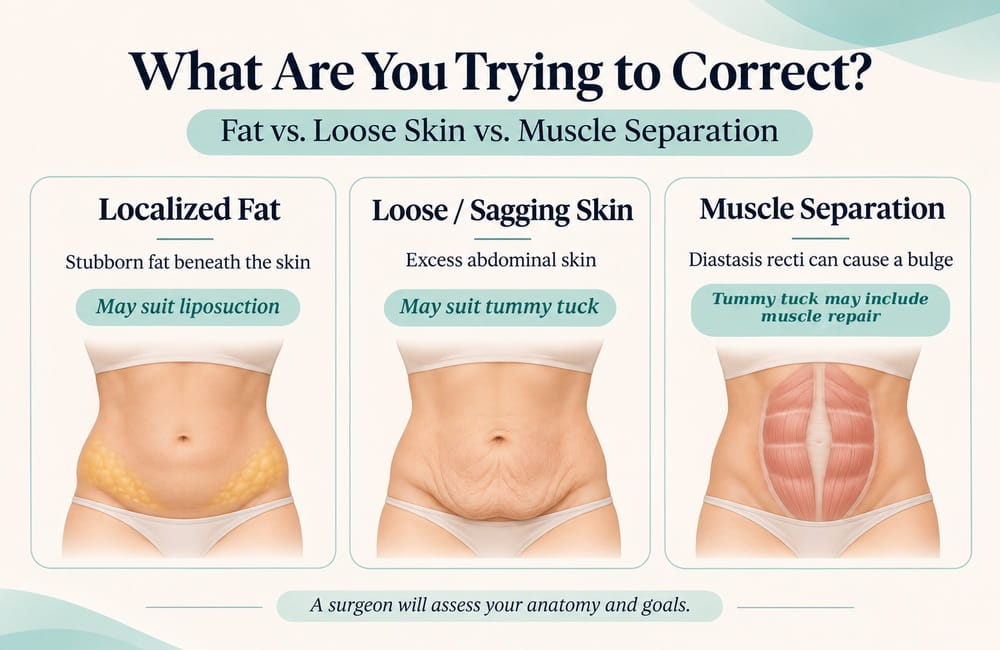
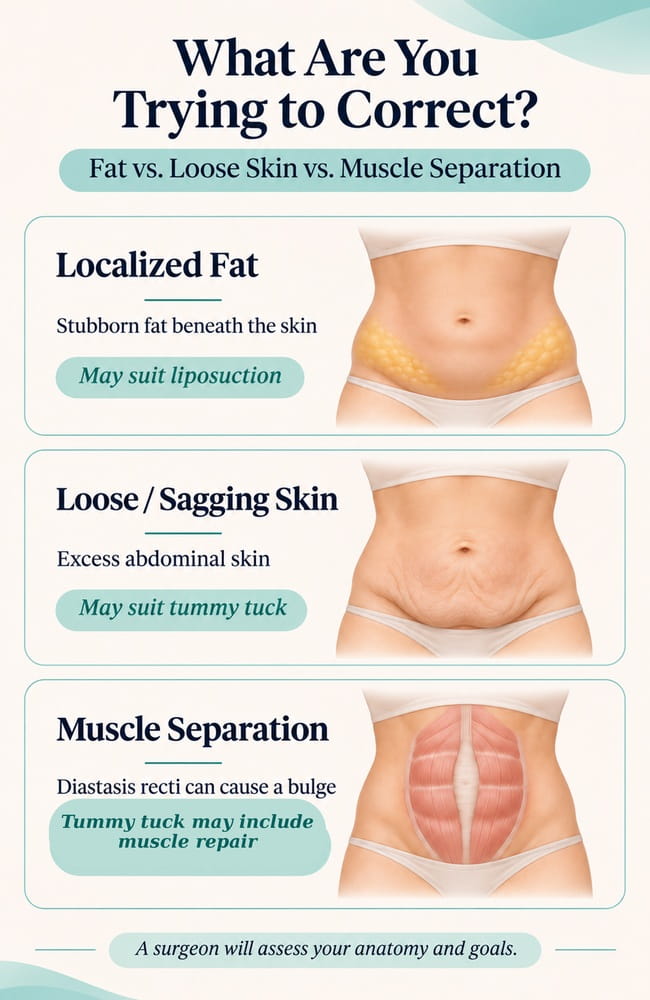
- Stubborn belly fat: If you have localized fat and reasonably firm, elastic skin, liposuction may be enough to improve your contours.
- Loose or sagging skin: If stretched skin hangs over your lower abdomen, especially after significant weight loss, a tummy tuck may be more effective. Liposuction alone won’t remove excess skin.
- Abdominal muscle separation: Pregnancy or other factors can contribute to rectus diastasis, which may cause a persistent abdominal bulge. Liposuction cannot correct this separation, while a tummy tuck may include abdominal wall repair when needed.
- Both fat and loose skin: Some people may benefit from combining liposuction with a tummy tuck to address both concerns.
A surgeon will assess your skin elasticity, fat distribution, abdominal wall, and overall health before recommending a procedure.
Liposuction vs. Tummy Tuck Results
Liposuction can leave your abdomen looking slimmer and more contoured, especially when your skin has good elasticity. A tummy tuck can create a flatter, smoother appearance by addressing loose skin and, when needed, abdominal wall laxity.
Both procedures can provide long-lasting results, but aging, pregnancy, and weight fluctuations may affect your shape over time. For more on weight-related changes, read Can Fat Come Back After Liposuction?
Recovery, Scars, and Risks: How Do They Compare?
Recovery is generally quicker after liposuction. Many people return to desk work within several days to two weeks, while tummy tuck patients often need around two weeks or longer, especially if muscle repair is performed. Strenuous exercise requires more recovery time after either procedure.
Liposuction usually leaves small incision scars. A tummy tuck leaves a longer scar across the lower abdomen, sometimes with another around the belly button.
Both procedures can cause temporary swelling and bruising. Potential complications include infection, fluid buildup, and blood clots. Individual risks depend on your health and the extent of surgery, making careful surgical planning and aftercare important.
Liposuction vs. Tummy Tuck Cost
Liposuction is often less expensive than a tummy tuck, although extensive or multi-area liposuction may cost more.
The final price depends on the procedure’s complexity, surgeon’s fees, anesthesia, facility costs, and whether treatments are combined.
Can Liposuction and a Tummy Tuck Be Combined?
Yes. Liposuction and a tummy tuck can be performed together in a procedure called lipoabdominoplasty. It can address stubborn fat and loose skin in one operation, with abdominal wall repair when necessary.
Combining procedures isn’t suitable for everyone, though. Your surgeon needs to review your health, goals, and surgical risks before recommending this approach.
For an overview of available techniques, explore CeritaMed’s body contouring services in Iran.
Conclusion
Liposuction is generally better suited to stubborn fat, while a tummy tuck addresses excess skin and may also correct muscle separation. Neither procedure is right for everyone.
The best choice depends on your anatomy, health, and aesthetic goals. If you’re considering either procedure, contact CeritaMed to discuss your concerns and get guidance on the next steps.
Frequently Asked Questions
1. Is Lipo 360 a substitute for a tummy tuck?
Not necessarily. Lipo 360 targets fat around the midsection, while a tummy tuck removes excess abdominal skin and may address muscle separation.
2. Which is more painful, liposuction or a tummy tuck?
A tummy tuck generally involves more postoperative discomfort, particularly when abdominal wall repair is performed. However, pain varies between individuals.
3. Is a mini tummy tuck better than liposuction?
A mini tummy tuck addresses limited excess skin in the lower abdomen, while liposuction targets localized fat. Neither is universally better.
4. Which procedure is better after pregnancy?
After pregnancy, the choice still depends on fat, loose skin, and muscle separation. If you plan more children, discuss timing with your surgeon.
Scientific References
International Society of Aesthetic Plastic Surgery (ISAPS). (n.d.). Liposuction. ISAPS Patient Information.
International Society of Aesthetic Plastic Surgery (ISAPS). (n.d.). Standard Abdominoplasty: Full Tummy Tuck. ISAPS Patient Information.
British Association of Aesthetic Plastic Surgeons (BAAPS). (n.d.). Tummy Tuck (Abdominoplasty). BAAPS Patient Information.
Xia Y, Zhao J, Cao DS. (2019). Safety of Lipoabdominoplasty Versus Abdominoplasty: A Systematic Review and Meta-analysis. Aesthetic Plastic Surgery, 43(1), 167–174.