



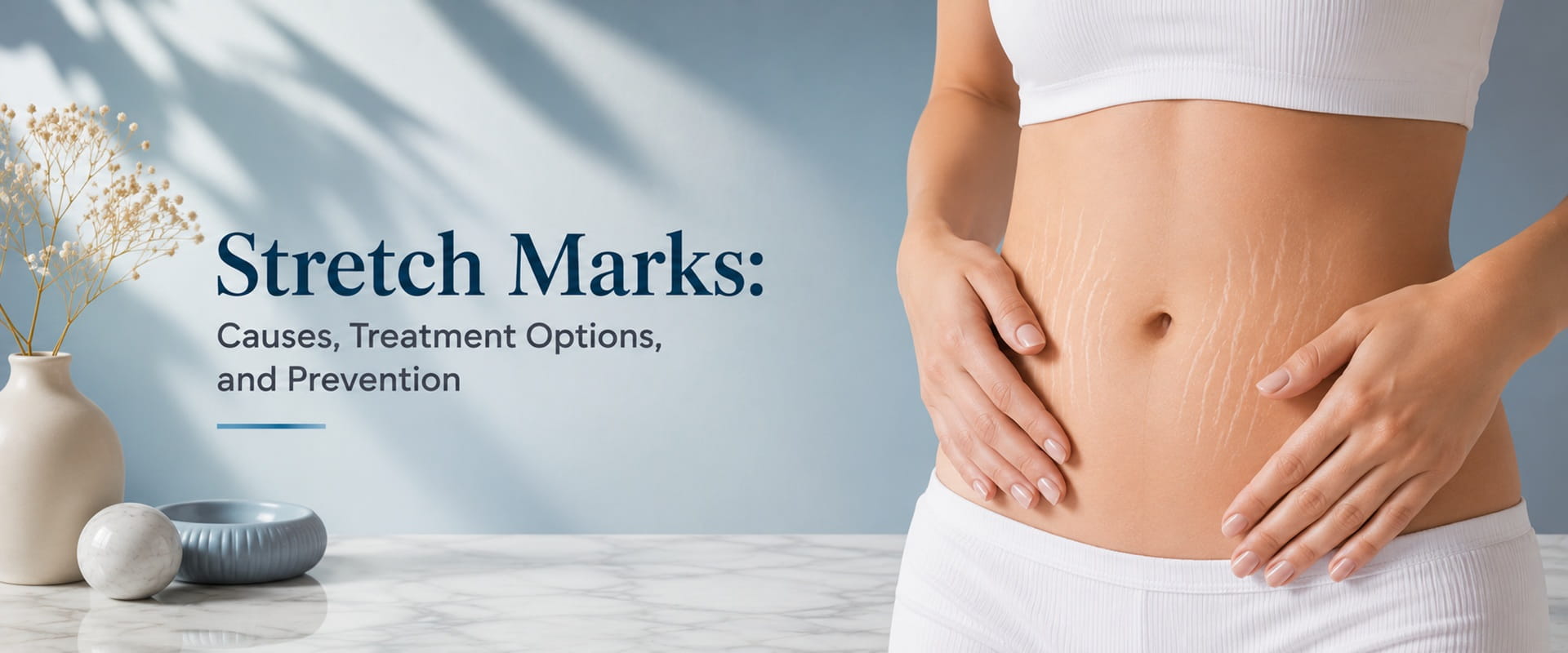
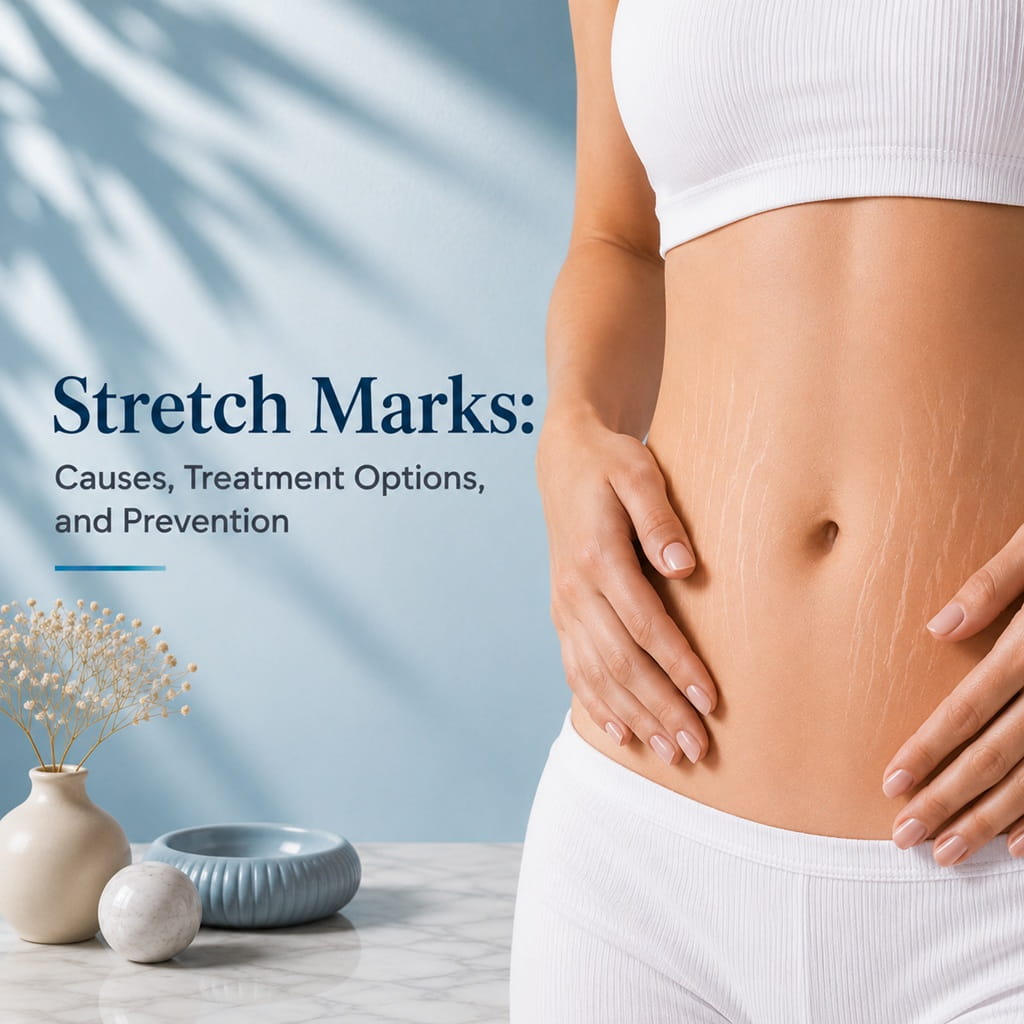
Stretch Marks: Causes, Treatment Options, and Prevention
Stretch marks are a common skin condition that can affect both men and women. They often appear after rapid stretching of the skin caused by pregnancy, puberty, sudden weight changes, or muscle growth.
Although stretch marks are harmless, many people seek treatment to improve their appearance. While they cannot always be completely removed, several medical treatments may help make them less noticeable.
In this article, you’ll learn what causes stretch marks, how they develop, the available treatment options, and ways to help prevent them.
What Are Stretch Marks?
Stretch marks, also known as striae, are long, narrow streaks that develop when the skin stretches faster than its supporting collagen and elastin fibers can adapt.
As these fibers break, visible lines form beneath the skin surface. Over time, the appearance of stretch marks changes as the skin heals naturally.
Stretch marks commonly appear on the:
- Abdomen
- Thighs
- Hips
- Breasts
- Buttocks
- Upper arms
What Causes Stretch Marks?
Several factors may contribute to the development of stretch marks, including:
- Pregnancy
- Rapid weight gain
- Rapid weight loss
- Puberty and growth spurts
- Rapid muscle growth
- Long-term use of corticosteroid medications
- Genetic predisposition
People with a family history of stretch marks may be more likely to develop them.
Red vs. White Stretch Marks: What's the Difference?
Stretch marks usually change in appearance over time.
Red, pink, or purple stretch marks are considered newer lesions. At this stage, small blood vessels beneath the skin remain visible, and certain treatments may be more effective.
White or silvery stretch marks are older and more mature. Although they may become less noticeable naturally, they are generally more difficult to treat than newer stretch marks.
Can Stretch Marks Be Treated?
Although stretch marks cannot always be completely removed, several treatments may help improve their appearance by stimulating collagen production and supporting skin remodeling.
The most appropriate treatment depends on factors such as the age of the stretch marks, skin type, and individual treatment goals.
Medical Treatments for Stretch Marks
Several medical treatments for stretch marks can improve skin texture and reduce their appearance. The most appropriate option depends on the type, age, and severity of the stretch marks.
Laser Therapy
Laser treatment stimulates collagen production and encourages skin remodeling, helping improve the appearance of stretch marks. It tends to be more effective for newer stretch marks but may also improve older ones after multiple sessions.
Microneedling with Radiofrequency
Microneedling combined with radiofrequency delivers controlled energy into the skin while stimulating the body’s natural healing response. This treatment promotes collagen production and may improve skin texture and reduce the visibility of stretch marks over a series of treatment sessions.
Dermal Fillers
In selected cases, dermal fillers may be used to improve the appearance of certain types of stretch marks by restoring volume and supporting collagen stimulation. The suitability of this treatment depends on the patient’s individual condition.
Do Home Remedies Work?
Many home remedies have been suggested for stretch marks, including natural oils, aloe vera, cocoa butter, and shea butter.
While these products may help keep the skin moisturized and improve overall skin health, there is currently limited scientific evidence that they can completely remove stretch marks.
For noticeable improvement, medical treatments are generally more effective than home remedies.
Can Stretch Marks Be Prevented?
Although stretch marks cannot always be prevented, the following measures may help reduce the risk:
- Maintain a stable body weight
- Stay well hydrated
- Eat a balanced diet rich in vitamins and protein
- Moisturize the skin regularly
- Exercise regularly
- Healthy skin is generally better able to adapt to changes in body size.
Conclusion
Stretch marks are a common skin concern that can develop during pregnancy, puberty, rapid weight changes, or muscle growth. While they are not harmful to your health, many people seek treatment to improve their appearance.
Although complete removal is not always possible, modern treatments such as laser therapy, microneedling with radiofrequency, and selected injectable treatments may help reduce their visibility. Consulting a qualified dermatologist can help determine the most appropriate treatment based on your skin type and the characteristics of your stretch marks.