


LASIK vs Femto LASIK: What’s the Difference and Which One Is Better?
If you are considering vision correction surgery, you have probably come across two popular procedures: LASIK and Femto LASIK. Both treatments are designed to correct refractive vision problems such as myopia, hyperopia, and astigmatism, helping patients reduce or eliminate their dependence on glasses or contact lenses. However, there are important differences between these two advanced procedures.
Understanding the difference between LASIK and Femto LASIK can help you choose the safest and most effective option for your eyes.
What Is Traditional LASIK?
LASIK (Laser-Assisted In Situ Keratomileusis) is one of the most commonly performed vision correction surgeries in the world. During the procedure, the surgeon creates a thin flap on the cornea using a mechanical blade called a microkeratome. After lifting the flap, an excimer laser reshapes the cornea to improve how light focuses on the retina.
Traditional LASIK is known for:
- Fast recovery time
- Minimal discomfort
- High success rates
- Long-lasting vision correction
Most patients experience significantly clearer vision within 24 to 48 hours after surgery.
What Is Femto LASIK?
Femto LASIK, also known as Blade-Free LASIK or All-Laser LASIK, is a more advanced version of traditional LASIK. Instead of using a blade to create the corneal flap, Femto LASIK uses a highly precise femtosecond laser.
This laser technology allows surgeons to create a thinner, more uniform flap with exceptional accuracy. After the flap is created, the rest of the procedure is similar to standard LASIK.
Because of its advanced technology, Femto LASIK is considered one of the most advanced and precise laser eye surgery procedures available today.
Key Differences Between LASIK and Femto LASIK
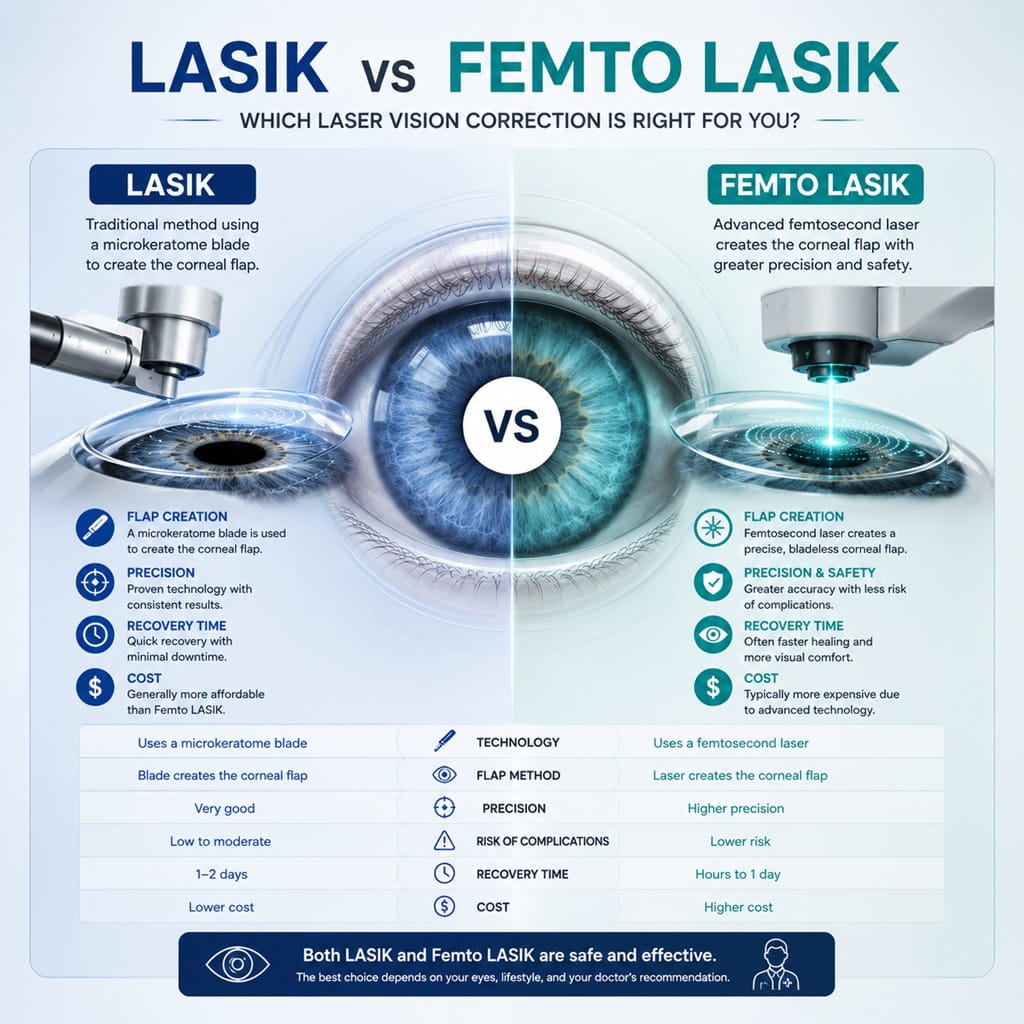
1. Flap Creation
The biggest difference between the two procedures is how the corneal flap is created.
- LASIK uses a mechanical blade
- Femto LASIK uses a femtosecond laser
Femto technology provides greater precision and reduces the risk of flap-related complications.
2. Safety and Precision
Femto LASIK offers a bladeless approach, making the procedure more predictable and controlled. The laser creates highly accurate flap dimensions, which can improve overall surgical precision and patient safety.
Patients with thinner corneas or sensitive eyes are often considered better candidates for Femto LASIK.
3. Recovery Time
Both procedures offer fast recovery, but many patients report slightly faster healing and less risk of dry eye symptoms after Femto LASIK. Vision improvement often begins within the first 24 hours.
4. Cost
Traditional LASIK is generally more affordable because it uses less advanced equipment. Femto LASIK typically costs more due to the use of sophisticated femtosecond laser technology.
However, many patients choose Femto LASIK because of its enhanced safety profile and precision.
Which Procedure Is Better?
There is no universal answer to whether LASIK or Femto LASIK is better. The right procedure depends on several factors, including:
- Corneal thickness
- Eye health
- Vision prescription
- Lifestyle
- Budget
- Surgeon recommendation
For many patients, Femto LASIK provides additional comfort and peace of mind thanks to its blade-free technology and higher precision.
Final Thoughts
Both LASIK and Femto LASIK are highly effective procedures that can dramatically improve vision and quality of life. Traditional LASIK remains a trusted option worldwide, while Femto LASIK represents the latest advancement in laser vision correction technology.
At Ceritamed, advanced diagnostic technology and personalized treatment planning help determine the most suitable procedure for each patient. Consulting with an experienced ophthalmologist is the best way to choose the safest and most effective option for your eyes.